For Victor Uka, mental health advocacy is a personal mission shaped by lived experience, resilience, and reflection. Born in Abia State and now based in Enugu, Nigeria, the 28-year-old wears many hats: research assistant, counselor, and therapist with Golden Heart Foundation. But beyond his professional titles lies a man driven by a profound understanding of the human mind’s importance, one shaped by personal trials and reflections.
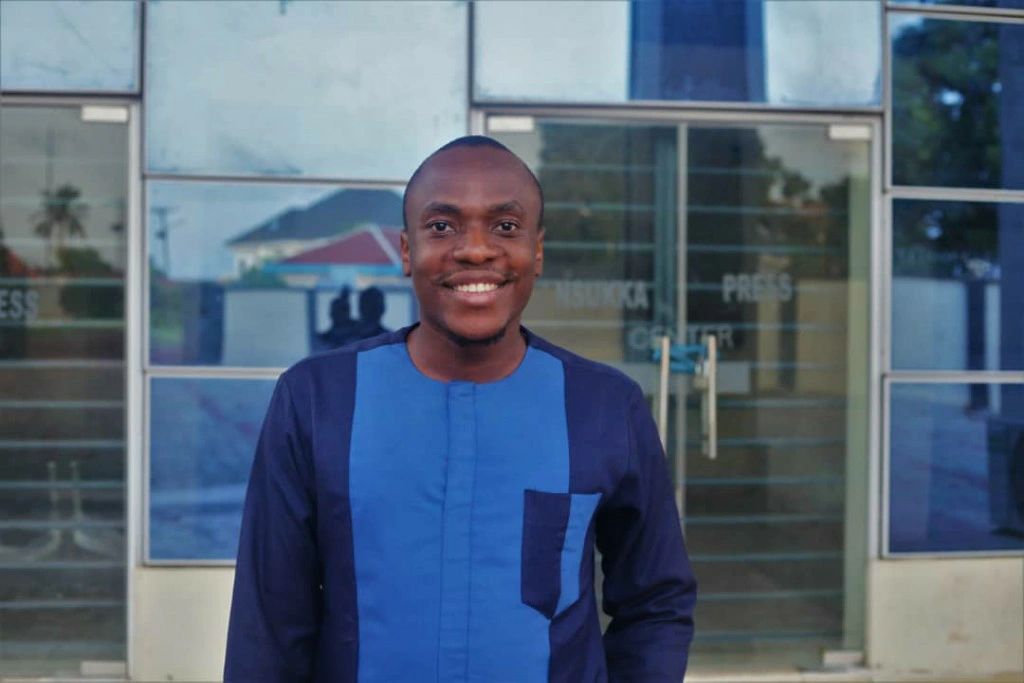
Growing up in a culture where physical health and financial stability are often the primary focus, Victor noticed a glaring neglect of mental well-being.
“Everyone talks about physical health and visits the doctor when their body malfunctions, financial health by engaging in production and distribution of goods and services to make ends meet, but nobody takes the health of the mind seriously around here. I see mental health as the mother of health, anything that goes on in the mind reverberates across every aspect of our lives to cripple it or to enhance it.”
Victor Uka
His awakening to the gravity of mental health came through his own struggle with depression and suicidal thoughts, sparked by academic difficulties.
“I personally experienced a mental health breakdown due to academic struggles. I battled depression and suicidal ideation for months which is what helped shape my passion for mental health concerns and for people battling the same issue.”
Victor Uka
These dark moments became turning points, revealing to him how the mind’s condition can either cripple or empower every other part of life. “I’ve seen the path, walked the path, and now carry the burden to help others navigate the path,” he shares.
Today, this burden has become a mission, a mission to ensure that no one has to walk the difficult road of mental distress alone. Victor’s story is of transformation, compassion, and purpose, laying the foundation for his work in mental health advocacy.
The Weight of Provision
For Victor Uka, the idea of being “the provider” carries a weight far heavier than most would expect, especially for someone who, by cultural standards, was never supposed to bear it.
As the youngest in a family of four, Victor grew up in a setting where the last-born is typically sheltered, expected to receive rather than give, to be cared for rather than to care. But life took a different turn. When his family faced a critical financial setback, all eyes turned, unexpectedly and unpreparedly, to him. “Nobody was buoyant except me,” he recalls. “I had to carry the entire weight almost alone. It was so heavy for little me with my meager resources.” Overnight, he became the one responsible not only for daily needs but also for the broader sustenance of the family.
This unplanned responsibility came at a cost. Mentally, Victor was consumed by constant anxiety, his mind racing with relentless calculations on how to make more money to keep the family afloat. Sleep patterns broke down. His health followed. Frequent visits to pharmacies and medical labs became the norm as stress manifested physically. Professionally, his work suffered, school demands, job tasks, and other obligations piled up, colliding with his responsibilities at home. Even socially, the burden left its mark.
“There was no more time for real bonding and unwinding, every call, meeting and engagement was so serious and required urgent attention. It wasn’t an easy time for me really” he says.
Every interaction became transactional, problem-solving, and urgent, far removed from the joy and ease of genuine connection.
The roots of this pressure were deeply cultural and familial. In Victor’s world, age brings expectations, whether or not one is ready, stability is presumed, and rarely questioned.
“In my context, expectations to provide basically comes from family especially when you have come of age and they feel it’s time for you to take responsibility so whether or not you are stable, responsibility is a must and most times the requisite understanding doesn’t accompany it.”
His generous nature made it worse; he took on more than he should, even when it drained him. His only flawed refuge? Feigning unavailability just to protect his mental well-being.
Guilt was a frequent companion. Failing to meet expectations left him feeling like he had fallen short, until a pivotal moment shifted his mindset. He recounts the sobering story of a top-performing employee who died from overwork. The very next day, the company paused only briefly before appointing a replacement and resuming business as usual.
“I heard the story of a young man who happened to the top performer in his organization. The story had it that he does as a result of the stress and hardwork of always delivering for the company and meeting up with deadlines and guess what?? The very next day while his corpse was still at the morgue the management and staff gathered together and observed a one minute silence for me him, appointed someone else is his office and work went on as though nobody left. So it dawned on me that the world will move on including family in the case of any eventuality so it is my responsibility to keep myself alive, do the little I can and leave the rest for later.”
Victor is still learning the delicate dance of provision and self-preservation. But progress is happening. He now divides his income carefully, keeping a portion exclusively for himself, a boundary he fiercely protects. And, most importantly, he is learning the power of a simple but difficult word: “No.”
“The first mindset that helped me was to break my income into percentages with a percentage for myself and myself alone and I never to use that portion of funds for anything else or anyone else. Another thing that helped me was also cultivating the ability to say ‘NO’ when it’s necessary realizing I can’t solve every problem because I am not God neither am I a magician.”
It’s a hard-earned lesson, but one that is slowly allowing Victor to breathe again, and to live not just for others, but for himself too.
The Power of Safe Spaces for Men
For Victor Uka, the meaning of a “safe space” can be captured in three simple words: peace of mind. To him, any person, environment, or community that offers this rare gift qualifies as a safe space. Sadly, he learned this not from abundance but from absence.
“Anything or anyone that guarantees me my peace of mind is my safe space.”
Victor Uka
Victor recalls a past relationship that daily robbed him of his peace. It was a friendship with intentions of marriage, but in hindsight, he thanks God the relationship never went that far.
“I have experienced what it feels like to be a place where my peace comes under attack everyday. One story worthy of mention here is a friend I once had, a lady, though I had intentions to move the friendship to marriage eventually but now I thank God that I didn’t make that mistake. My peace came under daily attack, there is no week we weren’t settling problems among ourselves, every little thing even the one that can be ignored would always be misunderstood and lead to a quarrel eventually. This affected my productivity grossly, affected my academics, my finances even my physical health. Then I learnt a serious lesson and what is that lesson, “friendship is by choice and not by force, when peace is no longer served at the table, you are free to walk out”. This single line has kept me sane over the years. So now the moment you pose as a threat to my peace of mind whether you are a place or you are a person, I call it quit.”
This truth became his anchor. Today, Victor makes no apologies for walking away from any person or place that threatens his peace of mind. It is his boundary, and he holds it firm.
But Victor didn’t just keep this wisdom to himself. He became intentional about creating safe spaces for others, particularly young people. While studying at the University of Nigeria, he joined the Golden Heart Foundation, an NGO focused on mentoring youth, helping them discover, develop, and deploy their full potential. Rising to serve as President of the campus chapter, Victor and his team transformed the organization’s reach.
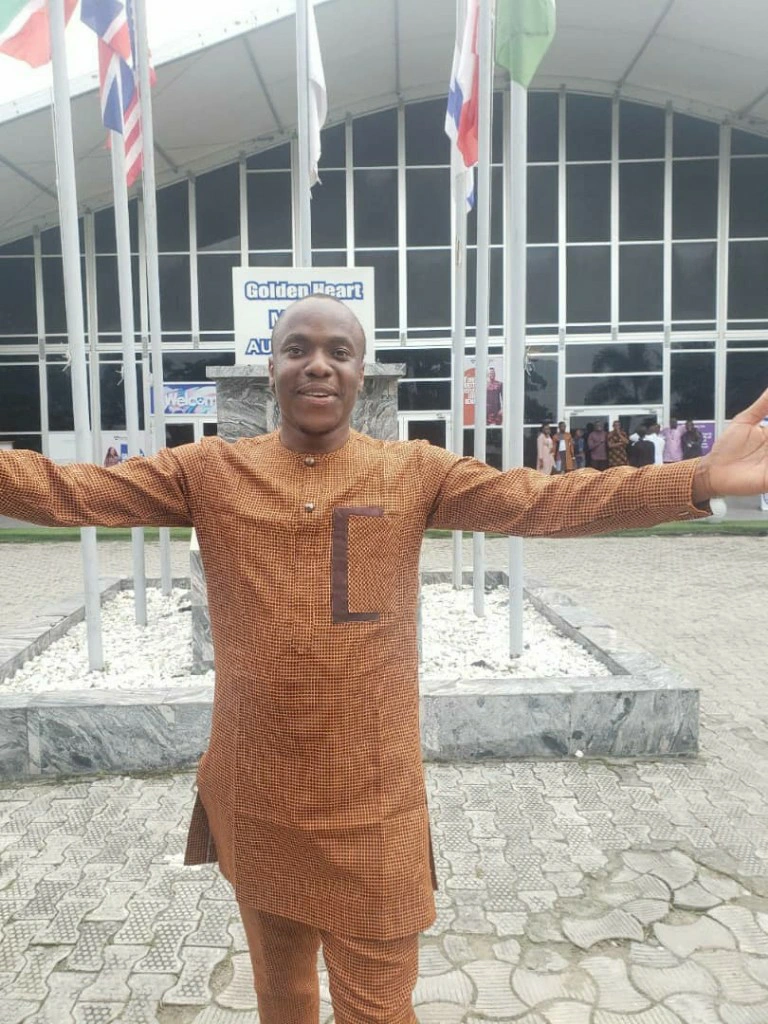
They ran mental health awareness campaigns, provided mentorship, and built a culture of accountability. Most importantly, they built an environment where young people could be honest, about failure, doubt, fear, and dreams, without fear of judgment.
“We made it a place where their background or past mistakes didn’t matter,” he says. “They were free to open up, receive help, and grow.”
Though no longer President, Victor’s mission continues. Now he works to plant new chapters of the foundation in secondary schools and universities across his region.
“This was really a fulfilling adventure for me. I no longer serve as the President of that branch but I’m now involved in a mission work to plant branches of the organization across various campuses and secondary schools in my region and watching these young people literally transform, grow, learn and get better has given me a fulfillment that nothing else in this world could give to me.”
Victor Uka
Each time he sees a young man or woman grow, heal, and rise from brokenness, he finds a fulfillment that no other achievement can replace.
Why are such safe spaces so rare for men, especially? Victor has a painful answer: to be male, in many societies, is to be denied softness.
“There is a common belief that men don’t cry, the moment as a man you should any sign of weakness or emotions the next thing you hear is “ be a man” or you hear “ man up”. This is the major reason why emotional safety among men is overlooked, nobody even expects a man to be weak, cry, be down or show any sign of lack of strength.”
This cultural commandment teaches men to bury pain, to silence vulnerability, to pretend strength even when breaking inside. But the consequences of this neglect are devastating.
Victor shares the haunting story of a young man he once counseled.
“A young man in one of my counseling sessions opened up to me. According to him he had siblings that his parents obviously preferred above him and treated with favoritism. When be tried to talk about this, he was shouted out, shut down literally and treated as an outcast by family. So he turned to drugs, rape, and other vices as a way of distracting himself and drowning those pains caused by emotional neglect. As at the time I met him he was already suicidal. This is just one case out of the thousands of cases in my region.”
Men are human, too. They falter. They cry. They need help. Yet societal expectations continue to suffocate them in silence, pushing some to destruction.
“Men are humans too. Societal expectations is driving some of them crazy and it feels as though nobody understands them when they fail, make mistakes or are weak.”
Victor Uka
For Victor, this reality fuels his resolve: “This must end in our generation.”
And through every safe space he builds, every young life he touches, Victor is quietly helping that change unfold.
Redefining Masculinity & the Future for Men’s Mental Health
In the evolving conversation around mental health, one area still burdened by silence and stigma is the emotional well-being of men. Victor, a trained counselor and psychologist, is leading a quiet revolution, challenging beliefs about masculinity, vulnerability, and what it means to be emotionally whole as a man in today’s world.
Creating Safe Spaces Through Shared Vulnerability
Victor believes promoting emotional openness begins with radical honesty. “I share my own story first,” he says. “It establishes an immediate connection. I let the men know: I’ve been where they are. I’ve struggled. I’ve made mistakes. But I’ve also learned, and I want them to benefit from those lessons without having to repeat my missteps.”
This kind of disclosure is rare among men, where societal conditioning often discourages openness. But Victor believes vulnerability is the very foundation of trust. His professional training reinforces this. As a psychologist, confidentiality is a code that guides him.
“I also assure everyone in the room that whatever they share with me stays and ends with me, I won’t share it with anyone else except in a situation where I have to refer cases to a senior colleague and this will be done with express permission from the person.”
But confidentiality alone is not enough. In Victor’s sessions, every participant is reminded that personal stories are sacred. Ridicule, sarcasm, or dismissiveness are not tolerated. “We honor each other’s pain and truth. This creates an atmosphere where emotional safety can flourish, a space where men can finally breathe out what they’ve long held in.”

Rethinking Masculinity: What Needs to Change
Victor dreams of a different model of manhood, one where connection, not competition, defines masculinity. He challenges the notion that male friendships must orbit around alcohol, sports, or status. Instead, he envisions circles of men who can speak truthfully, confess fears, admit failures, and find strength, not shame, in emotional honesty.
“Men let’s learn to build communities, not just for drinking, watching sports or fundraising but for deep emotional connection and openness. Let’s learn to unburden our hearts and minds by letting others trusted men in into what is really going on with us.”
Victor Uka
His message to men is simple but radical:
- Cry without shame. Tears do not weaken a man; even Christ wept, and His divinity was not diminished.
- Fail without fear. Failure only destroys when a man refuses to rise again. Falling is human; standing up is heroic.
- Wait without hurry. Success is no race. Each life runs its own course. “Stop the deadly comparison,” he urges. “Find your purpose. Stay in your lane.”
“Men Let’s learn that success takes time and patience, you won’t get rich over night, everyone’s life follows a course that is different from the next person so stop the comparison, discover your unique purpose and stay on your track.”
Victor Uka
Victor’s call extends beyond men to the women and communities around them.
“Then for the women and the community around the men please enough of the pressure and the unrealistic expectations towards the men in your lives. Understand with us when we say we are weak, when we say we can’t afford this now, stand by us and encourage us instead of comparing us with other men. This will really go a long way.”
Victor Uka
Victor Uka’s Vision: A Thousand Clubs, A Thousand Safe Havens
He dreams of pursuing a Master’s and PhD abroad in Clinical Psychology, sharpening his skills in therapy and counseling, so he can serve this cause even better. But whether in a university classroom or a village gathering hall, his goal remains the same: to champion men’s mental health, spread awareness, influence policymakers, and build a culture where men can be fully human, strong, vulnerable, healing, and whole.
Victor’s vision is practical and grounded. With the Golden Heart Foundation, he plans to plant 1,000 men’s mental health clubs across Nigeria and Sub-Saharan Africa within the next five years. These clubs will welcome men of all ages, teenagers, young adults, and working men, offering safe spaces for honest conversation, emotional growth, and healing.
“I already have a team of fifty vibrant young men who share this dream. They will be trained and eventually deployed soon to lead these clubs in cities and towns across my country Nigeria. This movement will touch lives in ways we’ve never seen before.”
Victor Uka
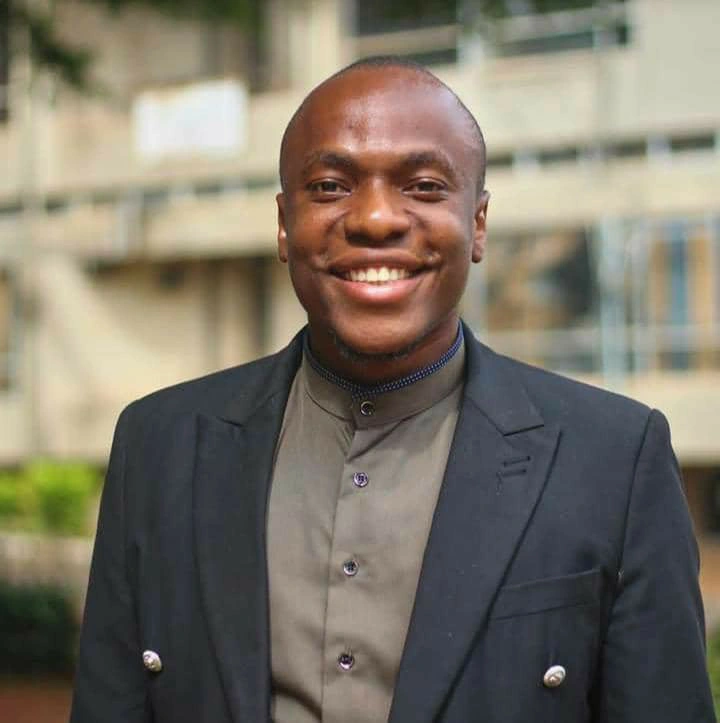
By sharing his own story with courage and honesty, Victor lights the way for other men to rise, strong not in silence, but in vulnerability; not in hiding, but in healing. May many more men find the freedom to feel, the strength to seek help, and the grace to grow. For in the end, beneath all roles and expectations, we are all simply human, longing to be seen, heard, and whole.

- The Rise of Suicide Posts in Digital Spaces Reflects a Growing Mental Health Crisis - February 22, 2026
- How Kenya’s Silent Lifestyle Disease Crisis Is Reshaping Public Health - February 12, 2026
- The Rise of Lifestyle Diseases Emerges as a Crisis Among Kenya’s Youth - February 9, 2026


