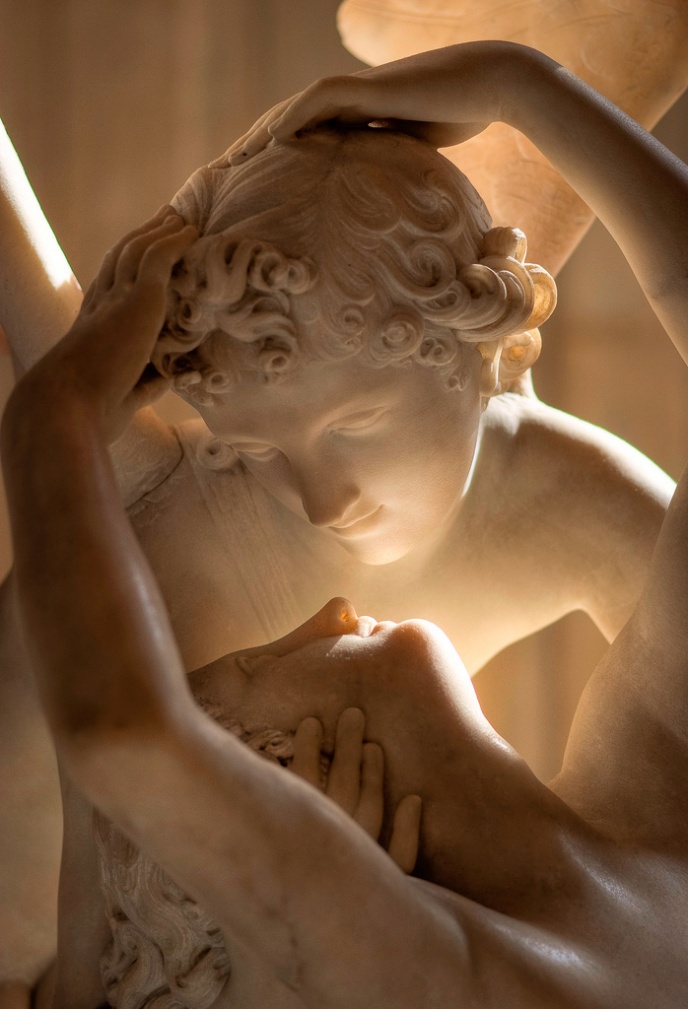
In the golden age of ancient Greece, when gods walked among mortals and mortals could ascend to divine heights, there lived a princess whose beauty was so extraordinary that it threatened to eclipse the very goddess of love herself. This is the story of Psyche, whose name means “soul,” and her tumultuous journey to win the heart of Eros, the god of passionate love.
Psyche was the youngest of three daughters born to a king whose realm flourished in an unnamed corner of the ancient world. While her elder sisters possessed conventional beauty that attracted suitors from neighboring kingdoms, Psyche’s loveliness transcended mortal understanding. Her skin seemed to glow with an inner light, her eyes held depths that spoke of wisdom beyond her years, and her grace moved poets to weep and sculptors to abandon their marble in despair, knowing they could never capture such perfection.
Word of Psyche’s beauty spread like wildfire across the Mediterranean. Pilgrims began arriving at her father’s palace, not to worship at the temples of Venus, but to catch a glimpse of the mortal maiden who surpassed the goddess in beauty. They would fall to their knees before her, offering prayers and sacrifices as if she were divine. The temples of Venus, once crowded with devoted worshippers, grew empty and cold. Psyche found no joy in this adoration. While her sisters married and found happiness, she remained alone, feared rather than loved by mortal men who deemed her too perfect to approach. She wandered her father’s palace like a beautiful ghost, longing for genuine companionship and the simple pleasure of being loved for her soul rather than her appearance.
High atop Mount Olympus, Venus—known to the Greeks as Aphrodite—watched this development with growing fury. The goddess of love and beauty, born from sea foam and desire itself, had always been the pinnacle of feminine perfection. Her golden hair caught sunlight like spun silk, her laughter could inspire both love and war, and her very presence made flowers bloom and hearts race. She was worshipped across the known world, her temples filled with offerings from those seeking her favor in matters of the heart.
Now, this mortal girl dared to steal her worshippers away. Venus’s rage burned like the heart of a star. She summoned her son Eros—called Cupid by the Romans—the winged god of love whose golden arrows could inspire the deepest passion and whose leaden arrows could extinguish desire entirely.
Eros was no cherubic child, despite how later artists would depict him. He was a young man of divine beauty, with wings that shimmered like oil on water and eyes that held the power to see into the deepest desires of any heart. His mother had always been able to command him, using his arrows to punish her enemies and reward her favorites. He was both feared and revered, for love in his hands was a weapon as much as a blessing.
“My son,” Venus commanded, her voice dripping with honeyed venom, “this mortal girl has made a mockery of my divine nature. I want you to make her fall in love with the most wretched creature you can find—a monster so hideous that even looking upon him will be torment. Let her beauty serve only to increase her suffering.”

Meanwhile, Psyche’s father grew increasingly troubled by his daughter’s fate. Despite her legendary beauty, no man dared court her, fearing they were unworthy. The king consulted the Oracle of Apollo at Delphi, hoping for guidance on finding his daughter a husband.
The Oracle’s response chilled him to the bone: “The maiden is destined for no mortal husband. She must be taken to the highest peak of the mountain, adorned as if for death, and left there to await her fate. A serpent shall come for her, a creature feared even by the gods themselves.”
The entire kingdom mourned as if for Psyche’s death. Dressed in funeral garments instead of wedding robes, she was led in a procession to the mountain peak. Her parents wept as they left her alone on the windswept heights, believing they would never see their beloved daughter again.
But Psyche, though frightened, felt a strange sense of relief. At last, her isolation would end, even if it meant death. She stood on the precipice, watching the sun set and waiting for whatever fate the gods had decreed.
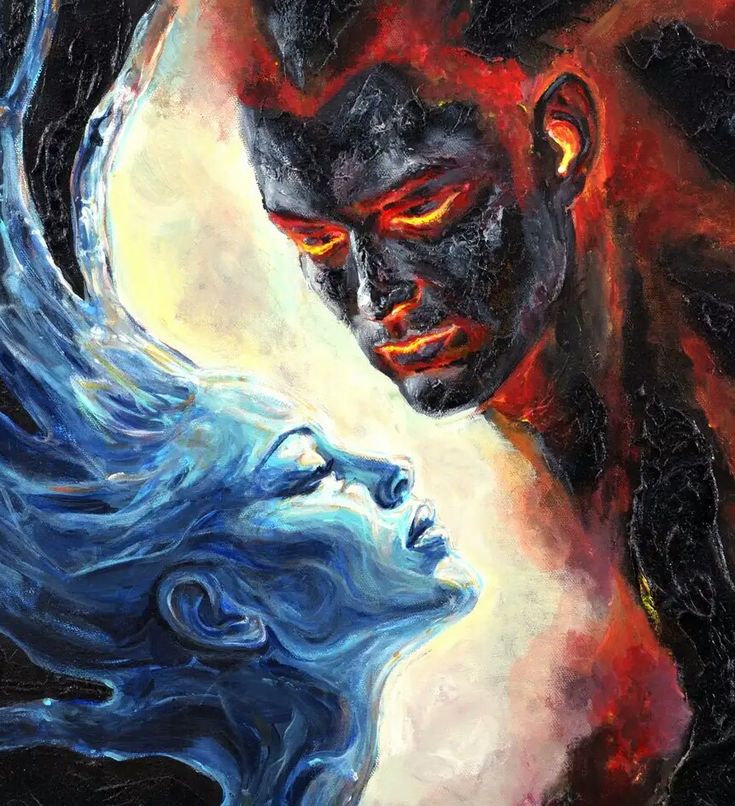
Instead of a monster, gentle winds lifted Psyche from the mountain. Zephyrus, the west wind, had been commanded by a power greater than Venus to carry the maiden safely to a hidden valley. There, she discovered a palace that defied mortal imagination—walls of gold and silver, floors of precious gems, and gardens where every flower sang with the voices of nightingales.
Invisible servants attended to her every need. Baths were drawn without hands to fill them, tables set themselves with delicacies from across the world, and music played from instruments that floated in the air. At night, when darkness cloaked the palace, her mysterious husband came to her.
His voice was like warm honey, his touch gentle as morning dew. He spoke to her of love and longing, of the loneliness he had known, and of how her presence had transformed his existence. But he made one absolute condition: she must never attempt to see his face. If she ever looked upon him, he warned, their happiness would be destroyed forever.

For months, Psyche lived in this paradise. By night, she knew love beyond mortal comprehension. Her husband’s passion was matched by his tenderness, his desire tempered by genuine care for her happiness. By day, she wandered the magical palace and gardens, but loneliness crept into her heart. She missed her sisters, her parents, and the simple pleasure of human conversation during daylight hours.
When Psyche begged to see her sisters, her husband reluctantly agreed, warning her to be cautious. Zephyrus brought her sisters to the valley, and their reaction was immediate and predictable—jealousy mixed with amazement at Psyche’s obvious prosperity and happiness.
“Who is this husband you’ve never seen?” they asked with false concern. “What if he truly is the monster the Oracle predicted? What if he’s simply fattening you up for some terrible purpose? Only demons and monsters hide their true forms.”
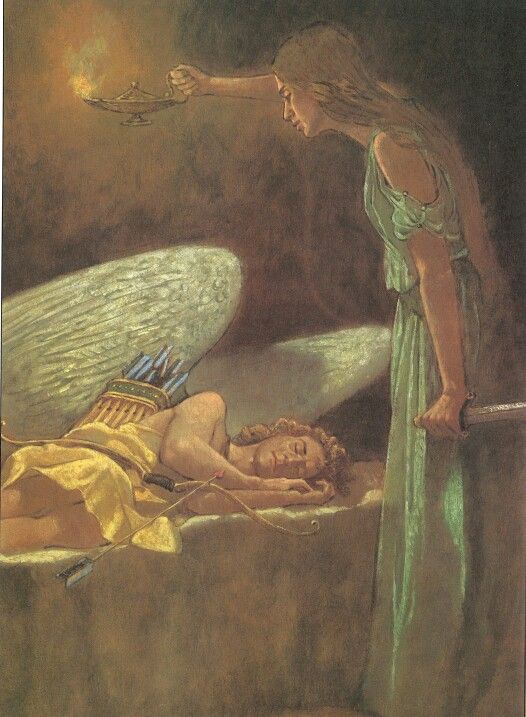
Their poisonous words found fertile ground in Psyche’s own doubts. Despite the love she felt in her husband’s embrace, despite his gentle words and passionate devotion, she began to wonder about his true nature. Her sisters provided her with a lamp and a sharp knife, urging her to look upon him while he slept and, if he proved to be a monster, to strike him down.
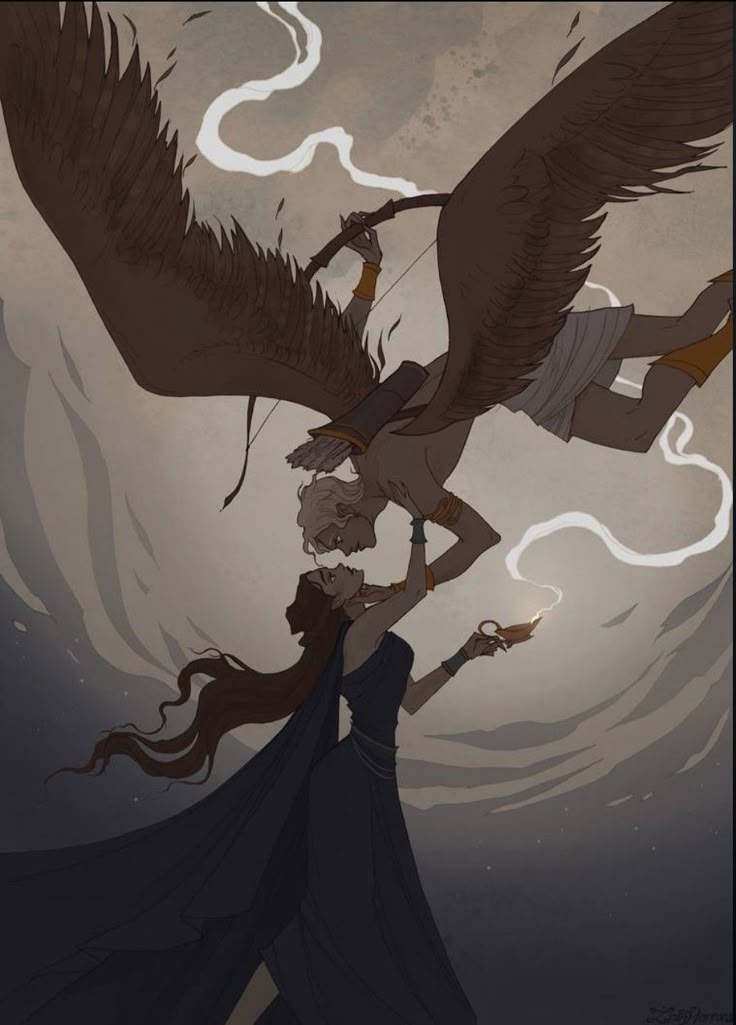
That night, as her husband slept peacefully beside her, Psyche lit the lamp with trembling hands. The golden light revealed not a monster, but the most beautiful being she had ever beheld. Eros lay before her, his wings folded against his perfect form, his face serene in sleep. Golden curls framed features that spoke of divine heritage, and even in rest, his presence radiated power and beauty that made her mortal loveliness seem pale by comparison.
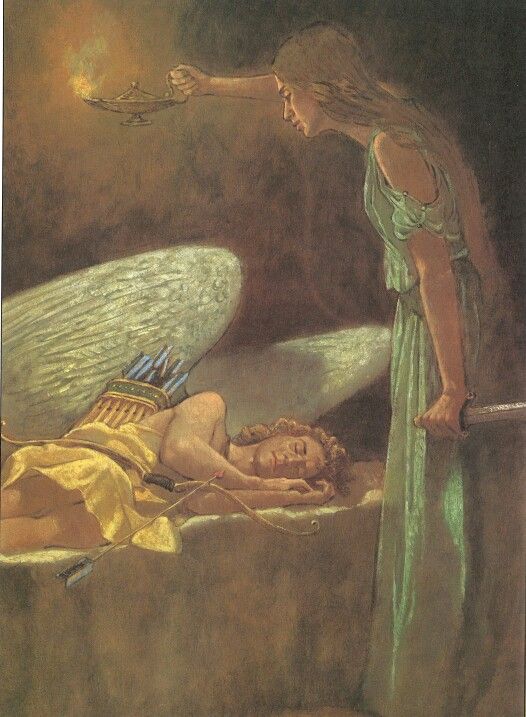
Psyche’s heart filled with wonder and terrible regret. This was her husband—not just any god, but the son of Venus herself, the deity who controlled love throughout the cosmos. She leaned closer, desperate to memorize every perfect detail, but a drop of hot oil from her lamp fell upon his shoulder.
Eros awoke instantly, his eyes reflecting pain beyond the physical wound. “Psyche,” he whispered, his voice breaking with anguish, “love cannot survive without trust. You have chosen doubt over faith, suspicion over love.”
With those words, he spread his magnificent wings and vanished into the night, taking with him the palace, the gardens, and all trace of the paradise they had shared.
Psyche found herself alone on a barren plain, the magical palace nothing but a dream. Desperate to win back her love, she began a quest that would take her across the known world. She searched every temple, every sacred grove, begging the gods for help, but all feared Venus’s wrath too much to assist her.
Finally, Psyche made the ultimate decision—she would go directly to Venus and submit herself to the goddess’s mercy. She climbed to Venus’s sacred temple on Mount Olympus, where the goddess received her with cold fury.
“So,” Venus sneered, her beauty now terrible in its perfection, “the little mortal who dared steal my worshippers now comes crawling for help. Very well. If you truly love my son, you’ll prove it by completing tasks that would challenge even the gods themselves.”
The first trial seemed impossible: Venus scattered an enormous pile of mixed grains—wheat, barley, millet, and beans—across a vast field. “Sort these before dawn,” she commanded, “or face my eternal wrath.”
As Psyche stared at the impossible task, help came from an unexpected source. A colony of ants, moved by pity for her plight, worked through the night to separate the grains into neat piles. Their tiny bodies moved like a perfectly coordinated army, and by sunrise, the task was complete.
For the second trial, Venus demanded the golden fleece of the sun-sheep that grazed by a dangerous river. These creatures were not ordinary animals but beings of living fire whose wool could burn flesh from bone. A wise river reed whispered advice to Psyche: wait until the sheep dozed in the afternoon heat, then gather the fleece that caught on the thorny bushes where they passed.
The third trial nearly broke Psyche’s spirit. She was commanded to climb to the peak of the highest mountain and fill a crystal goblet with water from the Styx, the river that flowed through the underworld. The mountain was guarded by dragons, and the river itself was surrounded by creatures that killed anyone who approached. Just as despair overwhelmed her, Zeus’s eagle swooped down, took the goblet in its mighty talons, and returned with the deadly water.
The final trial was the most perilous of all. Venus handed Psyche an ornate box and commanded her to descend into the underworld itself to petition Persephone, queen of the dead, for a portion of her divine beauty.
“Tell her,” Venus said with a cruel smile, “that I have grown haggard from caring for my lovesick son and require her aid to restore my appearance.”
The journey to Hades was fraught with dangers that would have destroyed any normal mortal. Psyche had to navigate past Cerberus, the three-headed hound of hell, by feeding him honey cakes. She crossed the river Styx by paying the ferryman Charon with coins placed under her tongue. She resisted the pleas of the dead who begged for her assistance, knowing that any deviation from her path would trap her forever in the underworld.
Persephone, moved by Psyche’s courage and genuine love, granted her request and filled the box with a portion of divine beauty. But as Psyche ascended back to the world of the living, curiosity and vanity overcame her wisdom. Thinking that a touch of divine beauty might help her win back Eros, she opened the box. Instead of beauty, the box contained the sleep of death. Psyche collapsed, falling into a slumber so deep it seemed like death itself.

Meanwhile, Eros had recovered from his wound, but not from his heartbreak. He had watched Psyche’s trials from afar, his love for her growing stronger with each act of courage, each proof of her devotion. When he saw her fall into deathly sleep, he could bear separation no longer. Flying on swift wings, he reached Psyche’s motionless form and gently wiped the sleep from her eyes, returning it to the box. His kiss awakened her, and his tears of joy fell like rain on her face.
“My beloved,” he whispered, “you have proven that love can indeed conquer all—even the wrath of the gods.”
Together, they ascended to Mount Olympus, where Eros pleaded with Zeus himself for permission to marry Psyche. The king of the gods, moved by their devotion and perhaps weary of Venus’s vindictive schemes, not only granted permission but bestowed immortality upon Psyche with a cup of ambrosia.

“Drink,” Zeus commanded gently, “and become what you have always been in spirit—a goddess worthy of the god you love.”
The wedding of Eros and Psyche became the stuff of legend. All the gods attended, their earlier reluctance forgotten in the face of Zeus’s approval. Venus herself, seeing her son’s genuine happiness and recognizing that Psyche’s beauty now served love rather than rivalry, blessed the union. Apollo played his golden lyre, the Muses sang celestial harmonies, and the Graces danced as Psyche took her place among the immortals. She was given dominion over the human soul and its journey toward divine love, becoming the goddess who helps mortals understand that true love requires not just passion, but trust, sacrifice, and the willingness to grow beyond one’s mortal limitations.
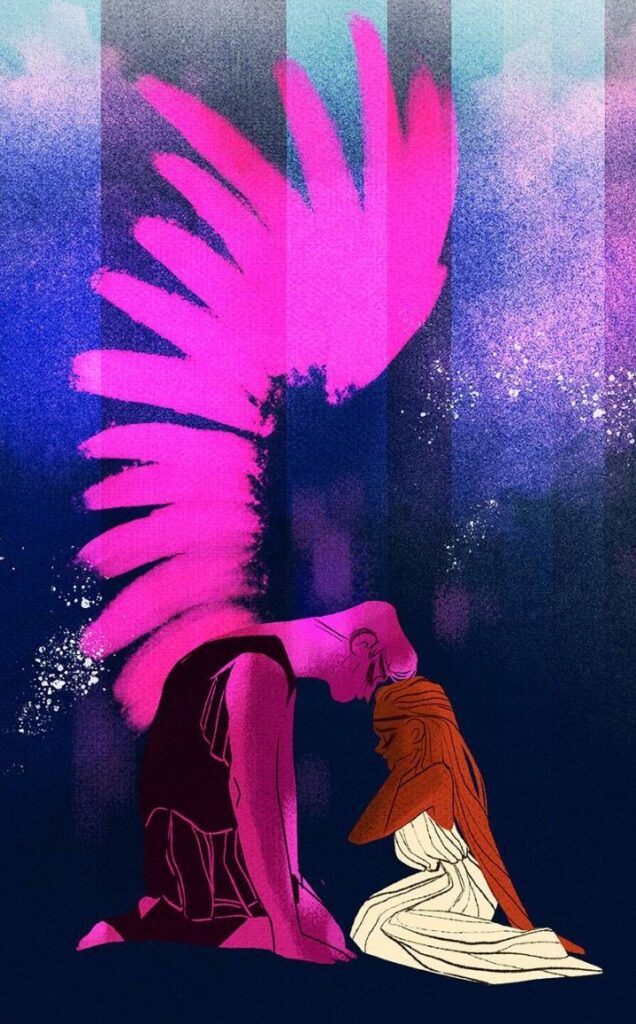
Their daughter, when she was born, was named Voluptas-the goddess of pleasure-but not the shallow pleasure of mere desire. Rather, she represented the deep joy that comes when soul and love unite in perfect harmony.
The story of Eros and Psyche became a sacred teaching, passed down through generations as a testament to love’s transformative power. It speaks to the truth that genuine love requires trust, that curiosity unchecked can destroy happiness, but that true devotion can overcome even divine opposition.
Psyche’s journey from beautiful princess to goddess represents the soul’s evolution from mortal concerns to divine understanding. Her trials show that love worthy of the gods demands courage, perseverance, and the willingness to face one’s deepest fears.
In the end, their love story reminds us that the greatest loves are those that transform both lovers, lifting them beyond what they were individually to become something greater together. For in their eternal embrace, Eros and Psyche prove that when the god of love truly loves, and when the soul learns to trust completely, even death itself cannot part them, and paradise becomes not a place they visit, but a reality they create together for all eternity.

- Must-Watch Movies Releasing in 2026: Your Complete Enterta1nment Calendar. - February 11, 2026
- World Tropical Diseases Day: The Silent Suffer1ng of 1.6b Lives. - January 31, 2026
- The El Molo Tribe: Kenya’s Last Fisher People Fight1ng for Survival on Lake Turkana’s Shores - January 30, 2026