The ‘Sick-Role’ in online communities shapes how individuals perceive their health journeys. In an era where digital spaces serve as lifelines for many struggling with health conditions, online support groups have become a beacon of hope. Take, for instance, the case of a young woman battling chronic anxiety who found solace in a thriving Facebook community. Through shared experiences, guided peer support, and evidence-based coping strategies, she learned to cope with her condition more effectively.
Similarly, countless individuals with depression, PTSD, and bipolar disorder have turned to these platforms not only for emotional support but also for actionable ways to manage their mental health. Research highlights the effectiveness of such groups in promoting safe communities, reducing isolation, and providing access to coping mechanisms that might otherwise be unavailable.
In this article, I will focus specifically on the impact of online communities in the realm of mental health illnesses. Social media has dramatically reshaped mental health discourse, creating spaces where individuals can openly discuss their struggles without stigma. Facebook, in particular, has become home to thousands of private and public mental health support groups, extending further to Reddit forums, Twitter threads, Discord servers, and specialized apps like TalkLife. The ability to share one’s story, receive validation, and connect with others who “get it” has made these communities indispensable for many.
However, these spaces, while invaluable, also have a potential downside, they can reinforce a static mental health identity. The same validation and belonging that foster support can sometimes contribute to an individual’s prolonged identification with their illness. Instead of seeing mental illness as a challenge to be managed and, in some cases, overcome, individuals may internalize it as an immutable part of their identity.

This phenomenon aligns with the concept of “sick-role” reinforcement, a sociological theory first introduced by Talcott Parsons. In the context of digital mental health discourse, it refers to the way online communities might inadvertently encourage individuals to remain within the framework of their illness, receiving social validation for their symptoms rather than their recovery efforts. While these spaces promote awareness and support, they may also create an echo chamber where symptoms and struggles become the central, unchanging narrative of one’s identity, rather than a stage in a journey toward healing.
It’s important to recognize that online mental health spaces can be both a source of strength and a potential trap. They offer a sense of belonging, a place where people feel seen and understood. But at the same time, they can unintentionally keep individuals stuck in their struggles, making it harder to see a path forward. The challenge, then, is to create spaces that do more than just validate pain, they should also encourage growth, and the belief that healing is possible.
The challenge isn’t to eliminate online mental health spaces but to shape them in ways that balance validation with empowerment. Communities that highlight recovery stories, promote self-efficacy, and encourage small steps forward can help members see their mental health journey as something fluid rather than fixed.
The Psychology of the “Sick-Role” in Digital Mental Health Spaces
The idea of the “sick-role”, first introduced by sociologist Talcott Parsons, describes the set of societal expectations assigned to individuals who are ill. According to Parsons, when someone is sick, they are granted certain allowances, such as exemption from responsibilities, while also being expected to seek treatment and work towards recovery. However, in mental health spaces, particularly online, this concept takes on a new dimension. Instead of being a temporary state, the “sick-role” can become a fixed identity, one that is reinforced through self-perception and social validation.
In online mental health communities, individuals often receive validation and support for their struggles, which can be incredibly comforting. However, this validation can also lead to an unintended effect: the more someone identifies with their illness, the harder it may become to imagine a life beyond it.
For example, phrases like “I have depression” can gradually shift to “I am depressed,” or even “I will always be this way.” This subtle change in language reflects a deeper psychological shift where a diagnosis becomes the defining characteristic of one’s identity. Over time, this identity may feel safer than the uncertainty of change, leading to identity fusion, a psychological concept where an individual’s sense of self becomes inseparable from a particular group, belief, or condition.
The Power of Repeated Narratives
When people engage with the same narratives repeatedly, whether their own or others’, these narratives become self-reinforcing scripts. If someone frequently hears (or shares) stories about hopelessness, relapse, and struggle, they may start to internalize the idea that recovery is impossible or that they will always be defined by their illness. Cognitive psychology refers to this as confirmation bias, the tendency to seek and interpret information in a way that supports existing beliefs. In mental health spaces, this can mean unconsciously filtering out stories of recovery while focusing on narratives that reinforce suffering.
Additionally, the co-rumination effect, a psychological concept where people excessively discuss and dwell on problems with others, can deepen this reinforcement. Co-rumination is defined as the tendency to excessively talk about and revisit a problem over and over again; often dwelling on the negative emotions and encouraging further problem talk, but not problem solving. While opening up about struggles is just as important for important for support, repeatedly dwelling on painful emotions without seeking solutions can deepen distress rather than bring relief.
Support vs. Stagnation
Online mental health communities have become safe havens for individuals struggling with their mental well-being. These spaces offer emotional support, crisis management, and a sense of shared understanding that can be difficult to find offline. People who feel isolated in their struggles can connect with others who truly “get it,” reducing loneliness and validating their experiences. Research has shown that peer support, especially in digital spaces, can help individuals cope better by providing encouragement, practical coping strategies, and a non-judgmental environment where they can express themselves freely. In cases of acute distress, some online communities even serve as lifelines, directing individuals to crisis resources or professional help when needed.
However, while these spaces provide comfort, they can also contribute to stagnation if they normalize helplessness and discourage recovery efforts. When struggling individuals repeatedly engage in conversations where suffering is the primary focus, it can reinforce the belief that their condition is permanent and unchangeable. This is where the concept of learned helplessness, a psychological phenomenon where people come to believe they have no control over their circumstances, comes into play.
Studies by Martin Seligman suggest that when people consistently encounter messages reinforcing their inability to improve, they may stop trying altogether. In some online spaces, members who discuss therapy, self-improvement, or alternative coping methods may even face resistance, with others arguing that their struggles are too severe to be helped, further discouraging proactive steps toward recovery.
Real-world studies have highlighted how mental health labels influence self-perception and coping behaviors. For instance, research on diagnostic labeling shows that while having a diagnosis can be validating, it can also lead to identity fixation, where individuals feel defined by their illness rather than seeing it as something they can manage. A systematic scoping review published in Frontiers in Public Health in 2021 outlines various consequences of diagnostic labeling from multiple perspectives, including the individual, family, healthcare professionals, and the community.
Platforms like Reddit and Facebook are filled with personal testimonies from individuals who initially found support in mental health communities but later realized that being immersed in illness-focused narratives kept them stuck. Some report that their online interactions made them feel like leaving their “sick-role” would mean losing their identity and community, reinforcing a cycle of self-identification with their condition.
How Platforms Shape Mental Health Identity
Social media platforms utilize algorithms designed to maximize user engagement by curating content that aligns with individual behaviors and preferences. While this personalization can enhance user experience, it often results in the amplification of specific mental health content, reinforcing certain narratives.
For instance, TikTok’s algorithm has been found to promote misleading information about ADHD, potentially leading to self-diagnosis and the misinterpretation of normal behaviors as symptoms of the disorder. A recent study, published on March 19, 2025 in The New York Times and featured in the journal PLOS One, highlighted the extent of misinformation on the platform. Researchers found that fewer than 50% of the claims made in some of the most popular ADHD-related videos on TikTok aligned with established diagnostic criteria or professional treatment recommendations. Alarmingly, even individuals who had already been diagnosed with ADHD struggled to differentiate between accurate medical information and misleading content, raising concerns about the platform’s role in shaping public perceptions of the disorder.
Constant exposure to content related to depression or anxiety can significantly influence an individual’s self-concept and expectations. A study published in BMC Psychiatry indicates that self-concept mediates the relationship between childhood traumatic experiences and adolescent depression, suggesting that negative self-perception can exacerbate depressive symptoms. When users are continually exposed to content highlighting mental health struggles without corresponding narratives of coping or recovery, they may internalize these issues as central to their identity, potentially hindering personal growth.
Rethinking Online Support for Mental Wellness
Online mental health communities serve as crucial spaces for individuals to share experiences, seek support, and find validation in their struggles. While these platforms provide comfort and solidarity, they must also promote growth and self-empowerment. Striking a balance between offering validation and encouraging personal growth ensures that individuals do not become overly identified with their conditions but instead build the confidence and skills needed to manage life beyond their mental health challenges.
To cultivate resilience within online mental health spaces, consider the following approaches:
- Encourage Diverse Narratives: Highlight stories of recovery and personal growth to balance discussions around struggles. This can inspire hope and motivate members toward proactive coping strategies.
- Facilitate Skill-Building Workshops: Offer sessions on stress management, mindfulness, and other coping mechanisms. Equipping members with practical tools can enhance their ability to cope up with challenges.
- Promote Offline Engagement: Encourage activities that involve real-world interactions and hobbies, helping individuals build a well-rounded identity beyond their mental health condition.
Spotlight on Christine Ombima and Stand Out for Mental Health
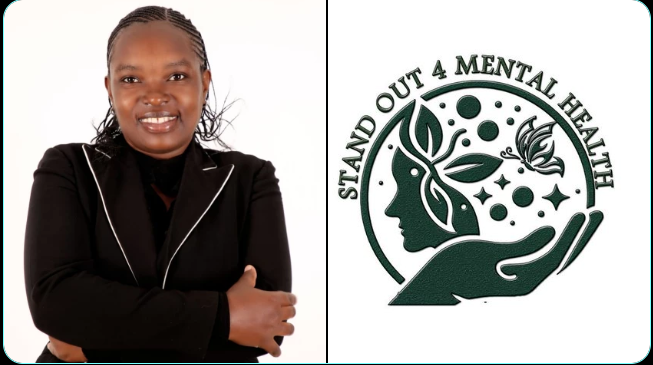
An exemplary case of transitioning from illness identity to self-empowerment is Christine Ombima, a Kenyan social worker and mental health advocate. Diagnosed with bipolar disorder in 2015, Christine transformed her personal challenges into a mission to support others facing similar struggles.
In August 2016, she founded Stand Out for Mental Health, an organization dedicated to mental health awareness through creative arts like dance, art, and fashion. The initiative also established peer-to-peer support groups, providing safe spaces for individuals to connect and share experiences.
Christine and her advocacy team actively share success stories, educational materials, and discussions on hobbies or interests unrelated to mental health. This diversification helps prevent over-identification with one’s condition and promotes peer-to-peer support, allowing individuals to connect on various aspects of life beyond their mental health struggles. You can connect with them through their social platform links here: LinkedIn, Facebook, X and Instagram.
Christine does it differently, she ensures that her mental wellness support groups have adequate counselors and professionals within the circle to safeguard the well-being of community members. By integrating trained professionals into the support system, she minimized risks associated with peer-led mental health discussions, ensuring that no negative consequences such as negative advices arose from online interactions.
Beyond online engagement, Christine promotes offline interaction to help individuals cultivate a well-rounded identity outside of their mental health journey. She runs a program called Tutazidi Hangouts, an initiative that organizes outdoor events and team-building activities. These gatherings create opportunities for individuals to form meaningful social connections, explore new hobbies, and reinforce a sense of community beyond virtual spaces.
Christine often reminds others that a diagnosis does not define a person.
“My diagnosis is not my identity, it’s more than a diagnosis. Bipolar diagnosis isn’t a death sentence; it doesn’t define me.”
Christine Ombima, CEO and Founder, Stand Out for Mental Health
To maintain a healthy balance between validation and resilience in online mental health communities, consider implementing the following strategies:
- Cognitive Reframing: Encourage members to shift perspectives by focusing on strengths and achievements, fostering a more empowering self-view.
- Diverse Content Consumption: Promote engagement with a variety of content, including success stories, educational materials, and discussions on hobbies or interests unrelated to mental health. This diversification helps prevent over-identification with one’s condition.
- Structured Moderation: Implement guidelines that balance supportive discussions of challenges with conversations emphasizing solutions, progress, and personal development. Moderators can guide dialogues to ensure a constructive and uplifting environment.
Finding a New Digital Mental Wellness Narrative
Online mental health communities remain invaluable sources of support, validation, and connection, offering solace to those navigating difficult emotions. However, it is important to acknowledge the risk of identity fixation, where individuals begin to see themselves solely through the lens of their diagnosis. While acknowledging struggles is important, these spaces should also empower individuals to move forward, promote growth and recovery rather than reinforcing a static self-perception rooted in illness.
To create a more balanced digital mental wellness landscape, platforms should actively encourage both acceptance and personal agency. This means promoting narratives of healing, integrating mental health education with solution-oriented discussions, and ensuring that recovery stories receive as much visibility as struggle-based content. Social media algorithms can be leveraged to highlight coping strategies, therapy insights, and success stories, counteracting the echo chamber effect that often amplifies suffering over solutions. Additionally, peer support groups can be designed to celebrate progress, ensuring that members feel encouraged to take steps toward well-being rather than remaining stuck in cycles of distress.
Reshaping digital mental health spaces requires collective effort. As users, we can be mindful of the content we consume and share, engaging in conversations that validate struggles while also embracing the possibility of change. As content creators and platform developers, we can advocate for healthier engagement models, pushing for community guidelines and algorithms that promote a holistic view of mental wellness. The question we must all ask ourselves is: How can we reshape digital spaces to support mental wellness without reinforcing limiting identities? The answer lies in building a culture of balance, one that acknowledges pain but champions healing.

- The Rise of Suicide Posts in Digital Spaces Reflects a Growing Mental Health Crisis - February 22, 2026
- How Kenya’s Silent Lifestyle Disease Crisis Is Reshaping Public Health - February 12, 2026
- The Rise of Lifestyle Diseases Emerges as a Crisis Among Kenya’s Youth - February 9, 2026