“Motherhood changed everything, not just my schedule, but the way I see the world, the way I hold space for others, and the way I care for myself.” — Sylvia Beatrice Wairimu
Meet Sylvia Beatrice Wairimu, a woman of many titles, all carried with grace and conviction. She is a Kiswahili educator and linguist, a graphic designer, and an impassioned mental health advocate. Based in Kenya, Sylvia juggles multiple hats: she runs Yrimore Graphics, serves as the Publicity Officer for the National Youth Guidance and Counselling Association (NYGCA), and is a core member of the Communications and Advocacy Team at Stand Out for Mental Health. She’s also a Teach For Kenya Fellow, committed to transforming education through equity and inclusion. Her life is full of meaningful service and multidimensional impact.
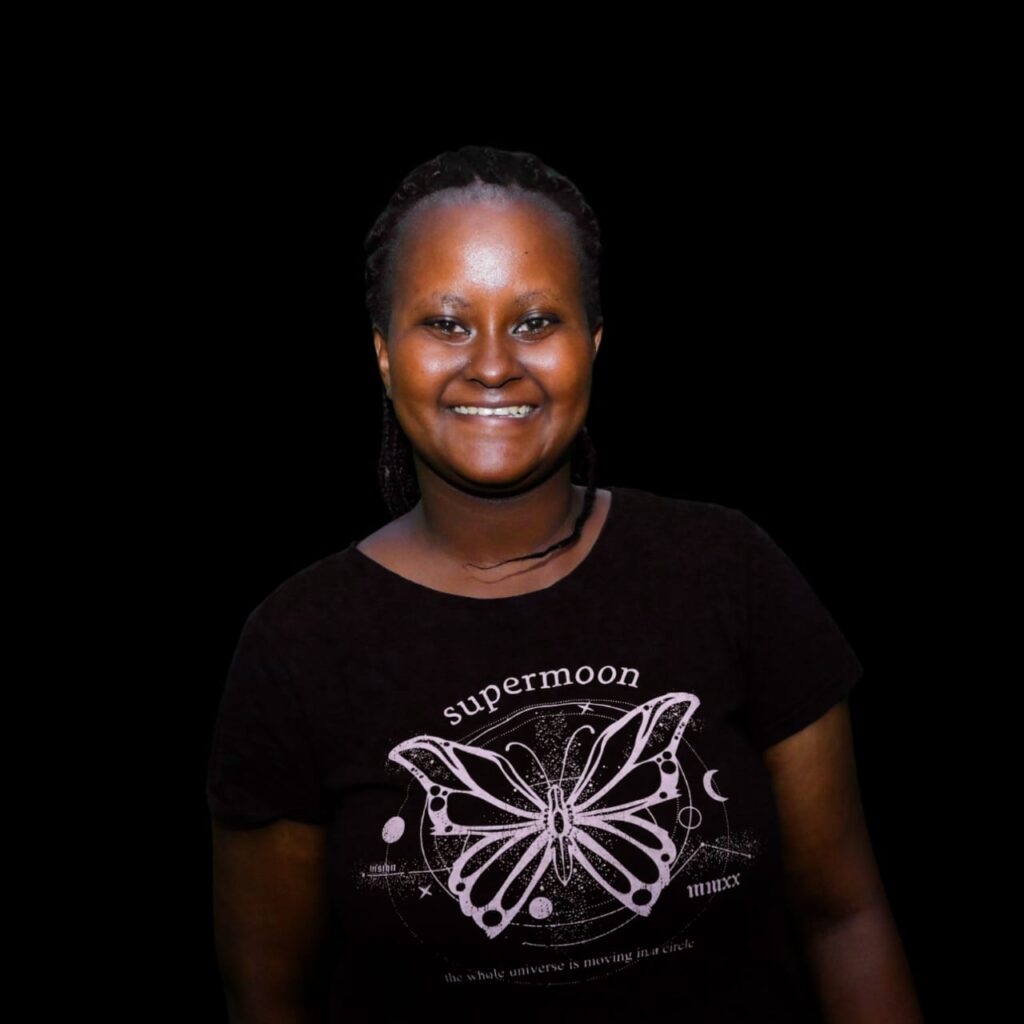
“But the most life-changing role I’ve taken on is being a mother.”
Sylvia Beatrice Wairimu
And yet, amidst the credentials and community roles, motherhood is what she names as most life-changing. Why? Because it altered not just what she does, but how she experiences the world. She shared that the experience had redefined her, stretching her capacity to love, to question, to fight for her own wellness, and to view the world through the eyes of someone wholly dependent on her. There’s no manual for that kind of growth.
The Mental Health of a Mother
Maternal mental health remains one of the most overlooked yet critical aspects of public health. Globally, it’s estimated that approximately 10–20% of women experience mental health disorders during pregnancy or in the first year after childbirth, such as postpartum depression and anxiety. In low- and middle-income countries, including many in Africa, the prevalence can be even higher due to factors like limited access to healthcare and social support. In Kenya, studies have reported postpartum depression rates ranging from 13% to 18.7%, highlighting a significant public health concern.
Before motherhood, Sylvia Beatrice Wairimu thought she understood the kind of exhaustion parenting would demand, sleepless nights, diaper changes, shifting routines. But what she didn’t anticipate was the invisible storm quietly building inside her, the mental and emotional weight that no parenting manual truly prepares you for.
It wasn’t just about managing a baby’s needs. It was about the constant calculations, the alertness that never sleeps, the way time begins to revolve around another human being’s every breath. In the midst of giving everything, Sylvia began to feel herself slipping through the cracks of her own life.
“I’m learning to mother not just her, but also myself.”
Sylvia Beatrice Wairimu
With her daughter now 20 months old, she reflects on how even seemingly small milestones, like weaning, carry unexpected emotional weight.
“She recently stopped breastfeeding, and that milestone alone felt like a full-circle moment, both freeing and deeply emotional,” she shares.
It marked the end of a chapter defined by constant closeness, late-night feedings, and silent bonding. Letting go of that rhythm was bittersweet, a quiet reminder of how quickly time passes and how motherhood is a continuous cycle of holding on and letting go.
“No one tells you how lonely it can feel, even when you’re surrounded by love.”
Sylvia Beatrice Wairimu
After childbirth, her relationship with mental health took an unexpected turn. Though love surrounded her, she often found herself retreating inward, dwelling in a quiet solitude that few prepare you for. She speaks with honesty about a season of stillness and overwhelm, a time when the weight of caregiving blurred her sense of self, and the roles she once held felt distant. It wasn’t sadness in the obvious sense, but a slow fading of who she’d been, hidden beneath the beautiful, heavy layers of new responsibility.
“One particularly difficult night, I looked at my daughter and realized I needed to be whole, not just for her, but for myself. That was my wake-up call.”
Sylvia Beatrice Wairimu
That night became a quiet but pivotal turning point. She began the slow, intentional work of rebuilding her sense of self, through journaling, through mindfulness, and eventually, through advocacy. It wasn’t easy. “There’s immense pressure on new mothers to appear strong,” she states. The world expects mothers to bounce back, to hold it together. And for Sylvia, the pressure to “be strong” was both external and internalized.
“You’re expected to keep smiling and always be grateful. And while I was grateful, I was also overwhelmed. I felt guilty for struggling.”
Sylvia Beatrice Wairimu
Society often romanticizes motherhood, wrapping it in images of joy, fulfillment, and instant resilience. New mothers are expected to “bounce back”, physically, emotionally, and socially, as if childbirth is a brief pause rather than a seismic shift. This stereotype persists because vulnerability in motherhood is still misunderstood. Struggling is seen as weakness, and any sign of emotional exhaustion is too often met with silence or subtle judgment. As a result, many women feel compelled to ‘perform strength’ rather than embody it, smiling through the overwhelm, masking their fatigue, and internalizing guilt for not feeling the way they believe they’re supposed to.
But true strength in motherhood isn’t about perfection or constant gratitude, it’s about honesty. It’s allowing space for the full spectrum of emotions: the joy and love, yes, but also the grief, fear, and confusion that come with such an identity shift. What needs to change is not the mother, but the culture around her. We must normalize the messy, nonlinear nature of healing and adjustment. We need to listen without fixing, support without conditions, and affirm that saying “I’m not okay.” Only then can mothers feel truly seen, not just celebrated.
Journaling became her refuge. In those private, ink-filled pages, she gave her emotions permission to speak. “I used to journal at night just to give my emotions a place to land,” she reflects. Later, it became the seed for something bigger, a project she developed as part of the Global Arts in Medicine Fellowship, aimed at supporting other mothers through journaling and mindfulness. “Motherhood actually inspired me to join the Global Arts in Medicine Fellowship. Through it, I created and led a journaling and mindfulness project for new mothers, ” she stated.
“It was a healing journey, one that helped me reflect and gave others the space to do the same. I came to see that I wasn’t alone. And neither are the mothers I now speak up for.”
Sylvia Beatrice Wairimu
In sharing her truth, Sylvia challenges a culture that links strength with silence. Her story holds up a mirror to every mother who has felt guilty for not being “grateful enough” or strong enough to keep her cracks hidden. It’s a reminder that not all cracks are failures, some are simply the places where the light finds its way in.
The Power of Community and Advocacy
When Sylvia joined the Stand Out for Mental Health community, something profound shifted within her. It wasn’t just about finding others who shared similar experiences, it was about finding the language to name the feelings that had once seemed intangible. She learned that her voice, however fragile or uncertain, held power.
“Joining Stand Out for Mental Health gave me the language I needed to name what I was feeling. It reminded me that my voice matters, and that by telling the truth about my mental health, I can help others find the courage to do the same.”
Sylvia Beatrice Wairimu
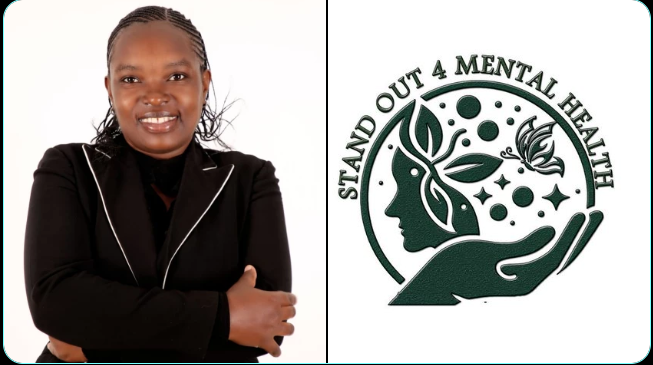
For Sylvia, Stand Out for Mental Health was a lifeline. Founded in 2016 by Christine Ombima, a Kenyan social worker and mental health advocate living with bipolar disorder, the organization was born from Christine’s desire to transform personal pain into purpose. Through creative outlets like dance, art, fashion, and storytelling, Stand Out for Mental Health fosters mental health awareness and peer-to-peer support in safe, vibrant spaces. Since joining, Sylvia has served as the organization’s volunteer graphics lead, designing powerful visual content through her brand, Yrimore Graphics. Her creative contributions have not only elevated Stand Out’s advocacy but also deepened her sense of purpose.
If you’d like to work with Yrimore Graphics or bring life to your next creative project, reach out via yrimoregraphics@gmail.com. Let them help you tell your story, visually and boldly.

In those moments of doubt, when the weight of motherhood made her feel small and unheard, the support from loved ones became her lifeline. Sylvia’s partner, sisters, and mother offered steady hands to hold her up when she couldn’t find her own strength.
“I’m grateful for my partner, my sisters, and my mother. They held me through the hardest moments, even when I couldn’t hold myself.”
Her advocacy is deeply personal. Her lived experience as a mother fuels her passion to normalize conversations about maternal mental health. She understands firsthand the silent struggles that many mothers endure and the way these experiences often go unspoken in both public discourse and private circles.
“My advocacy for mental health is deeply rooted in my lived experience as a mother, I speak from the inside, from the sleepless nights, the quiet tears, the moments of burnout, and the small, steady victories. I want to use that experience to normalize conversations about maternal mental health, especially in communities and systems that often overlook it.”
Rewriting the Narrative – What Mothers Need to Hear
For far too long, society has wrapped its arms around the child while overlooking the one who carried them. Sylvia speaks to this imbalance with a quiet urgency, calling out a culture that glorifies maternal sacrifice while turning a blind eye to its cost.
Sylvia exposes a painful imbalance that’s long been embedded in how society views motherhood. The moment a child is born, attention naturally shifts toward their care and development, milestones, feeding schedules, growth charts. Meanwhile, the mother, who has undergone a profound physical and emotional transformation, often fades into the background. This shift is not just cultural; it’s reinforced by health systems that prioritize pediatric checkups while postnatal mental health is barely addressed. The world gathers to celebrate new life, yet forgets to hold space for the woman who brought it forth.
Media, tradition, and even some religious or cultural teachings reinforce the idea that a “good mother” is one who gives endlessly, often at the expense of her own well-being. But glorifying burnout as devotion is not sustainable. It isolates mothers, breeds shame around asking for help, and normalizes neglect of their mental and emotional health. This needs to stop, not only for the sake of mothers, but for the well-being of the children they raise. A child’s first bully is an unhealed parent. A supported, mentally well mother is the foundation of a healthier, more compassionate society.
In her words, there’s a clear challenge to shift the narrative, to ask deeper questions, to create space for softness, and to remember that being strong doesn’t mean being silent. She reminds us that even mothers need to be mothered sometimes: to be asked, “How are you really doing?” and to be offered rest without guilt.
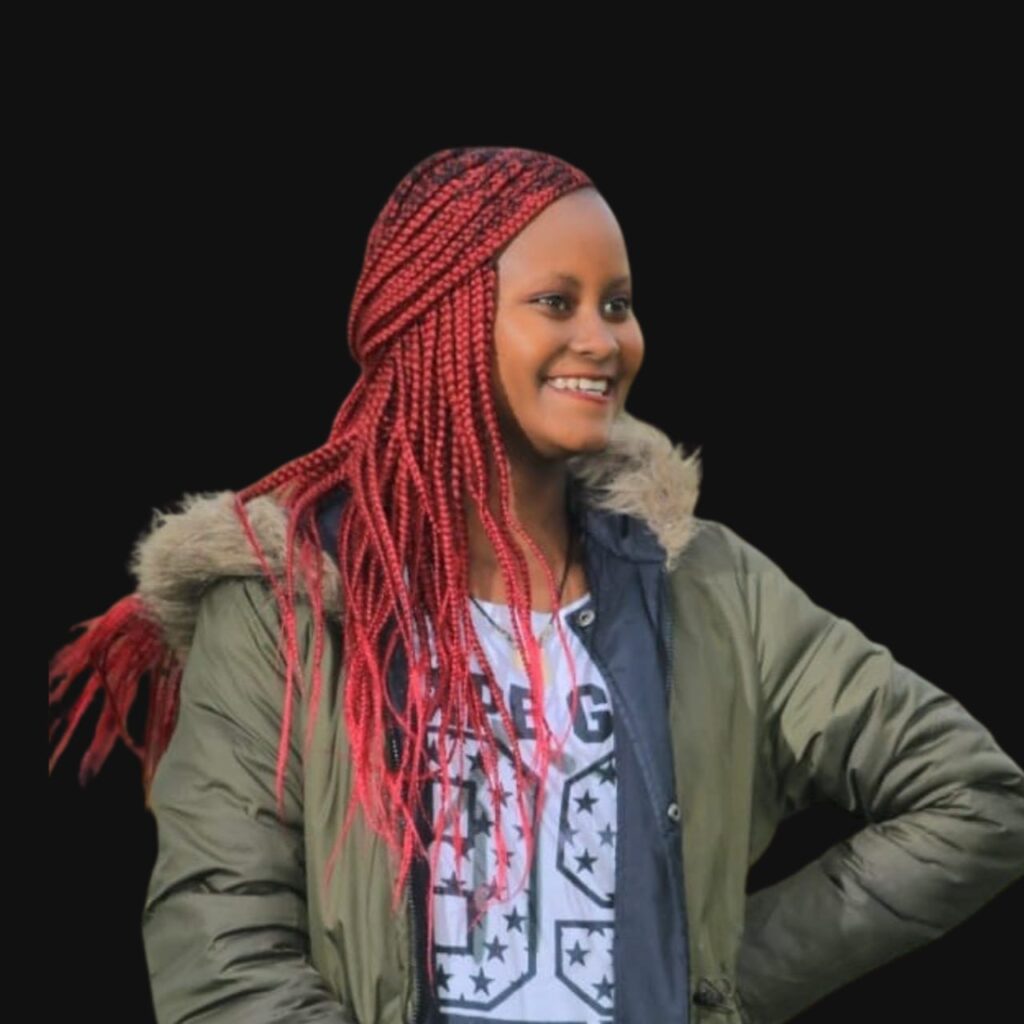
Her final message is clear. It is for every mother quietly carrying more than she can name:
You are not alone.
You are not weak.
You are not failing.
You deserve support.
You deserve to breathe.
You deserve to be well.
“In your healing, you don’t have to walk alone, Please don’t suffer in silence, there is so much power in reaching out.”
Sylvia Beatrice Wairimu
In telling her story, Sylvia hopes to create space for others to heal. In her story, may many rise, and find the strength to share their own.

- The Rise of Suicide Posts in Digital Spaces Reflects a Growing Mental Health Crisis - February 22, 2026
- How Kenya’s Silent Lifestyle Disease Crisis Is Reshaping Public Health - February 12, 2026
- The Rise of Lifestyle Diseases Emerges as a Crisis Among Kenya’s Youth - February 9, 2026
