Suicide posts are rising across digital spaces, signaling a growing crisis in mental health that cannot be ignored.
Digital platforms are filling with suicide posts, exposing the cracks in mental health support everywhere. Over the past few months, what once felt like occasional expressions of distress online has turned into a pattern that grows more visible with each passing day.

I’ve been observing this trend across my social platforms, and in 2026 it has intensified. Young people from around the world are increasingly choosing Instagram, TikTok, Facebook and X to share feelings that many would find difficult to express in person. On X especially, where algorithms surface content rapidly, I often scroll through just a handful of posts before seeing someone voice thoughts of deep distress.
Unlike in the past, when coming across a cryptic post of distress was rare, these expressions are now more frequent than ever. Many of these posts are not removed or reported, as used to happen before; in fact, some even receive more engagement, suggesting that people are noticing, reacting, and relating.

This response is telling: when someone expresses thoughts about wanting to end their life and others interact with the post, it shows that many people are relating to these feelings, speaking the same language of distress. This collective resonance is a clear signal that what we are seeing is part of a much larger mental health crisis unfolding across our digital spaces.

These are not attention-seeking messages. They are honest expressions of pain that some people feel safer sharing in digital spaces than in their everyday lives. The language used, the vulnerability shown, and the frequency with which these posts appear raise an urgent question: What does it mean for mental health when the voices we most need to hear are only being shared on screens?
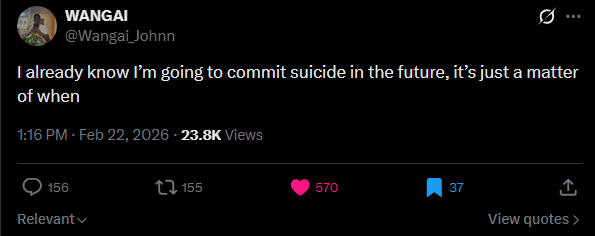
Digital spaces are becoming a reflection of struggles that often go unseen offline. For many young people, screens have become the place where emotional support is sought, where inner battles are expressed, and where cries for help appear more openly than in real life. Recent research shows that social media platforms have become places where individuals express emotional distress and signs of suicidal ideation that might not surface in more traditional settings, and analysis of this online language can help identify early signs of a mental health crisis before it is recognized elsewhere.
A December 2025 study published on ScienceDirect, Identifying suicidal ideations from social media posts using deep learning and explainable AI-driven approach, shows that many individuals first express signs of emotional distress and suicidal ideation on social media, often before these issues are recognized in traditional settings.
This research is significant because it highlights that digital spaces are more than just platforms for social interaction; they have become early warning systems for mental health struggles. By paying attention to how distress is expressed online, communities, caregivers, and mental health professionals can identify signs of risk earlier, potentially preventing crises before they escalate. It also emphasizes the urgency of understanding online behaviors not as isolated posts, but as part of a larger conversation about mental health, connection, and support. Ignoring these signals means missing opportunities to intervene, offer help, and address the underlying gaps in mental health care that leave so many young people feeling unheard and unsupported.
Why Social Media Has Become a Safe Space for Suicide Expression and Vulnerability
For many young people, expressing thoughts of distress or suicidal ideation online has become easier than sharing them in physical spaces. Even among friends and family, stigma around mental health still exists, making face-to-face conversations feel risky or uncomfortable.

Online, individuals often find it easier to speak openly because they are connecting with strangers who may understand without judging them for who they are, and even if judgment occurs, it is far less painful than being judged or stigmatized by friends, family, or people close to them. Many therefore prefer this distance, finding digital spaces a safer place to express their struggles honestly.
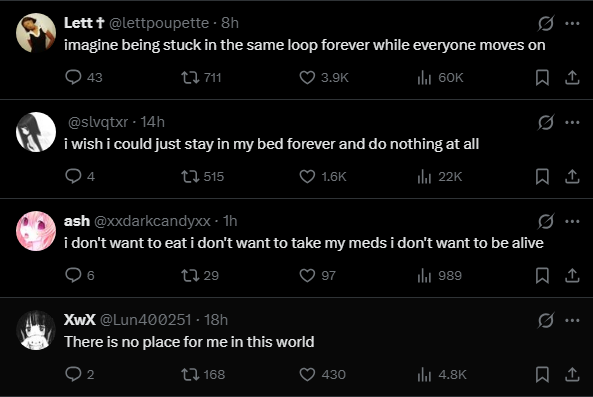
Anonymity, physical distance, and reduced social pressure are key factors that make these platforms appealing. Unlike in-person interactions, social media allows individuals to craft their message carefully, control who sees it, and gauge responses without the immediate vulnerability of face-to-face judgment. These factors create an environment where young people feel safer sharing personal struggles, including thoughts related to suicide, than they might in their schools, homes, or peer groups.
At the same time, these platforms carry both opportunities and risks. They can provide a space to vent, connect, and receive support from peers or mental health communities. However, as people engage with these posts, some may offer coping suggestions or advice that are unhelpful, or even harmful, because they are not trained mental health professionals.
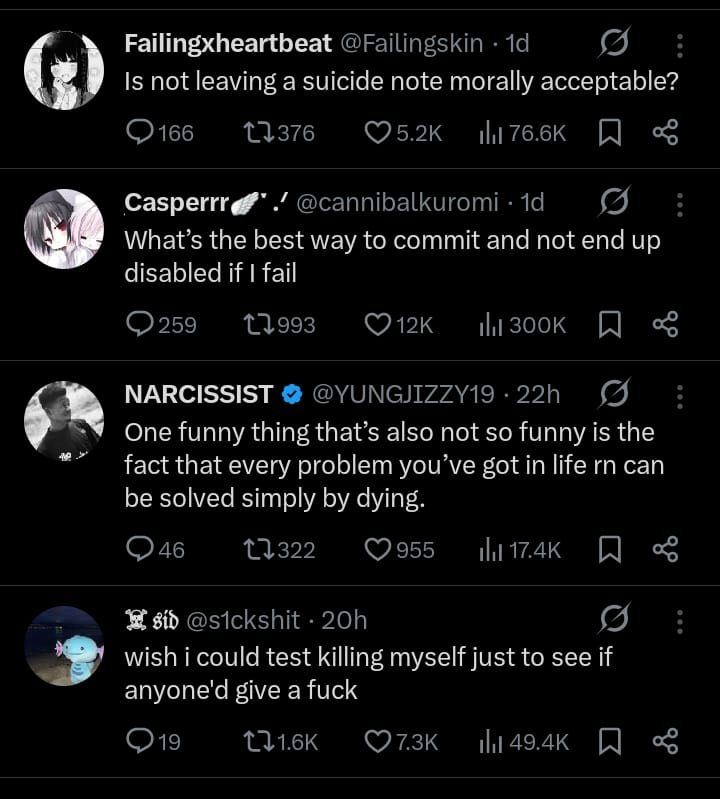
Posts can also be ignored, misinterpreted, or amplified without constructive responses, creating ethical dilemmas for those witnessing the content. Balancing the need to give people space to share with the need for timely, appropriate help is challenging. While social media opens avenues for expression, it also exposes vulnerabilities and underscores the urgent need for responsible engagement and digital mental health awareness.
What Suicide Posts Reveal About Community Care Gaps
Suicide posts expose systemic issues behind individual distress. They show that society, families, schools, and local communities often fail to provide safe spaces where people can express their emotions openly. We talk about promoting safe spaces, but the reality is that these spaces are often inaccessible, absent, or unsafe, leaving many to cope in isolation.

The digital sphere has become a mirror of this collective failure. Online posts are showing us what we often miss in everyday life: the silent struggles, the unmet need for emotional support, and the ways in which young people are left without avenues to process their pain.
I recently wrote in a post:
Carson Anekeya
This reflection warns us that our inaction or avoidance can have real consequences, and that the responsibility for noticing and responding extends beyond the individual.
These posts are not isolated incidents; they are symptoms of a broader societal gap in care and connection. The lack of accessible safe spaces for conversation, counseling, and support shows that mental health is still missing a critical link in our communities. Digital platforms are now revealing what we have long ignored offline: that thriving requires connection, understanding, and support, and when this missing link is absent, distress finds a voice online. So, what role will you play in bridging this gap?

Creating supportive communities starts with small, intentional actions. Make it a habit to check in with your friends and loved ones, not just with casual greetings, but by getting to know how they are really doing and listening to their answers. Showing that you care and that someone is willing to notice their struggles can make a meaningful difference. Simple gestures of attention and presence help build the kind of safe spaces that are often missing offline.

Beyond individual efforts, communities need structured initiatives to support mental health. Schools, local organizations, and peer networks can implement programs that encourage open conversation, teach coping strategies, and provide accessible counseling services. When we combine personal habits of care with systemic support, we begin to bridge the gap that has left so many young people voicing distress online. Every effort counts toward creating spaces, both online and offline, where mental health is recognized, nurtured, and protected, with digital platforms serving to complement, not replace, real-world mental health support.

It’s clear now more than ever that people are struggling mentally in ways we don’t always see. We can show up for them by being the safe spaces they can reach out to, online or offline. In the past, we complained about stigma and how people weren’t speaking up. Today, they are, they are posting, sharing, and being vulnerable online. Let’s meet them where they are with support. A simple word of encouragement, a check-in, or a listening ear can carry someone through a very long day and give them the strength to face tomorrow.
And in case you’re still wondering why some people develop suicidal thoughts or even die by suicide, I’ll leave you with one of my quotes on suicide that captures it best:
― Carson Anekeya

- The Rise of Suicide Posts in Digital Spaces Reflects a Growing Mental Health Crisis - February 22, 2026
- How Kenya’s Silent Lifestyle Disease Crisis Is Reshaping Public Health - February 12, 2026
- The Rise of Lifestyle Diseases Emerges as a Crisis Among Kenya’s Youth - February 9, 2026