The Pharmaceutical Society of Kenya’s recent warning against misleading Ozempic promotions comes at a time when the nation is witnessing a surge in fascination with rapid weight-loss trends.
Over the past year, Kenya has witnessed a growing fascination with rapid weight-loss methods, a trend fuelled by the intersection of fitness culture, social media influence, and the modern obsession with physical transformation. On platforms like TikTok and Instagram, “before-and-after” photos and body transformation videos now compete for attention alongside diet hacks and workout routines.
At the heart of this conversation is Ozempic, a prescription drug originally developed for managing type 2 diabetes. The medication, known scientifically as semaglutide, helps regulate blood sugar and appetite, but in recent months, it has been repurposed, often without medical oversight, as a shortcut to a slimmer body.
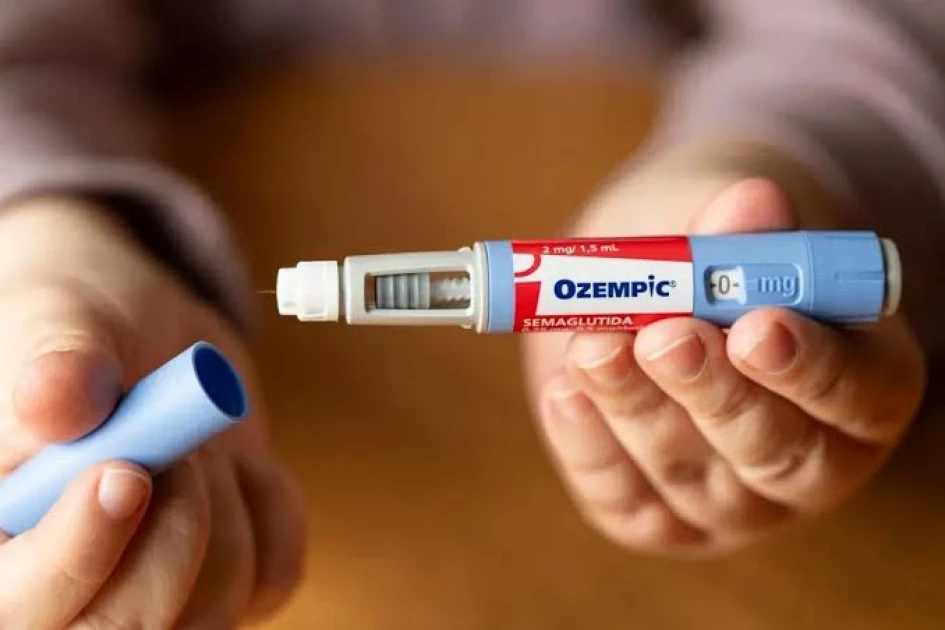
This shift marks a worrying new phase in Kenya’s health and beauty culture. Influencers and fitness personalities, who once promoted exercise and meal plans, are increasingly showcasing medical products as part of their “wellness journeys.” The rise of what some call “pharma-fitness content” reflects how powerful digital influence has become in shaping public health behavior.
Videos featuring weight-loss injections, diet supplements, and “miracle treatments” can go viral within hours, blurring the line between personal testimony and informal advertisement. As more Kenyans chase quick fixes for body image goals, medical professionals are sounding the alarm on the risks of unregulated use of drugs meant strictly for prescription under medical supervision.
Ozempic’s entry into popular culture is not unique to Kenya, it’s a global phenomenon, but its rapid spread through the Kenya’s online fitness circles has drawn attention from health regulators. The drug’s off-label use has created a surge of demand among people who have never been diagnosed with diabetes, leading to shortages for legitimate patients and increased risk of side effects among unmonitored users. The Pharmaceutical Society of Kenya (PSK) and the Pharmacy and Poisons Board (PPB) have both issued warnings in recent months, urging the public to avoid self-prescription and cautioning influencers against promoting or glamorizing its use.
Social media has become one of the most powerful tools shaping health behavior in Kenya today. What once began as fitspiration, motivational content promoting exercise and wellness, has gradually evolved into what many now call pharma-inspired fitness. Instead of sharing gym routines or healthy recipes, some influencers now showcase injections and prescription drugs as part of their transformation stories. This shift blurs the boundary between authentic wellness advocacy and the unregulated promotion of medical treatments. For followers seeking quick results, such content can appear convincing, but it also fuels unrealistic expectations and risky self-medication trends.
Amid growing concern, the Pharmaceutical Society of Kenya (PSK) on November 6th issued a public statement cautioning both fitness influencers and their audiences against promoting or using prescription-only drugs such as Ozempic without professional medical supervision. The Society emphasized that such practices not only breach ethical guidelines but also endanger public health. In its warning, the PSK noted that “promotions of this nature risk normalizing self-prescription and misuse of regulated medicines,” urging influencers to act responsibly and avoid content that could mislead or encourage unsafe drug use.
The Pharmacy and Poisons Board (PPB) first issued a warning on 17th July 2024, cautioning the public against the unsupervised use of semaglutide for weight loss. This advisory highlighted the potential side effects of misuse, including nausea, low blood sugar, gastrointestinal complications, and even intestinal obstruction, and reminded Kenyans that the drug is approved solely for the treatment of type 2 diabetes. The PPB followed up with a second warning on 20th August 2025, reinforcing the earlier message and emphasizing that prescription-only medicines should not be used as quick fixes for cosmetic weight loss.
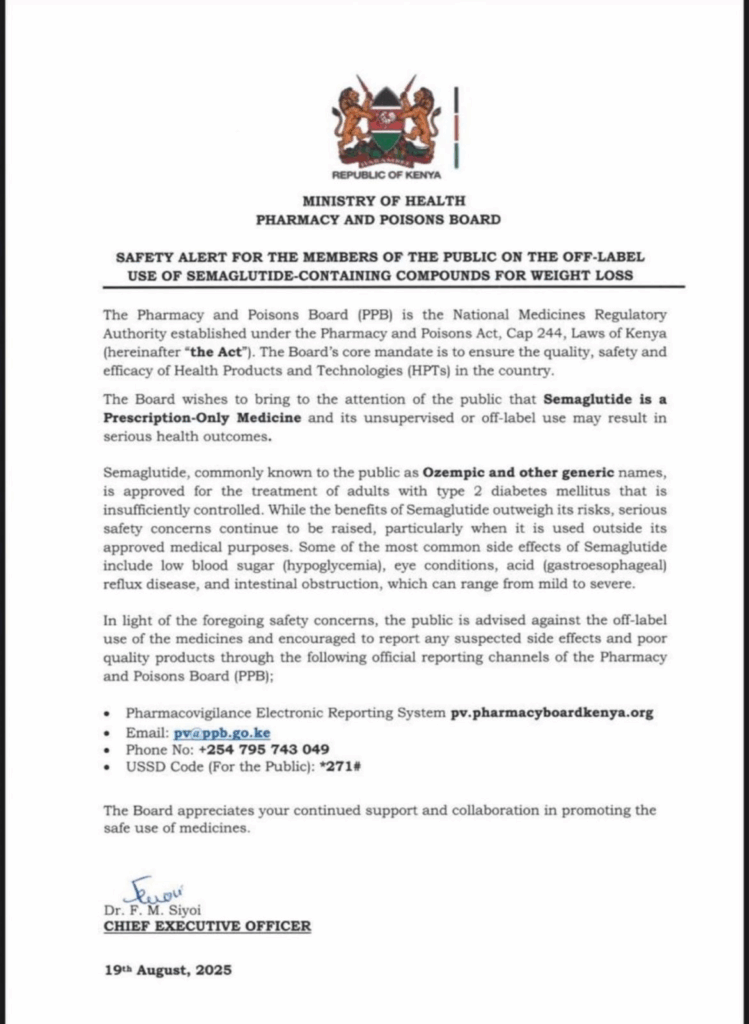
What began as a wellness trend has now become a public health concern, one which raises more questions than answers: Where does digital responsibility begin when health information spreads faster than regulation? How much influence should social media personalities have over people’s medical choices? And in an age where every post can shape perception, what ethical line separates sharing personal experience from promoting potentially harmful behavior? These questions are now at the heart of Kenya’s conversation on Ozempic and influencer culture, pushing both the health community and the online world to think harder about how influence, intention, and accountability come together.
Kenya’s Growing Trend of Fitness Influencers Promoting Prescription Drugs
The rise of influencer-led wellness culture in Kenya has taken an unexpected turn. Once focused on gym routines, diets, and detox teas, the conversation has shifted toward prescription medications like Ozempic, a diabetes drug now trending for weight loss.
Influencers and social media content add a layer of risk: when people see “instant transformation” posts, they may assume the drug is safe, easy, or risk-free, which is far from the case.
The Influencer Effect
With the rise of the digital age, influencers hold immense power to shape public opinion. Their large followings often look up to them, seeking to emulate their lifestyles and choices. This influence can come at a cost when promotions or advice are not ethical or medically sound, potentially leading followers to make decisions that may harm their health or well-being.
Pritty Vishy
On August 20, 2025, content creator Pritty Vishy (Purity Vishenwa) documented her Ozempic journey, sharing a video of herself receiving the injection. Her posts highlighted both her rapid transformation, claiming to have lost over 40 kilograms, and the financial cost of the treatment.

While many followers praised her transparency and determination, others voiced concern about the safety and accessibility of such medication without proper medical supervision.
Kelvin Kinuthia
By May 15, 2025, entertainer Kelvin Kinuthia had joined the movement, publicly revealing that he began using Ozempic after weighing about 148 kilograms.
“This is a living testimony, my people,” he wrote. “Losing 5kgs in 7 days is such a big flex.”
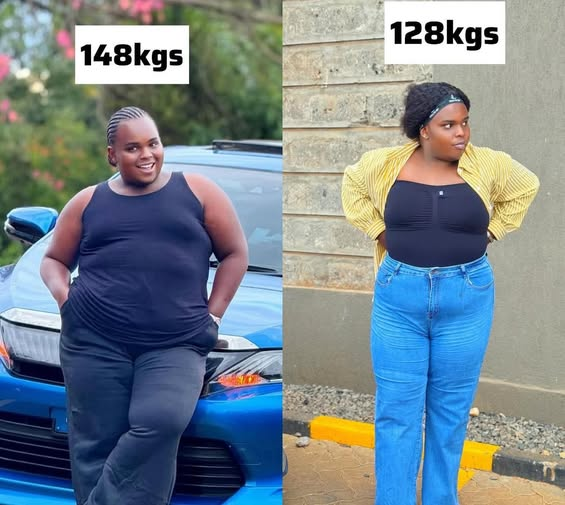
Over the following weeks, he shared updates about shedding nearly 20 kilograms, turning his progress into a motivational series that quickly gained traction. His story became one of the most visible examples of how personal weight-loss journeys can unintentionally normalize prescription drug use as a quick solution.
Lydia Wanjiru
On July 24, 2025, lifestyle influencer Lydia Wanjiru revealed she had lost about 27 kilograms after several months on Ozempic. She spoke candidly about early side effects, vomiting and dizziness, before celebrating her transformation and transition into waist training.
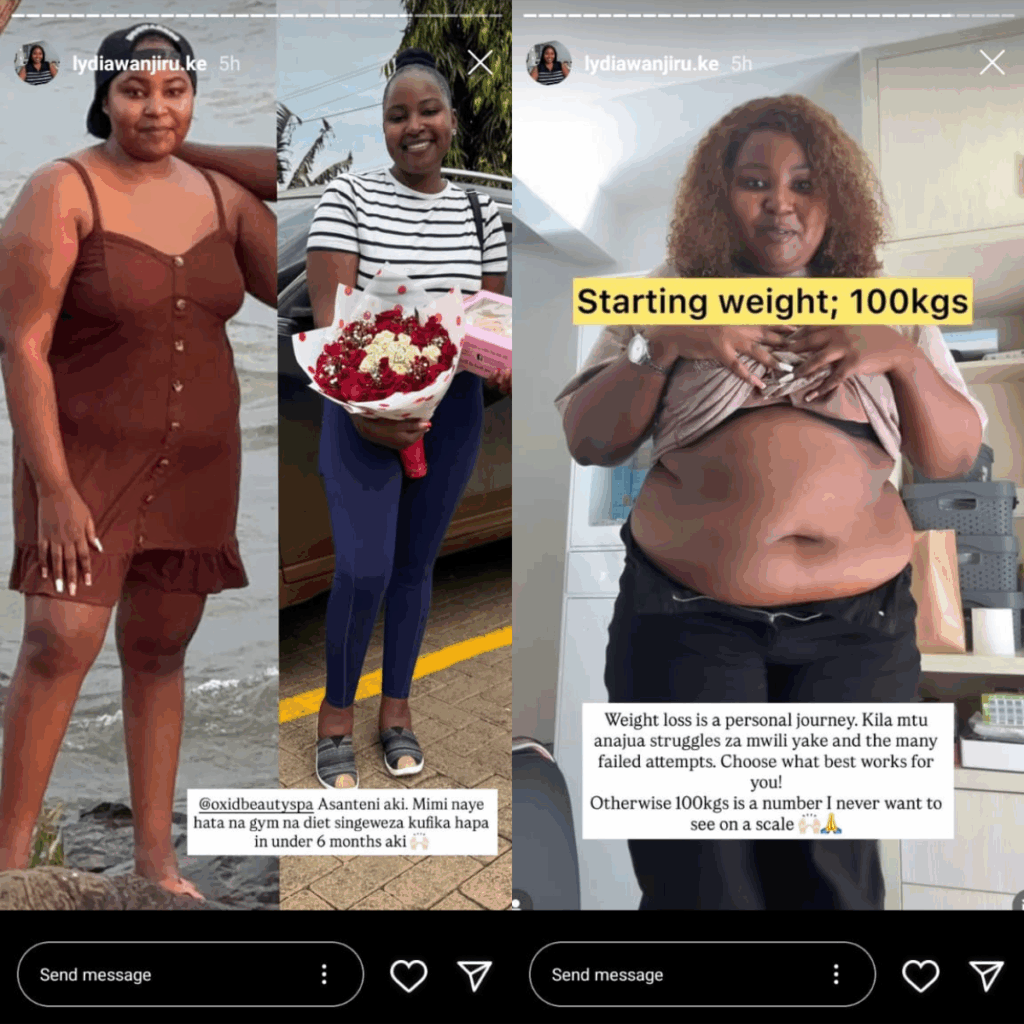
Her story resonated with many followers, but it also sparked debate over the hidden health risks of using the drug without proper medical supervision.
Nimo Gachuiri

In late July 2025, Nimo Gachuiri became the latest public figure to confirm her use of Ozempic, solidifying how mainstream the drug’s use had become among Kenyan celebrities. Her openness added to the growing public curiosity, and concern, around influencer-led endorsements of medical products.
Regulation, Responsibility & Public Awareness
On November 6, 2025, the Pharmaceutical Society of Kenya (PSK) issued a stern statement warning fitness professionals and influencers against promoting or using prescription-only medicines without medical oversight.
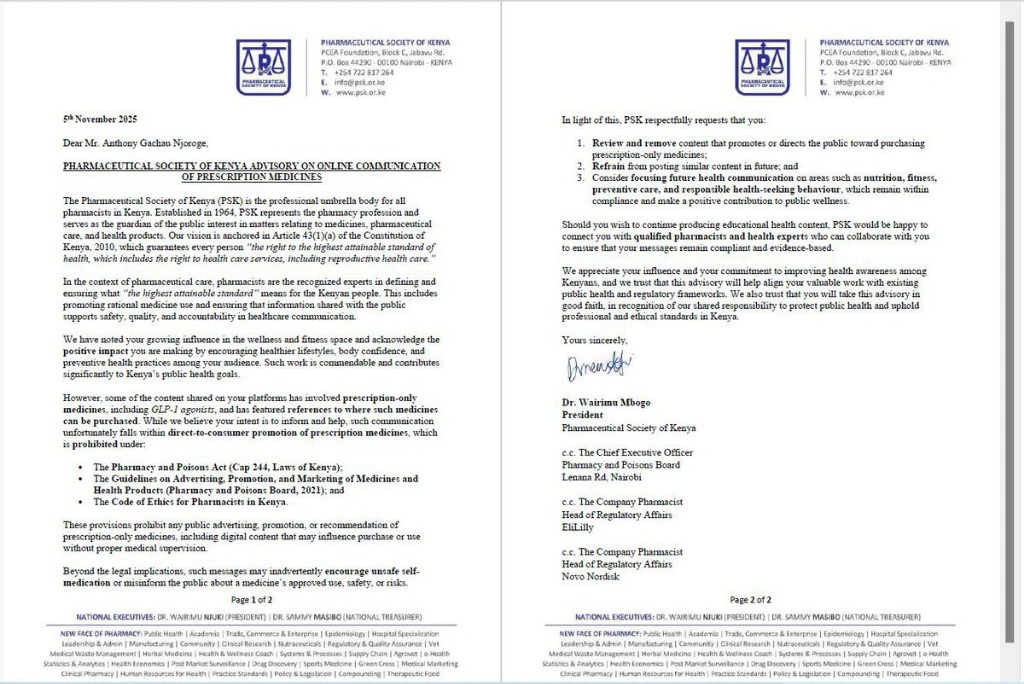
They singled out fitness trainer Gachau Njoroge, cautioning that “content promoting prescription drugs constitutes professional and ethical misconduct.”
The warnings from the Pharmaceutical Society of Kenya (PSK) and the Pharmacy and Poisons Board (PPB) underline the seriousness of misusing prescription drugs like Ozempic. For the public, these advisories are a clear reminder that medications meant for medical conditions cannot be safely repurposed for cosmetic goals. Self-prescribing or following influencer-led trends carries real health risks, from nausea and dizziness to more severe complications such as hypoglycemia and gastrointestinal issues. Regulators are emphasizing that the safety and well-being of individuals must come before social media popularity or viral transformations.
Influencers with large followings hold a unique responsibility when it comes to health messaging. Endorsing or showcasing prescription-only drugs without medical guidance not only risks public health but also crosses ethical boundaries. Health advocates note that while personal testimonials can inspire, they can also mislead impressionable audiences, normalizing dangerous practices and creating a culture where medication is seen as a quick fix for appearance rather than a carefully managed treatment.
The conversation around Ozempic and social media influence highlights the need for greater public health education, digital responsibility, and mindful influence. Experts encourage audiences to seek professional advice before experimenting with prescription drugs, while influencers are urged to prioritize accuracy and safety over virality. With greater awareness and responsible communication, Kenya can find a balance between inspiration and risk, helping people make informed choices instead of chasing trends that could jeopardize their health.

- The Rise of Suicide Posts in Digital Spaces Reflects a Growing Mental Health Crisis - February 22, 2026
- How Kenya’s Silent Lifestyle Disease Crisis Is Reshaping Public Health - February 12, 2026
- The Rise of Lifestyle Diseases Emerges as a Crisis Among Kenya’s Youth - February 9, 2026