
Moyo wangu, roho yangu – My heart, my soul.
The Truth
The truth came to her in fragments, like pieces of a broken mirror that cut when she tried to put them together.
First, there were the visits from nervous young men who brought briefcases and left empty-handed, their eyes darting around the apartment as if expecting police to burst through the walls. Then came the newspaper articles she found hidden in Kesi’s jacket—stories about disappearances in the slums, about families who could no longer afford rent after their children went missing, about a growing trade that treated human beings like commodities.
The final piece fell into place on a Tuesday morning when she answered Kesi’s phone while he was in the shower.
“The shipment is ready,” a voice said in heavily accented English. “Fifteen girls, all young, all clean. The buyers in Dubai are expecting them tomorrow night.”
Amara’s blood turned to ice water in her veins. The phone slipped from her numb fingers, clattering onto the marble floor.

“Amara?” Kesi’s voice came from the doorway. He stood there dripping wet, a towel wrapped around his waist, his eyes fixed on the phone at her feet. “What did you hear?”
She couldn’t speak. Couldn’t breathe. The beautiful apartment suddenly felt like a cage, and the man she loved looked like a stranger wearing her beloved’s face.
“Kesi,” she whispered, “what have you done?”
His expression shifted again, becoming something cold and calculating. “I’ve built an empire. I’ve given you everything you ever wanted.”
“By selling people? By destroying families?”
“By being smart enough to see an opportunity and strong enough to take it.” He moved toward her, his footsteps silent on the marble. “Do you think your comfort came free? Do you think someone like me stays interested in someone like you without a reason?”
The words hit her like physical blows. “What do you mean?”
“You were perfect, Amara. Young, beautiful, desperate. I could have sold you a dozen times over, but I kept you for myself. That’s love, isn’t it?”

The Choice
That night, Amara stared at her reflection in the bathroom mirror and barely recognized the woman looking back. Her face was still beautiful, but her eyes held a hollow darkness that reminded her of the street children she used to pass on her way to school—those who had seen too much, lost too much.
Kesi was asleep in their bed, his breathing deep and peaceful. On the nightstand beside him lay his phone and the key to the safe where he kept his business records. Everything she needed to destroy him was within reach.
But destroying him meant destroying herself too. Without Kesi, she would return to nothing—no money, no home, no protection from the stepfather who would welcome her back with his fists. The police wouldn’t believe her without evidence, and even if they did, Kesi’s connections ran deep. She had seen the photos of politicians and businessmen in his private office, all of them smiling and shaking hands with the man she had thought was her savior.
Her phone buzzed with a text from her younger sister: “Mama is sick again. We need medicine money.”
Amara closed her eyes and made her choice.

The Hunt
Three weeks of careful planning followed. Amara became the perfect girlfriend again—loving, grateful, unquestioning. She learned to smile when Kesi’s business associates visited, learned to leave the room at exactly the right moments, learned to hear without listening and see without watching.
But in the darkness of their bedroom, while Kesi slept the peaceful sleep of the morally bankrupt, she photographed documents, copied phone numbers, and memorized the locations of safe houses and meeting points. She reached out to Grace Wanjiku, an investigative journalist she had read about in the Daily Nation, using an encrypted email account she accessed from internet cafés across the city.
“I have evidence of a trafficking ring,” she wrote. “But I need protection.”
Grace’s response came within hours: “Meet me at Java House, Sarit Centre, Thursday 3 PM. Come alone.”
The journalist was a small woman with intelligent eyes and prematurely gray hair that she wore like a badge of honor. She listened to Amara’s story without interruption, occasionally taking notes in a shorthand that looked like hieroglyphics.
“You understand what you’re risking?” Grace asked when Amara finished speaking.
“I understand what I’m risking by doing nothing.”
Grace studied her for a long moment. “There’s a task force that’s been trying to break this network for months. Your evidence could be exactly what they need. But once we move, there’s no going back. Are you prepared for that?”
Amara thought of the fifteen girls who were supposed to ship to Dubai, of her sister who needed medicine money, of the woman in the mirror who no longer recognized herself.
“Yes,” she said. “I’m ready.”

The Reckoning
The raid happened at dawn on a Saturday morning. Amara was in the kitchen making tea when she heard the helicopters, then the sound of boots on stairs, then Kesi’s voice roaring her name with a rage that shook the windows.
She had been staying at a safe house for two days, but she had come back that morning to collect the last pieces of evidence—and to face him one final time.
“You think you’re clever?” Kesi stood in the doorway, his hair wild, his eyes blazing with betrayal and fury. Behind him, she could hear the sounds of his world collapsing—doors splintering, voices shouting orders, the electronic whine of sirens.
“I think I’m free,” she said quietly.

He moved toward her with the fluid grace of a predator, and for a moment she was afraid he would kill her with his bare hands. Instead, he stopped just close enough that she could smell his cologne, the scent that had once made her feel safe.
“Do you know what you’ve done?” His voice was barely a whisper. “Do you know how many people will die because of your righteousness?”
“Do you know how many people will live?”
His hand shot out and grabbed her throat, not hard enough to hurt but firmly enough to make his point. “I loved you.”
“No,” Amara said, looking directly into his eyes. “You owned me. There’s a difference.”
The police found them like that—facing each other in the ruins of their twisted paradise, love and hate so tangled together that even they couldn’t tell where one ended and the other began.

After the Storm
Six months later, Amara testified in a courthouse that smelled of old wood and broken dreams. Kesi sat at the defendant’s table in an orange jumpsuit, his hands shackled, his eyes never leaving her face. The scar on his jaw seemed deeper now, like a crack in stone that had finally given way.
Twenty-three people were arrested in the raids that followed her evidence. Forty-seven victims were rescued, including twelve who were being held in a warehouse in Industrial Area, waiting for transport to various destinations across the Middle East and Europe.
When the judge read the guilty verdict, Kesi smiled at her—not the beautiful smile that had once made her believe in fairy tales, but something darker and more honest. He mouthed words that might have been “I love you” or “I’ll find you.” She chose not to try to decode them.
Outside the courthouse, Grace Wanjiku found her sitting on the steps, watching Nairobi’s chaos flow around her like a river.
“What will you do now?” the journalist asked.
Amara touched the small scar on her palm where she had cut herself opening Kesi’s safe, a mark that would remind her forever of the choice she had made. “I’m going back to school. I want to study law.”
“Why?”
“Because I want to learn the difference between justice and revenge.”
Grace sat beside her on the concrete steps. “And have you? Learned the difference?”
Amara watched a matatu disappear around a corner, carrying its passengers toward destinations unknown. “I’m still learning.”
That evening, she sent money to her sister for their mother’s medicine. She paid her own school fees. She bought a small apartment in a part of town where the streets had numbers instead of names, where no one knew her story or asked questions about her past.
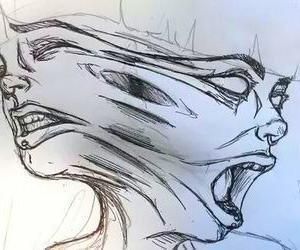
Some nights, she still dreamed of marble floors and silk curtains, of whispered endearments and the sound of helicopters. She would wake with the taste of betrayal in her mouth and the memory of Kesi’s hands on her skin.
But she had learned something in those dark months—that love without freedom was just another form of slavery, and that sometimes the most courageous thing you can do is destroy the very thing you think you need to survive.
Penzi la damu had taught her that the heart can bleed and still keep beating, that redemption always comes with a price, and that the only way to truly love someone is to be willing to let them go—even if that someone is yourself.
In the end, that was the most twisted love story of all: learning to love herself enough to save others, even when it meant losing everything she thought she wanted.
The city lights still blurred past her window some evenings as she rode the matatu home from her law classes. But now, instead of looking like fallen stars, they looked like what they truly were—beacons of hope in the darkness, guiding lost souls toward something better.
And Amara Wanjiku—she had reclaimed her mother’s maiden name—was no longer lost.

- Must-Watch Movies Releasing in 2026: Your Complete Enterta1nment Calendar. - February 11, 2026
- World Tropical Diseases Day: The Silent Suffer1ng of 1.6b Lives. - January 31, 2026
- The El Molo Tribe: Kenya’s Last Fisher People Fight1ng for Survival on Lake Turkana’s Shores - January 30, 2026