The reflections of Nimara Newa bring to light the shifts in spirituality she has observed among young people, and the mental health challenges of meaning-making that arise as they struggle to interpret their experiences. In today’s world, these changes reveal how deeply intertwined faith, identity, and wellbeing have become for a generation in transition.
Nimara Newa, a clinical psychologist, shares her insights on these realities, reflections drawn from her recent internship at USIU’s Counseling Center, where she observed striking patterns in how students approached therapy and spirituality.
At the heart of her observations lies the idea of meaning-making. This is the process by which people interpret their experiences, especially difficult or painful ones, and try to fit them into a broader understanding of life. It’s how we answer questions like “Why did this happen?” or “What does this mean for me?” For many students, their search for meaning has been complicated by drifting spiritual identities and mounting psychological pressures.
Who Is Nimara Newa?
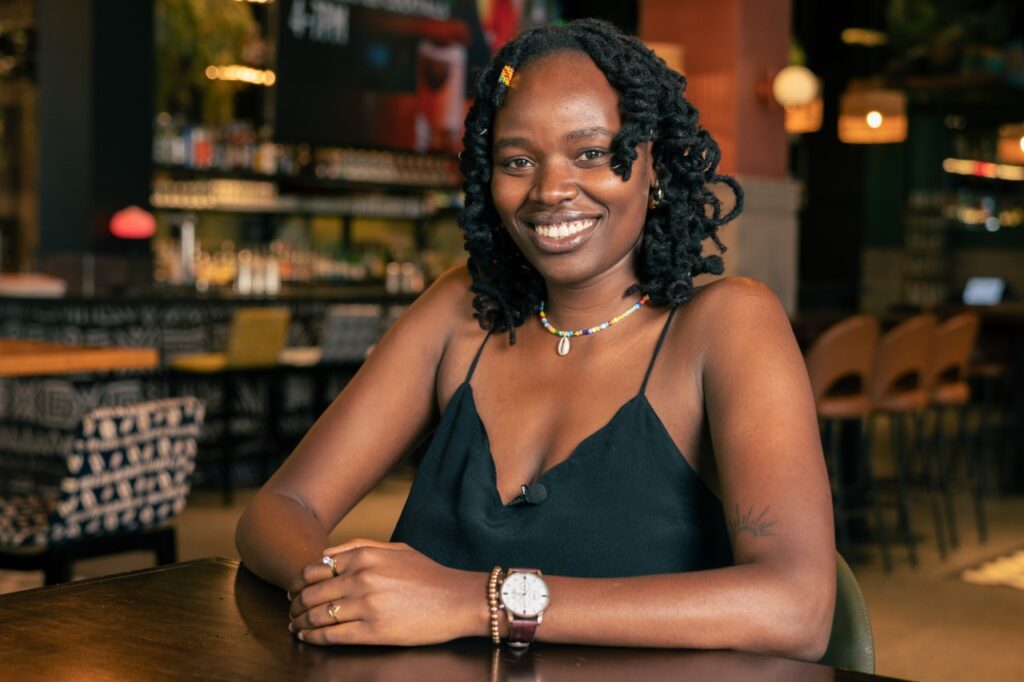
“I am a writer, psychologist, and visionary whose work is grounded in the conviction that mental health cannot be separated from creativity, culture, and spirit.”
Nimara Newa
Her mission, she explains, is to empower people in ways that go beyond clinical definitions of therapy.
“My mission is to empower individuals to holistically cultivate psychological and emotional well-being, enhance cognitive frameworks, and integrate authentic self-expression into their daily lives.”
Nimara also describes herself as a lifelong creative, someone deeply interested in the meeting point between psychology and the arts.
“At my core, I am a creative who continually explores the intersection of psychology, spirituality, and the arts. I view storytelling, music, film, and other art forms as pathways through which people can reclaim agency, find meaning in their struggles, and access deeper layers of their consciousness.”
Currently pursuing an M.A. in Clinical Psychology at USIU–Africa, Nimara balances academic work with hands-on practice.
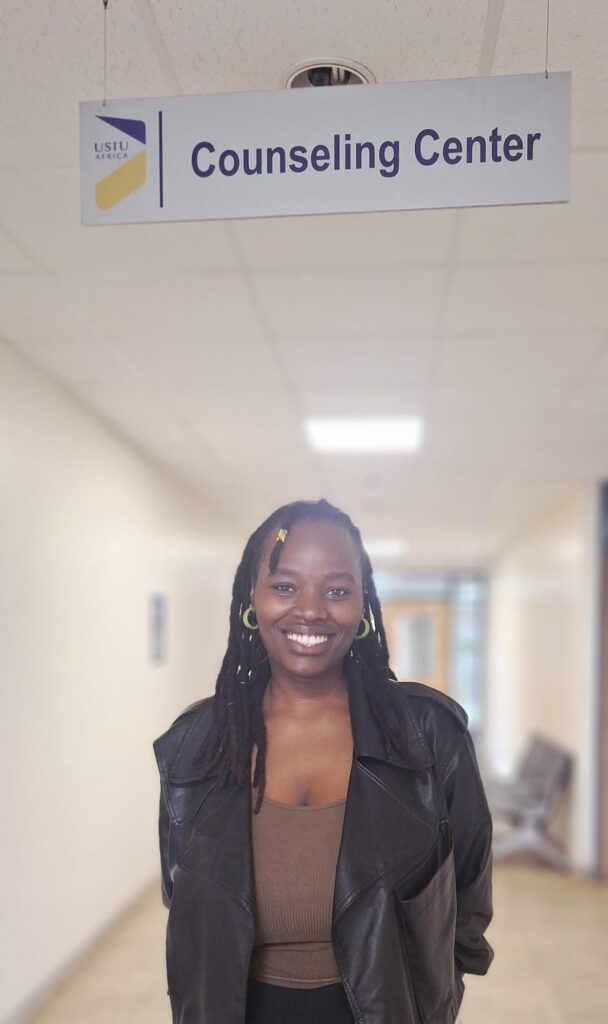
“I have also worked as a therapist and trainer across various capacities and organizations, supporting young adults as they explore identity, relationships, and mental health.”
What Young Minds Are Really Facing
During her internship at USIU’s Counseling Center, Nimara Newa quickly noticed a pattern: far more female students were walking into therapy sessions than their male peers. She describes this as a “clear gender gap in help-seeking,” one that reveals deep-seated barriers in how young men relate to mental health.
Breaking it down, Nimara identifies three kinds of barriers, mental, emotional, and social.
“In sessions with the male students I saw, many preferred a solution-focused approach rather than an exploratory one,” she explains. For men, she observed, the “destination” often feels more important than the “journey” of self-discovery. This, she adds, reflects cultural conditioning that prizes problem-solving and efficiency, qualities that can make therapy seem less appealing or useful.
On the emotional level, she noticed another tendency.
“Men, in particular, often excel at intellectualizing their feelings. I observed how quickly emotions were reframed into thoughts, solutions, or rationalizations, rather than being embodied and expressed.”
This, she suggests, reflects a broader difficulty with vulnerability, not because men feel less, but because they’ve been socialized to process emotions through cognition rather than experience.
Part of this tendency, I think, is rooted in the way boys are conditioned from an early age. Strength is often equated with control, and control is exercised through the mind rather than the body. To admit sadness, fear, or tenderness is seen as exposing a crack in the armor. So, many men learn to reroute those raw feelings into analysis or action, a way of staying safe within the socially acceptable boundaries of masculinity. In doing so, emotions are not denied, but translated into something less threatening: ideas, strategies, or solutions.
Perhaps the heaviest weight comes from social scripts.
“Young men are taught that to be strong is to be self-reliant, and that strength must never be associated with the ‘weakness’ of admitting struggle or seeking help. Talking openly about how hard life feels is often equated with fragility, so many men avoid it altogether.”
For some, simply seeking therapy can feel like a violation of masculinity.
But it’s not just men who are struggling. Across the board, Nimara observed recurring themes of grief, unresolved childhood trauma, and anxiety, what she calls “mirrors reflecting the wider challenges of young adulthood today.”
She points to the weight of transgenerational wounds:
“Many of us are carrying wounds passed down from our parents’ and grandparents’ legacies of hardship, silence, or unprocessed pain. Unlike past generations, however, young people today are less willing, and perhaps less able, to suppress these inheritances. The cracks are showing, not because we are weaker, but because we are finally confronting what has been ignored for so long.”

Economic instability adds another layer.
“With rising uncertainty about the future, limited opportunities, and increasing social pressures, young adults often feel as though they are building their lives on shaky ground. Anxiety becomes not just a personal struggle, but a collective symptom of struggling within a world where stability feels out of reach.”
Nimara Newa
And at the root of many personal struggles lies childhood trauma. “It is no surprise that the home, which is our first context of identity and belonging, leaves deep imprints,” she says. Parents themselves, often carrying unresolved pain, can unintentionally pass on cycles of hurt.
What she points out rings true in our daily lives. Many young people today are trying to unlearn patterns that were never theirs to begin with. We see it in how we approach relationships, how we set boundaries, and even how we talk about mental health more openly than our parents did. The struggles of childhood don’t just stay in childhood, they shape how we love, trust, and cope as adults. And in a fast-changing world, breaking those old cycles has become part of building healthier futures.
The result is a generation working hard to break patterns it did not create.
Shifting Grounds: Redefining Spirituality in a Changing Generation
Of all her reflections, the most striking came from how students spoke, or didn’t speak, about faith. During her internship, Nimara Newa noticed that spirituality no longer played the anchoring role it once did for many young people.
“In my sessions, I observed a noticeable shift in how students relate to spirituality. Many identified as agnostic, meaning they neither fully rejected nor fully embraced religion, but instead held a stance of uncertainty or openness. For some, spirituality was not something to be inherited but something to be discovered. I often heard sentiments like, ‘I want to figure out my spirituality without all the noise.’”
This openness to exploration, she explains, reflects a generation willing to question tradition, to confront difficult truths, and to ask, why is this so? Yet it is not without struggle. “Without clear frameworks, some students described feeling ungrounded, especially when trauma and existential searching were combined.”
For those who did identify with faith, most traced it back to family ties.
“Among those who did identify with religion, most traced their faith back to parental influence. This highlights that spiritual identity is still often transmitted intergenerationally, even as many young people seek to reinterpret or redefine it on their own terms.”
At the same time, a significant number of students described their spirituality as simply “N/A,” signaling not just disengagement, but the normalization of having no religious orientation at all.
Why is this happening? Nimara points to generational shifts in how authority and truth are understood.
“I think many young adults are moving away from traditional faith structures because these frameworks often feel outdated and disconnected from the realities of modern life. Younger generations are less willing to accept external authority at face value; they want spirituality that feels authentic, internal, and self-directed rather than imposed.”
Nimara Newa
From a psychological lens, she interprets this as a movement from an external locus of control to an internal one.
“This shift reflects a broader movement from an external locus of control, which is the belief that one’s fate is determined by outside forces such as religious authorities or institutions, to an internal locus of control, where one is responsible for creating meaning and self-direction in their own life.”
The move inward, she acknowledges, has both strengths and risks.
“From a psychological standpoint, this internal orientation can be empowering: it fosters agency, personal responsibility, and the freedom to align one’s life with authentic values rather than inherited rules. Yet, it also carries risks. Traditional faith communities offer social belonging and shared practices that help people feel anchored, especially during times of grief and uncertainty. When young people step away from these structures without building new ones to replace them, they may experience a sense of ungroundedness or even heightened vulnerability to stress, since resilience grows not just from individual coping but also from community and connection.”
So, is this spiritual shift a danger, or an opportunity? For Nimara, it is both.
“The drift away from traditional frameworks can definitely be a risk factor. Without anchoring belief systems or communities, some young adults may feel isolated or untethered. This lack of grounding can intensify experiences of anxiety, grief, or existential uncertainty.”
But she also sees hope. “At the same time, it opens up profound opportunities to explore and experiment with new forms of meaning-making, shaping spirituality in ways that feel authentic, like integrating mindfulness, gratitude, or diverse spiritual practices that align with personal values. Done well, this reimagining of spirituality has the potential to be more holistic, inclusive, and psychologically nourishing. The challenge, and the opportunity, lies in finding practices that balance freedom with grounding, ensuring that exploration does not slip into fragmentation, with beliefs and practices pulling in different directions rather than supporting a unified sense of meaning.”
From her reflections, it becomes clear that the future of spirituality is not about abandoning meaning, but about reimagining it.
I think this change is happening because we now live in a world where certainty is harder to come by. Globalization, technology, and exposure to different worldviews have made it impossible to rely on a single, fixed story of life. Instead, people are encouraged to question, compare, and choose for themselves. In that openness, traditional authority, whether religious or cultural, no longer carries the same unquestioned weight it once did. People want meaning that speaks to their lived reality, not just inherited frameworks, and that naturally pushes them toward personal exploration and inner grounding.
Carson Anekeya
Nimara’s Vision for Guiding the Next Generation
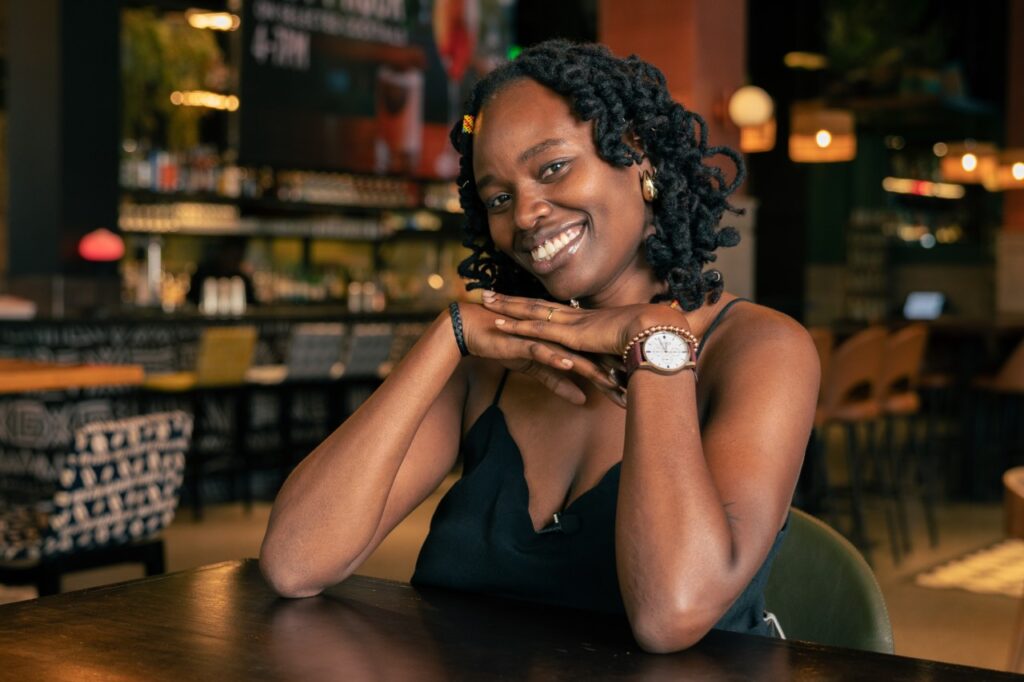
When asked what message she’d share with educators, parents, and peers, Nimara Newa replied with empathy and foresight.
“I would encourage educators, parents, and peers to hold space for young people’s exploration without rushing to provide answers or impose frameworks. Beyond the emphasis on ‘doing’ that religion often prescribes, the rituals, duties, and rules, young people are seeking the ‘being’ of spirituality: presence, authenticity, and a sense of identity rooted in openness and support. From this deeper grounding in ‘being,’ the ‘doing’ practices can emerge more organically and meaningfully.”
Nimara states that spirituality today is not a fixed inheritance, but a living question.
“It’s important to remember that for many, spirituality is no longer a fixed inheritance but a living question. Supporting this search requires humility, curiosity, and patience. By offering safe spaces for dialogue and affirming that spirituality can take many forms, we create conditions where young people can integrate both mental health and spiritual growth into something whole and sustaining.”
Her vision stretches beyond the present. As she continues her psychology journey, she is drawn to the deep and often unspoken questions that shape human life.
“I feel most drawn to research and practice at the intersections of identity and existentialism. Questions of who we are, sexually, spiritually, and culturally, are deeply tied to mental health, and I want to keep exploring how young people make meaning in these areas. I’m especially interested in how identity formation, sexuality, and spiritual searching shape one’s sense of self, connection, and purpose.”
For her, psychology is not just about relieving pain but about walking alongside people in their search for meaning.
“For me, psychology is not simply about alleviating symptoms, but about accompanying people through the profound questions of being human: belonging, freedom, love, loss, mortality, and the search for meaning.”
In this, she echoes the existential psychiatrist Irvin Yalom, whose words guide her practice:
“The fact that we are all, in the end, fellow travellers should give us compassion for each other’s journey.”
Irvin Yalom
As it is, people must dare to ask the difficult questions, questions of who they are, why they hurt, and what their struggles mean in the bigger picture.
In seeking meaning, Nimara emphasizes, we learn not to run from pain but to transform it into wisdom. To do this, we must remain open, open to doubt, open to dialogue, open to the possibility that spirituality and mental health are not competing forces but companions on the journey of being human.
This spirit of shared humanity, Nimara believes, is the heart of guiding the next generation. Her vision is not to dictate answers, but to nurture spaces where exploration can unfold, where young people can wrestle with questions of identity, spirituality, and mental health in ways that encourage openness, deepen their sense of belonging, and allow them to discover meaning for themselves. Equally important, she notes, is recognizing how these evolving identities shape relationship patterns across romantic, platonic, and familial bonds, influencing how people connect, communicate, and grow together.

- The Rise of Suicide Posts in Digital Spaces Reflects a Growing Mental Health Crisis - February 22, 2026
- How Kenya’s Silent Lifestyle Disease Crisis Is Reshaping Public Health - February 12, 2026
- The Rise of Lifestyle Diseases Emerges as a Crisis Among Kenya’s Youth - February 9, 2026

