When it comes to suicide and the brain’s “suicidal mode,” few voices bring as much clarity and depth as Nicole Onderi.
She is a dedicated psychologist and Research Associate at the Aga Khan University’s Brain & Mind Institute in Nairobi, Kenya. In her current role, she supports the administration and adaptation of culturally appropriate neuropsychological test batteries tailored for African populations, ensuring their reliability across diverse communities. With a deep commitment to advancing mental health research and practice, she brings both scientific rigor and compassion to her work.
In this feature, Nicole Onderi sheds light on the brain’s “Suicidal Mode,” explaining how it alters thought patterns, why suicide is often misunderstood, and what strategies can help individuals in crisis. Through her expertise, she offers powerful insights into how we can better support those struggling with suicidal thoughts and reshape societal attitudes toward prevention.

Nicole Onderi’s journey into psychology has been anything but linear. What began as a simple desire to “help people” soon evolved into a deep exploration of the human mind and the crises that push it to the edge.
“Honestly, my journey into psychology feels like one of those Netflix plots where you think you know where the story is headed, then life throws in a twist. I’ve always been fascinated by the way the mind works, why people think, feel, and behave the way they do. But what really pulled me in was seeing how often people suffer in silence, especially around issues like depression and suicidal thoughts.”
Nicole Onderi, Counselling Psychologist
For Nicole, the turning point came from noticing how often people endure suffering in silence, particularly around depression and suicidal thoughts. These moments revealed to her that mental health crises are not just clinical events to be studied, but profoundly human experiences that cut across all walks of life.
“Suicidal thinking, in particular, struck me because it’s such a painful intersection of despair and survival. You’re watching someone’s brain flip into this ‘suicidal mode,’ almost like a faulty switch, and yet beneath that, there’s still this spark of life they’re holding on to.”
Nicole admits her curiosity and compassion keep her anchored in this work,
“The brain can sometimes act like a bad roommate, it tells you lies, makes you doubt yourself, and occasionally forgets to pay rent. My job is helping people kick out those negative thoughts or at least renegotiate the lease.”
It was during her clinical training that she encountered the concept of the “Suicidal Mode” a term that gave structure to what she had already been witnessing.
“You know how sometimes your computer goes into ‘safe mode’ when it’s overloaded? Well, the brain has its own version, except instead of protecting you, it convinces you that the only way out is to shut down completely. That framing really clicked for me.”
Understanding this mode, Nicole emphasizes, is transformative for both professionals and the public. For psychologists, it shifts the approach from judgment to empathy. For families and communities, it offers a way to see suicidal thoughts not as permanent or defining, but as temporary states that can pass.
“If people can see suicidal thinking as a temporary brain state, like a storm that passes rather than a permanent identity, it opens up space for compassion. It means friends, families, even colleagues can say, ‘Okay, this is a mode, not who you are. Let’s ride it out together.’”
Nicole Onderi, Counselling Psychologist
Nicole believes that rethinking suicide through the lens of the “suicidal mode” is a lifeline. It reframes despair as a temporary state rather than a permanent truth, reminding us that people are not defined by their darkest moments. By naming this mode, she says, we create space for empathy, for holding on, and for guiding someone back toward safety.

“The suicidal mode concept gives us language, perspective, and most importantly, hope. And between you and me, hope is the best Wi-Fi connection the brain can ever have; it keeps us all connected and reminds us that even when the signal drops, it can be restored.”
Inside the Suicidal Mind
One of the most common misconceptions about suicide is the belief that it is a rational choice, a calm and reasoned decision someone makes after weighing their options. Nicole Onderi challenges this assumption, explaining that while it may appear that way from the outside, the inner workings of the suicidal mind tell a very different story. Suicide, she emphasizes, is not about logic; it is about survival instincts gone awry.
“From the outside, suicide can look like a calm, thought-out decision; almost like someone making a tough but rational choice. But from a psychological perspective, that’s not what’s happening. When someone is suicidal, the brain isn’t running on its full operating system. It’s more like being stuck in ‘emergency mode,’ where survival instincts get hijacked.”
She compares this to trying to solve a crossword puzzle while your house is burning down. In such a state, the brain is so consumed with extinguishing the flames of emotional pain that it cannot see broader possibilities. This explains why suicidal thinking feels deceptively logical to the person experiencing it: the brain presents suicide as the only route to relief.
“Calling suicide a rational choice oversimplifies what’s really happening. It’s not about people wanting to die; it’s about people wanting the pain to stop. And the brain, in its “suicidal mode,” just happens to offer the worst possible advice.”
Nicole Onderi, Counselling Psychologist
This narrowing of perception is what psychologists call cognitive narrowing or tunnel vision. In everyday life, our brains juggle many options, from calling a friend to taking a break when overwhelmed. But in a suicidal crisis, that flexibility collapses. Nicole likens it to the urgency of a phone on 1% battery: the mind can only obsess over one thing, recharging the battery, or in this case, ending the pain.
“It’s like the mind puts blinders on, so instead of a wide horizon of choices, all you see is one dark path. That tunnel vision is dangerous because it tricks people into believing there’s no way out, when in reality there are other exits; they just can’t see them in that moment.”
Nicole Onderi says that part of their job as psychologists is to gently widen that tunnel again, reminding people there are other ways out of the maze besides giving up.
For loved ones, friends, or colleagues, this shrinking world can be hard to spot because it often unfolds quietly. Nicole describes it as watching someone dim the lights in their own room, piece by piece. Conversations that once spanned a range of interests may reduce to a single theme: hopelessness or self-blame. Decision-making becomes unusually difficult, even over small matters. And in speech, absolute language, words like always, never, or no point, replaces nuance and possibility.
“It’s like their brain’s browser has 20 tabs open, but all of them lead to the same gloomy webpage. Emotionally, you may hear absolutes: ‘I can’t go on,’ ‘You’d be better off without me.’ Physically, they might withdraw, seem unusually tired, or act like they’re carrying invisible weights.”
These are not signs of weakness, Nicole stresses, but signals of a brain overwhelmed and stuck in survival mode. Recognizing them early can mean the difference between silence and lifesaving intervention. And that recognition does not demand expertise, only presence.

“For friends, family, or colleagues, the key is to notice these patterns without panic but with presence. If someone’s world seems to be shrinking to one painful thought, that’s the time to lean in gently: ask questions, listen without judgment, and remind them you see more paths for them than they can see right now. Sometimes, simply being that extra set of eyes outside the tunnel can make all the difference.”
Nicole Onderi, Counselling Psychologist
Breaking Through the Tunnel
Supporting someone caught in the grip of suicidal thoughts can feel overwhelming. Many loved ones worry about saying the “wrong thing” or believe they need the perfect words to pull someone back from the edge. But Nicole is quick to point out that in such moments, presence matters far more than perfection. The goal is not to deliver a flawless rescue speech, but to remind the person that they are not facing the storm alone.
“When someone is in that suicidal ‘mode,’ the best support isn’t about having the perfect speech, it’s about being a steady presence. Think of yourself as holding an umbrella in their storm; you can’t stop the rain, but you can make sure they’re not getting soaked alone.”
This steady presence often looks deceptively simple: listening without rushing to fix, asking gentle questions, reflecting back what you hear, and resisting the urge to argue with or rationalize their pain.
In the middle of a crisis, logic tends to bounce off; compassion, however, gets through.
Even small gestures, sitting quietly together, helping with routine tasks, or checking in regularly, can create just enough space for the tunnel vision to widen.
“Logic won’t land when their brain is in survival mode, but compassion will. Small gestures like sitting with them, checking in, helping with simple tasks can widen their tunnel just enough to see other options. Above all, remind them this state is temporary. Hope, when shared, works like a torch in the dark: even if they can’t hold it themselves, you can hold it up until their hands are free again.”
Nicole Onderi, Counselling Psychologist
In clinical practice, the work follows a similar principle: restoring perspective slowly, rather than forcing solutions. Nicole explains that one of the first steps is helping the person regulate emotions so the brain’s “alarm bells” stop drowning everything else out. Grounding exercises, calming techniques, and simply slowing the pace can create the conditions for clearer thinking to return.
Carson Anekeya
From there, she emphasizes the value of collaboration over prescription.
“Another strategy is collaborative problem-solving. Instead of saying, ‘Here’s what you should do,’ we sit side by side and explore options together. It’s a bit like holding up a map when someone’s lost in a maze; you don’t drag them out, you walk with them until new paths come into view.”
Nicole also highlights the role of gently challenging all-or-nothing thinking. Sometimes, it’s as simple as asking: “Is it possible there’s more than one way forward?” Such a question doesn’t demand immediate answers but opens the door to alternatives, even if only slightly at first.
“Psychological counselling strategies are less about giving advice and more about restoring perspective. Once the emotional fog lifts, people often surprise themselves with the solutions they already carry inside. Our job is simply to hand them the flashlight so they can find the exits again.”
Nicole Onderi, Counselling Psychologist
Changing Minds, Saving Lives
Nicole emphasizes that understanding the brain’s “suicidal mode” has the power to transform how society approaches suicide prevention. Instead of viewing suicide as a moral weakness or a deliberate choice, reframing it as a temporary brain state creates room for compassion.
“It’s like realizing someone isn’t bad at swimming, they’ve just been caught in a strong current. You don’t judge them for struggling; you throw them a floater.”
This shift matters. When we recognize suicidal crises as altered states of mind rather than fixed identities, judgment softens and support becomes possible. Conversations move from silence and stigma to empathy and action. On a broader scale, this perspective strengthens prevention efforts by reminding us that recovery is achievable and intervention is worthwhile. Hope stops being a vague concept and becomes something practical, something that can be offered, held, and shared.
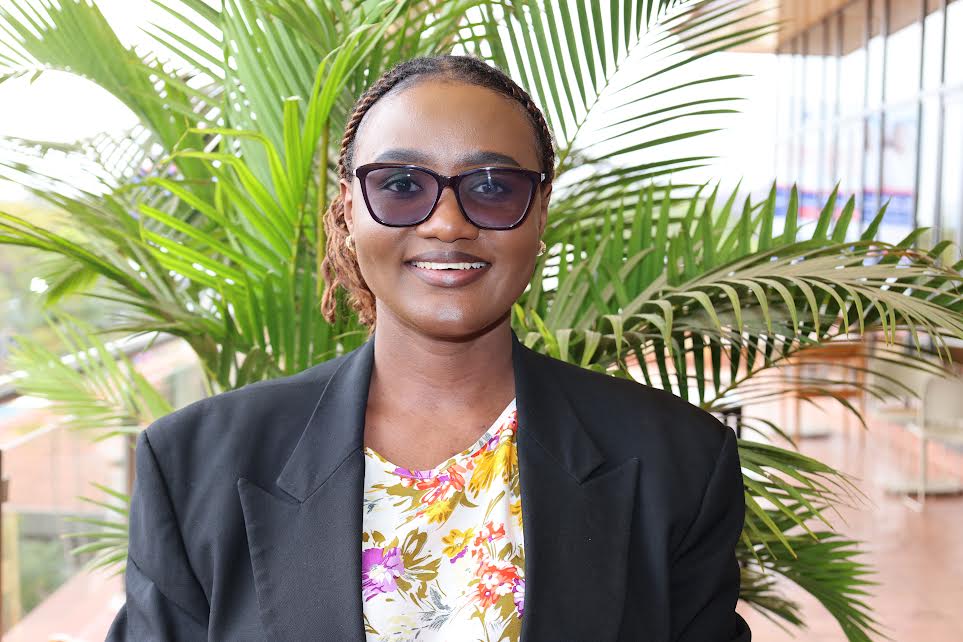
“Suicidal thoughts aren’t proof of weakness; they’re proof that the brain is in distress. And with the right care and compassion, people can, and do, find their way back to calmer ground. Suicidal mode is a storm, not the whole climate.”
It is both inspiring and grounding to receive psychological expert insights from Nicole Onderi, whose work sheds light on one of the most urgent issues of our time. In a month dedicated to Suicide Prevention Awareness, her insights remind us that knowledge and compassion are powerful tools in saving lives. Nicole’s passion for her work shines through in every explanation, offering understanding and hope. And in her rising, may many more professionals rise too, committed to guiding, supporting, and keeping the flame of hope alive for those who need it most.

- The Rise of Suicide Posts in Digital Spaces Reflects a Growing Mental Health Crisis - February 22, 2026
- How Kenya’s Silent Lifestyle Disease Crisis Is Reshaping Public Health - February 12, 2026
- The Rise of Lifestyle Diseases Emerges as a Crisis Among Kenya’s Youth - February 9, 2026


