Modern dating communication patterns are silently killing relationships, and many connections are dying before they even make it past the talking stage. Despite the evolution of digital platforms with enhanced features meant to keep people connected, something still isn’t working. Messages go unanswered, conversations stall, and the talking stages feel more exhausting than exciting.
Are we failing to communicate, or have the rules of dating simply changed too fast for us to keep up?
On 18th October 2024, I published an article titled “Why Some Relationships Thrive Without Words”, where I asked a simple question: Do we talk too much? The piece was inspired by a quote that challenged the popular belief that constant communication is the ultimate marker of healthy relationships:

“People always say communication is key, but why do some of the best relationships thrive on things left unsaid, Are we overcomplicating things by demanding constant emotional transparency?” — DaiseyIvy
My previous article examined themes such as emotional intimacy, dry texting and one-word replies, whether slow texting is a red flag, how to deal with partners who refuse to communicate, the weight of unspoken emotions, codependency, and the thin line between needing space and emotional withdrawal. You can check out the full feature here.
Today, I return to this conversation from a different angle. While silence once raised questions about emotional availability, the problem has evolved. We are now communicating more than ever, yet things are still not working out. This raises a more urgent question: why are relationships dying in the age of Modern Dating Communication? With endless messaging platforms, read receipts, typing indicators, voice notes, and social media access, one would expect clarity and closeness. Instead, many relationships are ending before they even begin, many connections collapse long before they are given a chance to become something real.
What we are witnessing is not a lack of communication, but a breakdown in how we communicate. At the centre of it all is the talking stage. In today’s dating culture, it is no longer merely a bridge to intimacy; it is often where relationships begin to fall apart.
The Talking Stage: “Where Hope Is Built on Notifications”
The talking stage is often long and repetitive, with extended texting, voice notes, memes, and late-night chats, but it usually has no clear trajectory toward exclusivity or real relationship progression. Many young people report this as exhausting because it creates emotional investment without security or clarity on mutual intent. This stage prolongs emotional engagement while avoiding commitment, leaving people in limbo and emotionally strained, and without clarity, individuals keep hoping the other will “step up,” which feeds anxiety and uncertainty. This pattern often leads to ghosting or breadcrumbing when interest starts to fade.
Recent discussions on platforms like X, TikTok, and Kenyan forums reveal a growing battle between men and women over messaging habits during the talking stage. From men’s perspective, many claim women are inconsistent in texting, leaving them confused, anxious, and unsure whether the other party is interested, whereas women argue men are inconsistent responders and are often distracted, sometimes humorously pointing out that games like PES (Pro Evolution Soccer) keep boys & men glued to their phones, replacing the role of active emotional engagement.
Many women online also claim that men these days are “poor communicators” and often fail to provide even the “bare minimum” in conversation, like replying promptly, showing interest, or checking in. Although I do believe that what counts as the bare minimum is highly subjective. To one person, responding within an hour and sending a thoughtful text may be enough, whereas to another, bare minimum might mean daily check-ins, engaging in meaningful conversations, or remembering small details. This subjectivity creates a mismatch of expectations, which fuels frustration and blame in the talking stage, and it’s not always about laziness, disinterest, or gender; rather, it reflects personal standards, communication styles, and digital habits.
Instead of pointing fingers, the emphasis should shift towards open dialogue, encouraging people to communicate what they consider essential, and toward awareness, recognizing that texting frequency or style may differ by personality or even lifestyle. By setting mutual expectations early in the talking stage, many misinterpretations, breadcrumbing, or ghosting can be avoided, yet when these conversations don’t happen, failure in early expectations often escalates into those patterns.
Ghosting: Sudden Silence Breaking Relationships

Ghosting occurs when one party abruptly cuts off all communication without explanation or discussion, leaving the other person without closure. It can happen at any stage of a relationship, but it is particularly common after the talking stage, when expectations have been raised but commitment is unclear. The sudden disappearance leaves the recipient confused and struggling to understand what went wrong, often creating emotional limbo.
The reasons people ghost vary, but some do it to avoid confrontation or uncomfortable conversations. Digital communication also plays a role, as it reduces empathy and encourages impulsive, detached behavior, a phenomenon psychologists call toxic online disinhibition.

According to research, online disinhibition is the tendency for people to behave and communicate more freely, often more intensely or rudely, online than they would in person. Factors such as anonymity, invisibility, and the lack of immediate feedback reduce the social checks that normally guide behavior, allowing people to express themselves more intensely. This can lead to positive, “benign” behaviors, like sharing personal thoughts openly, but it can also promote negative, “toxic” behaviors, including rudeness, cyberbullying, or, in the context of dating, ghosting.
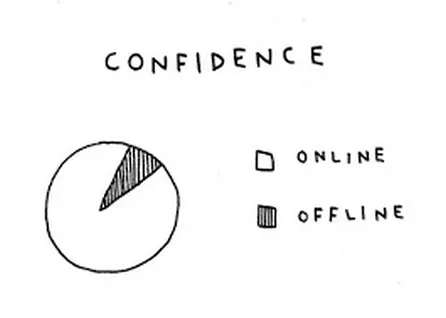
We tend to believe we have more freedom, and therefore more confidence, online than we would in person, hence that explains why we behave differently than we would face-to-face. With a screen between people, it becomes easier to walk away without facing immediate emotional consequences, making ghosting a convenient, though hurtful, escape from relational tension.
Unlike direct rejection, ghosting disrupts psychological closure and leaves individuals in a prolonged state of uncertainty. Research shows that being ghosted triggers higher levels of anxiety, self-doubt, and lowered self-esteem than a clear “no,” because the abrupt silence prevents the brain from processing the rejection fully.
According to research published in November 2025 in Computers in Human Behavior titled “The phantom pain of ghosting: Multi-Day experiments comparing the reactions to ghosting and rejection” found that while both ghosting and direct rejection harm emotions and basic psychological needs, ghosting produced a slower and more prolonged negative reaction due to the uncertainty and lack of closure associated with it. This emotional ambiguity can affect not only romantic relationships but also friendships and professional interactions, reflecting a broader culture of avoidant communication in the digital age.
Breadcrumbing: Mixed Signals
Breadcrumbing is when someone gives minimal, sporadic signals of interest, a like, a short text, or a half-hearted comment, but makes no real effort toward genuine engagement. Today, this behavior is often referred to as giving “mixed signals” and happens frequently, leaving the other person unsure of where they stand.
For those on the receiving end, breadcrumbing can be confusing and emotionally draining. Victims often feel stuck in limbo, clinging to hope without any real payoff, which can lead to lower life satisfaction, helplessness, and loneliness. The inconsistent attention creates an emotional pull that is difficult to resist.
Psychologically, breadcrumbing works because sporadic attention mimics intermittent rewards, similar to patterns seen in addictive behaviors. This keeps people “on the hook,” making it hard to disengage emotionally even when they recognize the lack of genuine interest.
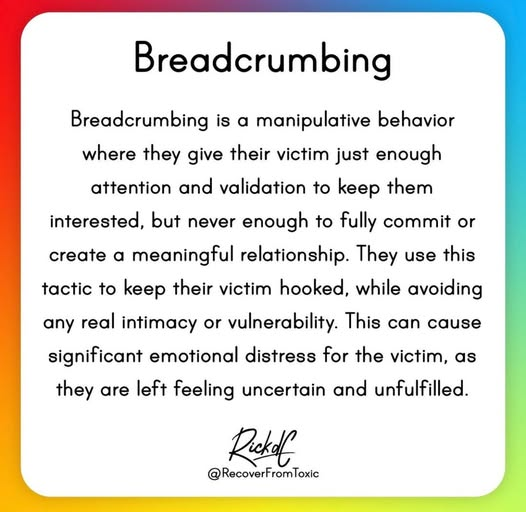
The reasons behind breadcrumbing vary. Some individuals seek emotional availability without accountability, using small gestures of attention as an ego boost rather than expressing real interest. Often, breadcrumbers rationalize their behavior without fully acknowledging the emotional harm it causes, leaving the recipient trapped in uncertainty.
Beyond ghosting and breadcrumbing, other modern dating behaviours are emerging that also carry emotional costs. One of these is zombieing, which happens when someone who ghosted suddenly reappears as if nothing ever occurred. Studies on patterns like ghosting and intermittent contact show that when people vanish and then return unpredictably it prolongs emotional confusion and undermines boundaries, because the ambiguity rekindles hope without commitment. Research on related behaviours suggests that exposure to silent withdrawal and unpredictable contact is associated with poorer emotional resolution and heightens relational uncertainty rather than closure.
Another growing pattern is situationships, which are ambiguous relationships without labels or commitment, leaving partners unclear about expectations, roles, and emotional rights within the connection. This is especially common among campus and young adult relationships, where communication remains frequent but intentions remain undefined. The lack of clarity creates emotional imbalance, where one party may be investing emotionally while the other avoids responsibility or commitment. In mixed‑method studies, individuals in situationships report lower satisfaction and higher emotional ambiguity than those in more clearly defined relationships, reinforcing that lack of clarity can generate stress, overthinking, and insecurity about the future of the connection.
A more toxic evolution in digital dating communication is ghostlighting, a hybrid of ghosting and gaslighting, where someone not only disappears but later returns while manipulating the other person’s sense of reality, denying their absence or implying the recipient misunderstood what happened. Experts argue that this behaviour worsens insecurity and emotional instability because it combines emotional abandonment with psychological invalidation, making individuals question their own perceptions and emotional responses.
Research on ghosting and gaslighting combined shows that exposure to these behaviours is linked with negative psychological outcomes such as depression and paranoid ideation. A 2025 cross‑sectional study “Exposure to Ghosting, Gaslighting and Coercion and Mental Health Outcomes” found that individuals exposed to ghosting, gaslighting, or coercive behaviours in relationships were more likely to experience poor mental health, including increased depression and paranoid thinking, underscoring how manipulative communication patterns can undermine emotional stability.
The research by Barbara Lopes and Rusi Jaspal examined the mental health consequences of exposure to ghosting, gaslighting, and coercion in relationships. The cross-sectional survey study looked at how maladaptive traits, such as rejection sensitivity and intolerance of uncertainty in relationships, and situational triggers, like being ghosted, gaslighted, or coerced by a current or past partner, predicted depression, anxiety, and paranoid ideation.
The study analyzed correlational data from 544 participants in the United Kingdom using hierarchical multiple regression. It found that rejection sensitivity and intolerance of uncertainty were positively associated with depression, anxiety, and paranoid ideation. Gaslighting was positively associated with depression, while ghosting and coercion were linked with paranoid ideation. The researchers recommended that victims of these abusive relationship behaviours be offered psychological support to prevent the onset of depression and paranoia.
Why Are These Patterns Prevalent Now?
These patterns are becoming increasingly common for a number of reasons, many tied to how we communicate in the digital age. Online dating and app culture is one major factor. With platforms like Tinder, Bumble, and others, people are exposed to many potential partners in a short amount of time. Early rejection, ghosting, or poor closure often feels almost cost-free, and with endless options just a swipe away, the incentive to invest emotionally diminishes. The same applies to everyday texting on apps like WhatsApp, where conversations can drag on without real commitment, and disappearing or replying late is easier than facing a difficult conversation in person.
Digital communication also lowers social accountability. Texts and direct messages remove the nonverbal cues that normally trigger empathy, making it easier for people to avoid confrontation or dismiss emotional responsibility. Without the immediacy of face-to-face interaction, behaviors like ghosting or breadcrumbing feel less risky, and people may not even realize the impact of their actions on the other person.
Finally, there’s a culture of comparison and validation that reinforces these patterns. Younger generations often measure interest, effort, and commitment against public interactions, messages, likes, and social media stories, rather than direct communication. Expectations around loyalty, respect, and face-to-face conversation are still strong, but digital dating habits push in the opposite direction. We need to reclaim the culture of meeting in person and speaking openly; some things are simply better said face-to-face rather than over a screen.
Psychological and Social Consequences
Modern dating communication patterns like ghosting and breadcrumbing can have serious psychological effects. Victims often report higher levels of loneliness and helplessness compared to those not exposed to these behaviours. Life satisfaction can drop as people struggle with the uncertainty and emotional limbo created by inconsistent or sudden silence, leaving them feeling emotionally drained and unsupported.
These patterns can also erode self-esteem. Repeated ambiguous communication or sudden disappearances can trigger self-doubt, making individuals question their worth or whether they did something wrong. Over time, this internalized uncertainty can affect how someone approaches future relationships, creating hesitation and fear around expressing their feelings openly.
Another consequence that really frightens me is how we are starting to normalize avoidant behaviour. When ghosting, breadcrumbing, and other confusing patterns become common, they begin to feel normal, and those who have been on the receiving end may eventually adopt the same behaviours themselves. If we aren’t careful, this could become the new normal, a cycle where avoidant communication is expected rather than questioned. And when that happens, it becomes even harder for relationships to thrive on honesty, consistency, and trust.
Redefining What Healthy Communication Looks Like

1. Acknowledge the Problem
The first step is recognizing just how widespread these patterns have become. Ghosting, breadcrumbing, zombieing, ghostlighting, and situationships are no longer isolated experiences, they are part of how modern dating works. This matters because these behaviours carry real mental health consequences, including loneliness, anxiety, depression, self-doubt, and the normalization of avoidant communication. If left unchecked, these patterns risk becoming the “new normal” in relationships.
2. Personal Responsibility and Awareness
We each have a role to play in breaking these cycles. Take a moment to reflect on your own communication habits and consider whether they contribute to confusion or emotional strain. Understanding your personal standards and expectations, and being honest about them with partners is key.
3. Clear Communication as Prevention
Prevention starts with clarity. Early and explicit conversations about intentions, boundaries, and expectations can prevent misunderstandings that lead to ghosting or breadcrumbing. Setting mutual “communication agreements” with partners can help ensure both sides are on the same page.
This reminds me of something I recently reflected on and shared on my X:
“I’ve never understood why the beginning has no rules, yet somehow everything still counts. In the early stages, no one is really meant to tell the other how to behave, yet we’re all observing, judging and deciding whether to stay. I’m still trying to make sense of this.”
Carson Anekeya
The point is, don’t be afraid to let someone know from the very start what you like, what you don’t, and what you expect. We’ve always treated this stage as undefined, yet it’s often where relationships begin to fail before they fully take shape. It’s high time we change this narrative and set clear expectations early, rather than leaving so much to guesswork and assumption.
Finally, prioritize your emotional well-being. If you have been affected by ghosting, breadcrumbing, or other toxic dating behaviours, seeking psychological support or guidance can help you process the experience and prevent long-term harm. Professional advice can also provide strategies to break cycles of avoidant behaviour and promote healthier communication in future relationships.
So, the next time you start a new connection or a conversation with someone, think of the patterns you’ve experienced before, ghosting, breadcrumbing, or unclear expectations, and ask yourself: Am I going to accept this as normal, or will I set a different standard from the very beginning?

- The Rise of Suicide Posts in Digital Spaces Reflects a Growing Mental Health Crisis - February 22, 2026
- How Kenya’s Silent Lifestyle Disease Crisis Is Reshaping Public Health - February 12, 2026
- The Rise of Lifestyle Diseases Emerges as a Crisis Among Kenya’s Youth - February 9, 2026
