On Friday, March 28, 2025, Nation Media published a powerful piece titled “Psychology Graduates Struggle to Get Jobs in Kenya” by Michael Ochieng’. The article highlighted a glaring paradox: “Despite Kenya’s growing mental health crisis, a stark paradox persists. Many psychology graduates are finding themselves unable to secure employment, yet an alarming number of Kenyans face mental health challenges. There are about 9,000 counsellors and psychologists registered under the Kenya Counselling and Psychological Association to serve an estimated 25 percent of the population wrestling with mental health issues.”
The irony is painful, even as the demand for mental health support surges, psychology graduates in Kenya remain largely underemployed or completely locked out of the workforce. This disconnect isn’t just about job availability; it’s something that runs deep in how the society, the employers and the public, perceive the value and versatility of psychology as a profession.
It’s this disconnect that prompted Maureen Wanjiru, a recent psychology graduate, currently serving as a Clinical Supervisor at Shamiri Institute, to speak up. Although she’s among the fortunate few who found a foothold in the healthcare sector, Maureen felt compelled to advocate for those still on the sidelines, qualified, capable, and yet overlooked. Her reflections inspired this follow-up article, a deeper look into the narratives, misconceptions, and missed opportunities surrounding psychology graduates in Kenya.

The Stereotype Trap
There’s a persistent and limiting belief in Kenya that psychology begins and ends with therapy. Many employers still view psychology graduates solely through the lens of clinical counseling or hospital-based care, an outdated stereotype that narrows opportunities. As Maureen Wanjiru, Clinical Supervisor at Shamiri Institute, explains:
“Honestly, I think many employers in Kenya still associate psychology with just counseling or therapy. They assume if you studied psychology, your only career path is to become a counselor or work in a hospital. But our training is way broader than that.”
Maureen Wanjiru
Despite the growing awareness around mental health, professionals in the field still face narrow perceptions about where their skills belong. Many find themselves boxed into clinical roles, even when their training prepares them for so much more.
“I’ve applied for roles outside the typical mental health field, and I’ve been told I’m ‘in the wrong place.’ It forces you to question your career direction, even when you know you’re qualified for more.”
Maureen Wanjiru
When Maureen was asked to describe a time her psychology background was viewed as a limitation, she recalled an interview at a wellness company for an executive assistant position. Despite her qualifications, the interview panel fixated on her psychology degree, expressing concern that taking on a non-clinical role might derail her from what they assumed was her intended path. “They said the job was too different for someone with a psychology degree. It made me realize how misunderstood our field really is.”
“I went for an interview at a wellness company, for an executive assistant role, and the panel kept focusing on my psychology background. They were concerned that doing a “different” role would derail me from what they assumed was my path. I didn’t get the job, and it had nothing to do with my skills. That moment really opened my eyes to how boxed in we are.”
Maureen Wanjiru
It’s time to break the stereotype and expand the conversation.
The Curriculum Misconception
Another common misunderstanding lies in what psychology students actually study. Many assume a psychology degree in Kenya revolves entirely around counseling or diagnosing mental illness. But this assumption fails to capture the true academic scope of the field. Maureen Wanjiru points out that during her psychology studies, they only covered about three units specifically focused on counseling, and just four on abnormal psychology. The rest of the curriculum ranged widely across areas like organizational psychology, behavioral sciences, human development, cognitive processes, and research methods, disciplines that equip graduates for diverse roles beyond the therapy room.
“For example, in my degree, we only had a few counseling and abnormal psych units. The rest covered things like organizational psychology, statistics, and research. But people don’t see that side. They hear “psychology” and immediately think of therapy couches.”
Maureen Wanjiru
For those unfamiliar with the term, abnormal psychology is the branch of psychology that focuses on unusual patterns of behavior, emotion, and thought, typically linked to mental disorders. It aims to understand, diagnose, and treat these deviations from what is considered typical human functioning. And even that, as you can see, isn’t merely about giving therapy, it’s about analysis, scientific reasoning, and intervention strategies. Once you realize how layered this branch is, it’s hard to argue that psychology is a narrow field.
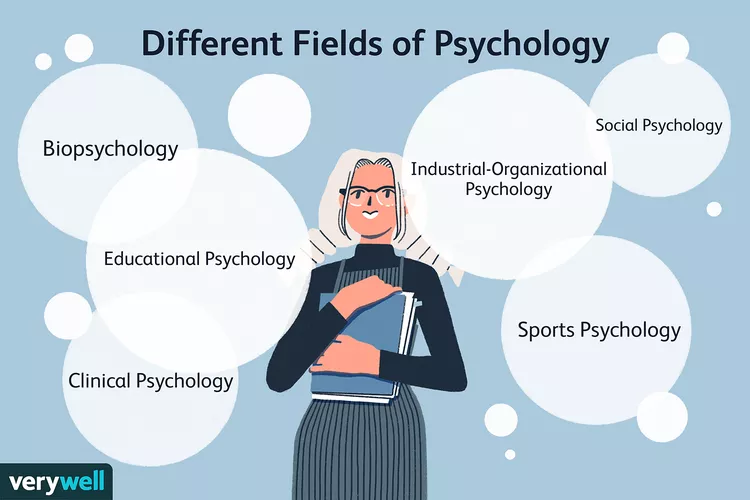
It’s sad to see the contradiction so many psychology graduates face, trained for diverse roles, but boxed into one expectation, Their education equips them with skills in communication, critical thinking, research, emotional intelligence, and human behavior, all of which are highly valuable across different sectors. Yet, despite this versatility, employers often reduce their potential to only clinical or counseling settings. This narrow view not only limits opportunities but also but also limits how institutions think about where and how psychologists can contribute, thus reinforcing the false notion that ‘psychology isn’t adaptable‘, when in reality, it’s one of the most transferable disciplines out there.
Psychology Beyond Therapy Rooms

Psychology is much more than therapy. In fact, psychology graduates can add significant value across various sectors beyond the traditional healthcare or counseling roles. When I spoke with Maureen Wanjiru about this, she emphasized that her academic training covered a wide range of areas. Yet, time and time again, employers tend to overlook this broader skill set, often confining psychology graduates to clinical settings.
Maureen believes there are numerous fields where psychology graduates can thrive and make a difference. One area where they can truly add value is Human Resources. Psychology graduates are trained to understand human behavior, making them well-equipped to manage employee well-being, resolve conflicts, and create a positive organizational culture. But often, HR departments fail to recognize the potential of psychologists, instead hiring professionals from more traditional backgrounds.
In Business and Marketing, psychologists’ understanding of consumer behavior, user experience (UX) research, and communication strategies can help companies tailor their products and services to meet the needs and preferences of their customers more effectively. Psychology graduates excel in understanding human motivations, which helps in creating targeted marketing strategies that resonate with different audiences.
The Education sector also stands to benefit greatly from psychologists. They can contribute to curriculum development, providing insights on how students learn best. They can also support student well-being by designing programs that cater to students’ emotional and psychological needs, helping them perform better in their academic environment.
Finally, as Maureen pointed out, even fields like Legal and Technology can benefit from psychologists’ expertise. Take the Content Moderators case, for example, as discussed in my previous article, “Mental Health Challenges Among Content Moderators“ In the absence of psychological oversight, the workers faced serious psychological harm, sadly, it’s only after the damage has been done that companies begin to realize the need for psychological support. This is a prime example of why psychologists should be proactively integrated into various sectors, rather than brought in only after irreversible harm has been caused.
In every one of these sectors, psychologists have the potential to bring valuable insights. Yet, by the time their worth is realized, it’s often too late to prevent damage. It’s high time we learn that psychology graduates are not confined to therapy rooms, it’s time employers recognized that potential too.
Rethinking Hiring and Industry Perceptions

To wind up our conversation, I posed a critical question to Maureen Wanjiru, one that speaks directly to decision-makers: What would you want hiring managers, CEOs, and the general public to understand, and rethink, about the true potential of psychology graduates? Her response was candid:
“Please stop boxing us into mental health roles only. Yes, psychologists are mental health professionals, but that’s not “all” we are. We are thinkers, researchers, strategists, human behavior experts. We can contribute so much if given the chance. The earlier organizations start recognizing that, the better their work culture, their systems, and even their bottom line will be.”
Maureen Wanjiru
The corporate world, HR departments, and even academia must move beyond the outdated notion that psychologists are only useful in therapy rooms. It’s no longer enough to acknowledge mental health as a crisis and then limit psychology graduates to reactive roles. Employers need to educate themselves on the full scope of psychology, from systems thinking and data analysis to human behavior and workplace dynamics.
A change in hiring practices is long overdue. Companies should begin by creating diverse roles that allow psychologists to contribute in areas like design thinking, organizational strategy, employee experience, crisis communication, and policy development. Ignoring such talent limits the growth of businesses and institutions alike.
“It’s time we stop labeling psychologists solely as ‘mental health professionals’. We are far more than that.”
Maureen Wanjiru
By sharing this, I hope we can all approach the conversation with more open minds and challenge the outdated perceptions limiting psychology graduates. Kenya doesn’t need more psychology graduates in the workforce, it just needs a mindset shift that allows them to thrive. When we rethink their potential, we don’t just create jobs, we build healthier workplaces, stronger institutions, and a more effective and inclusive society.

- The Rise of Suicide Posts in Digital Spaces Reflects a Growing Mental Health Crisis - February 22, 2026
- How Kenya’s Silent Lifestyle Disease Crisis Is Reshaping Public Health - February 12, 2026
- The Rise of Lifestyle Diseases Emerges as a Crisis Among Kenya’s Youth - February 9, 2026