Hilda Njeri is slowly transforming what it means to be a psychology student in Kenya, balancing her identity as a student leader, mental health advocate, and young woman finding her way through her own emotional world.
In a world where mental health conversations are finally taking center stage, those studying psychology often find themselves caught in a paradox, expected to understand the nuances of the human mind while still figuring out their own paths. But behind the textbooks, peer counseling sessions, and leadership roles are individuals who also wrestle with anxiety, doubt, burnout, and the silent weight of supporting others. This conversation with Hilda Njeri, a psychology student and student leader at Kenyatta University, offers an honest look into the lived experiences of those training to care for the minds of others, while still learning how to hold space for their own.

“I’m Hilda Njeri, a fourth-year psychology student at Kenyatta University. I also serve as a student leader representing the School of Humanities, where psychology is one of the departments under the faculty.”
Hilda Njeri
When you meet Hilda Njeri today, it’s easy to see her as a confident psychology student at Kenyatta University, serving as a student leader representing the School of Humanities. Her journey into this field wasn’t paved by certainty but by curiosity. “Honestly, I didn’t know much about psychology when I was choosing the course,” she shares candidly. What began as a decision driven by the desire to study something medical-related soon evolved into a deep appreciation for the subject. Hilda’s story reminds us that purpose is often formed, shaped by experience, exposure, and a growing sense of responsibility to serve both self and society.
Yet once she began engaging with the discipline, something shifted. She describes falling in love with the course after stepping into the academic environment at Kenyatta University. “After joining and we started learning, I loved and enjoyed the course,” she reflects. Her leadership role within the university reflects her growing sense of responsibility to represent, advocate, and inspire within her faculty, especially for students in psychology.
Beyond personal motivation, Hilda understands the quiet struggles many psychology students go through. One of the most pressing concerns she highlights is the anxiety around post-graduation opportunities. “The mental struggle of being anxious if they will get an internship or even a job,” she notes, is real and persistent. Despite progress in mental health awareness across the country, societal attitudes remain partially uninformed or dismissive. “There are people who still believe psychology is not a good course and you won’t find a job,” she explains. This external doubt often becomes internalized, weighing heavily on students who are already dealing with emotionally demanding coursework.
What Hilda shares above echoes a recent feature article I published titled Maureen Wanjiru Reflects on Psychology Graduates’ Struggles, where I highlighted the experience of Maureen Wanjiru, a recent psychology graduate who opened up about similar challenges.
Worse still is the public perception that downplays the academic rigor of the field. “Many people have this perception that everyone can practice counseling without the knowledge,” Hilda adds. It’s a common misunderstanding that erodes the professional value of trained mental health practitioners, creating both discouragement and disillusionment among students. In times like these, Hilda’s voice really matters. She’s not just speaking for her department, but as a reminder that psychology is a calling, and one worth dignifying with the respect and support it deserves.
The Private Battle
Studying psychology can be both empowering and burdensome. For many students like Hilda Njeri, it comes with the unspoken expectation of always being emotionally composed, people expect them to have it all together, an illusion that doesn’t leave room for personal struggles. “It really affects my emotional well-being since it is not easy to speak up that you have an issue,” she says. The idea that those who understand mental health should be immune to its struggles creates a silent pressure. Hilda puts it plainly: “People need to understand that kinyozi hajinyoi.” The Swahili proverb meaning “the barber does not shave himself”, captures how difficult it can be to apply professional knowledge to personal pain.
“People need to understand that ‘Kinyozi hajinyoi’ , simply because am an expert in a certain area that doesn’t mean I can handle it all on my own.”
Hilda Njeri
Still, Hilda acknowledges that her training in psychology has been a tool for self-awareness. Rather than increasing denial or guilt, it’s made it easier for her to recognize her own emotional states. “The knowledge in psychology has made me realize myself better,” she affirms. In a world where self-neglect is sometimes mistaken for resilience, this is a clear distinction, knowing the theory isn’t a shield against emotional breakdowns, but it can be a bridge to healing.
One of the most vulnerable moments in Hilda’s journey came when she lost her first political bid as a student leader. “I really broke down,” she recalls, speaking of the betrayal and disappointment that followed. “Close people had betrayed me. It was crazy.” Despite her public role and expectations to “hold it together,” she chose to prioritize herself. “I took a break from school and everything and went to stay with a friend. In 2–3 days I was okay and ready to resume my studies.” Her story challenges the narrative that strength means constant endurance, it can also mean stepping away, resting, and returning when ready.
Through her academic and personal journey, Hilda has also unlearned some rigid ideas about vulnerability. “It’s okay for any person to be vulnerable no matter the gender,” she reflects. Her words push against the societal conditioning that equates emotional expression with weakness.
“Every person needs care, support, and anyone can break down… I truly believe it’s okay not to be okay. At some point, we are all human beings.”
Hilda Njeri
By speaking up about these silent struggles, Hilda shares something many psychology students feel but rarely say out loud, dealing with emotions isn’t just something they learn in class, it’s part of their everyday lives, it’s woven into their lived experience. Even those who support others through pain need space to feel, stumble, and find their own healing too.
Emotional Backpacks: The Cost of Carrying Others
In the life of a student leader, especially one studying psychology, the line between personal space and public service often blurs. For Hilda Njeri, the emotional labor of supporting others can become overwhelming. “You find people have great expectations,” she says. “They want you to listen to them all the time, you solve their issues. It’s a lot.” As the go-to person for advice and emotional support, she admits that her own needs often take a backseat. “Most of the time I even forget to take care of myself and my life. Fronting other people’s issues first.”
This self-neglect is one of the earliest signs of burnout, a condition that creeps in silently but has very real physical and emotional consequences. For Hilda, burnout manifests in tangible ways:
“Having many chats to reply to since students will always be asking questions, having many calls, many meetings which makes me at some point forget about my life. One of the ways I know I have burnout is having continuos headache and feeling exhausted all the time, skipping meals unknowingly, among many others.”
Hilda Njeri
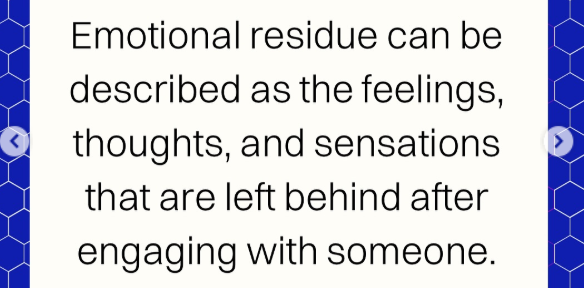
Her story reflects a broader truth: those in caregiving roles often carry what psychologists refer to as “emotional residue” the weight left behind from constantly absorbing the emotions of others. Over time, this weight can feel like an invisible backpack, one that gets heavier with each new crisis, request, or expectation.
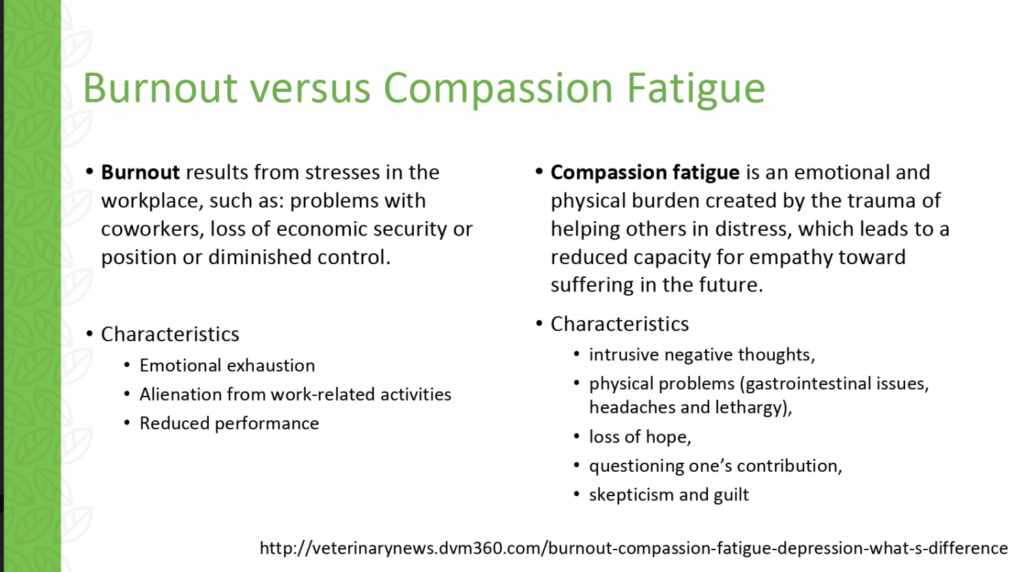
Left unaddressed, this emotional buildup can lead to as compassion fatigue, a deep emotional exhaustion that comes from caring too much, for too long, without enough space to recharge. For psychology students like Hilda, who are expected to both study and practice empathy, the line between personal and professional can blur.
This is where secondary trauma also comes in the emotional distress that can happen when you’re exposed to the pain and trauma of others, even if you didn’t experience it firsthand.
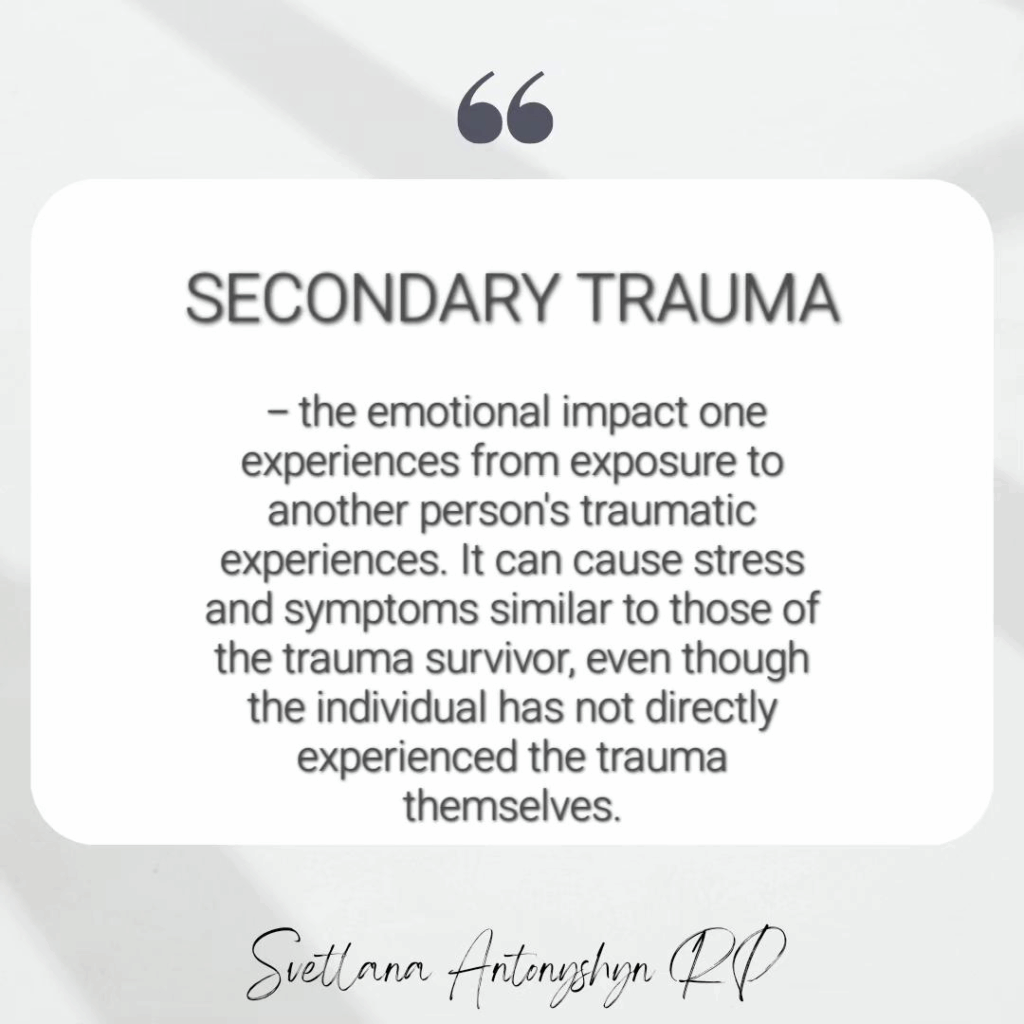
Vicarious trauma, also known as secondary trauma, refers to the emotional residue or psychological impact experienced by those who are exposed to the traumatic stories of others or who witness the aftermath of traumatic events. Over time, this repeated exposure can lead to symptoms similar to post-traumatic stress disorder (PTSD), such as intrusive thoughts, emotional numbing, and hyperarousal, even though the person has not directly experienced the trauma themselves.
When you’re always showing up for others, it’s easy to forget to show up for yourself. And without proper support, even the most passionate students can find themselves drained, questioning their capacity to continue in a field they once loved.
Hilda has found simple but meaningful ways to protect her inner world. “Journaling and reflection, mostly at the end of each day,” she shares, are her go-to methods of grounding. This practice is a vital form of emotional hygiene. Reflection allows her to process what she has taken in from others, separate their emotions from her own, and reconnect with herself.
In psychological terms, reflection helps restore what burnout depletes, agency and self-awareness. It turns experience into insight, and emotion into something manageable. For someone constantly “on” for others, even a few quiet minutes with a journal can offer the kind of space that daily routine rarely allows.

System Check, Advocacy & The Future of Mental Health
While many students in Kenya still face barriers to accessing mental health support, Hilda Njeri speaks with a rare note of optimism. “Kenyatta University has made it easier to seek mental health support,” she says. “We have an office for counseling services which are free of charge.” It’s a powerful reminder that institutional efforts, when well-resourced and student-centered, can make a meaningful difference.
However, the path is not without its gaps. While counseling offices are a step forward, support often thins out beyond campus walls. Hilda points out that universities, though supportive in general, need to “check in the mental health struggle while seeking industrial attachments, internships, and jobs.” This transition phase, when students leave the structure of school and step into an uncertain future, is one of the most mentally taxing. Many psychology students, despite their training, are not immune to the anxiety that comes from facing a job market that doesn’t always recognize or value their profession. “The struggle is real like never before,” she adds, voicing what so many feel but rarely say out loud.
To students like her, those who are silently holding it together while juggling coursework, leadership roles, and their own internal battles, Hilda offers a simple but necessary reminder: “They should not be burdened and they should speak up when they have issues.” And when the pressure becomes too much? “They should take a break.” In this, she echoes a growing movement in mental health advocacy that champions rest, boundaries, and the right to step away, especially for those who are expected to always be strong for others.
Hilda’s story reflects the untold journeys of many psychology students who are trying to balance the delicate dance between healing others and holding themselves together. Her honesty strips away the polished expectations society often places on mental health professionals and students alike, revealing the messy, human, and courageous reality underneath. In listening to her, we’re reminded that those who support others also need space to fall apart, to be held, and to be heard. If we are serious about building a mentally healthy society, we must begin by creating environments, on campuses, in homes, and in workplaces and beyond.

In her sharing, may many rise with the courage to name their struggles, to seek help without shame, and to extend grace to themselves as they do to others. May her voice become a mirror for those silently enduring, and a light for those still finding their way through the shadows. And may her truth remind us all, that even those who lead need space to lean.

- The Rise of Suicide Posts in Digital Spaces Reflects a Growing Mental Health Crisis - February 22, 2026
- How Kenya’s Silent Lifestyle Disease Crisis Is Reshaping Public Health - February 12, 2026
- The Rise of Lifestyle Diseases Emerges as a Crisis Among Kenya’s Youth - February 9, 2026


