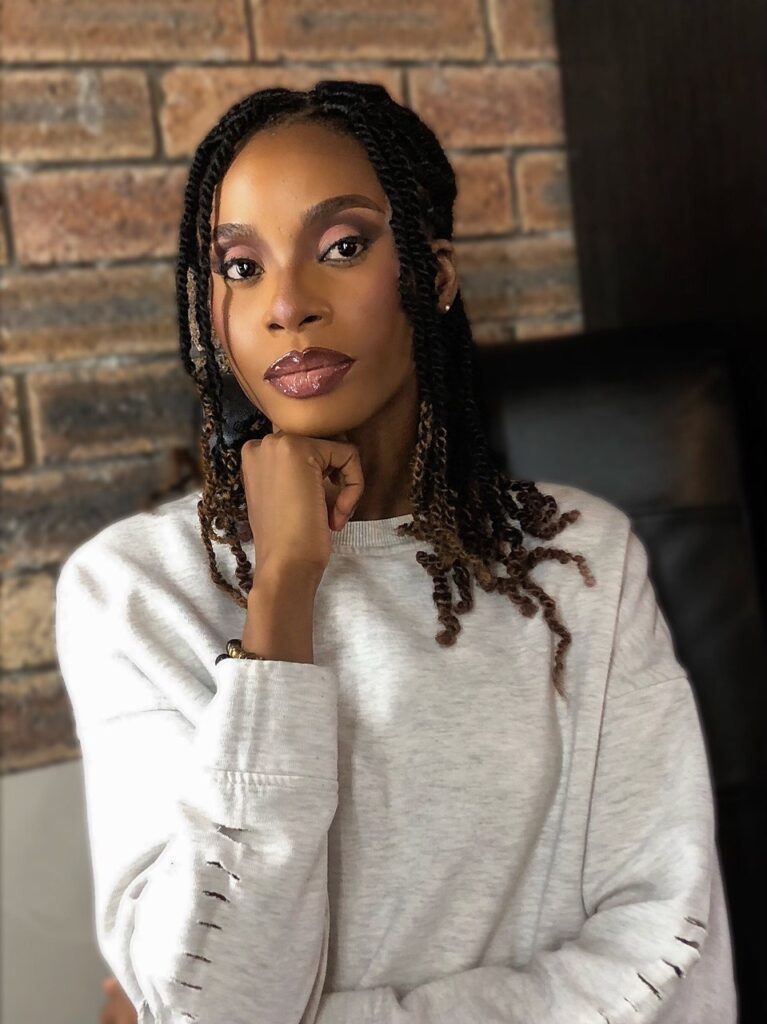
In the heart of Lagos, where conversations around mental health are steadily gaining momentum, a quiet revolution is underway. Behind this shift are powerful voices, mental health advocates and psychology students deeply committed to dismantling stigma and expanding access to care. Among them stands Fiyinfoluwa Onajoko, a postgraduate student completing her MSc in Clinical Psychology at the University of Lagos. Passionate, purposeful, and grounded in lived experience, Fiyinfoluwa is helping shape a more compassionate future for mental health in Nigeria.
Just in her late twenties, Fiyinfoluwa is a passionate mental health advocate determined to make support more accessible and conversations less stigmatized.
“I currently volunteer with a mental health non-profit called Room 707. We provide virtual support to individuals experiencing emotional or psychological distress. It’s a space where empathy, presence, and listening can make a real difference.”
Fiyinfoluwa Onajoko
Her journey into psychology began in adolescence, seeded by observation and empathy. “I often saw how people changed after going through trauma, grief, or abuse,” she reflects.
“They became withdrawn, guarded, or even developed distorted views of others and the world. I realized that with the right support and early intervention, many of these outcomes could be different; that healing was possible if people received the help they needed at the right time.”
Fiyinfoluwa Onajoko
It was this realization that led her to pursue a Bachelor of Science in Psychology and later, a Master’s in Clinical Psychology. But alongside the academic rigor, a deeper calling emerged: advocacy. “I developed a passion for helping young people understand their mental health, feel safe seeking help, and learn how to care for their emotional well-being,” she says.
“I have a Bachelor of Science in Psychology, and I’m currently pursuing a Master’s in Clinical Psychology at the University of Lagos. Along the way, I also developed a passion for advocacy, especially digital advocacy, to help young people understand their mental health, feel safe seeking help, and learn how to care for their emotional well-being.”
Fiyinfoluwa Onajoko
Her desire to go beyond classroom learning and engage directly with those in need propelled her into clinical support and psychoeducation initiatives. “I was driven by a strong desire to support people through difficult times and to help them cope with the emotional and mental challenges that often come with those experiences, I also realized that healing goes beyond just what happens in a therapy room.” she explains.
“That’s what led to my interest in psychoeducation and promoting mental health awareness in general,” she says. “To help bridge the gap between clinical care and public understanding, especially among young people.”
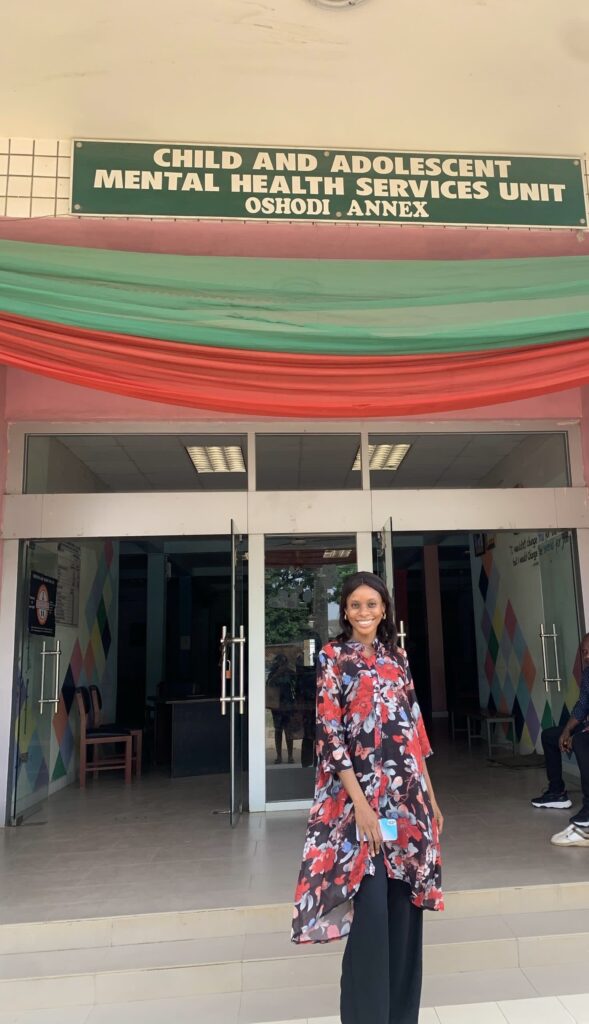
Through both academic pursuit and heartfelt advocacy, Fiyinfoluwa Onajoko is shaping a future where mental health, starting right where she is.
Turning Theory into Wellness Action
For Fiyinfoluwa Onajoko, psychology is not confined to lecture halls, it’s a living, breathing practice. Her commitment to mental health advocacy has taken her beyond academia, into the heart of communities often left out of critical conversations around emotional well-being.
One of the most impactful initiatives she has participated in is the ASADS Tour, spearheaded by the Anti-Suicide and Depression Squad. The mission: take mental health awareness directly to underserved and rural communities across Nigeria.
“One outreach that stood out to me was our visit to the Kadara community in Lagos,” Fiyinfoluwa recalls. “We communicated in the local language to ensure the message truly connected. We spoke about the basics of mental health, broke down common myths, and encouraged people to seek help.”
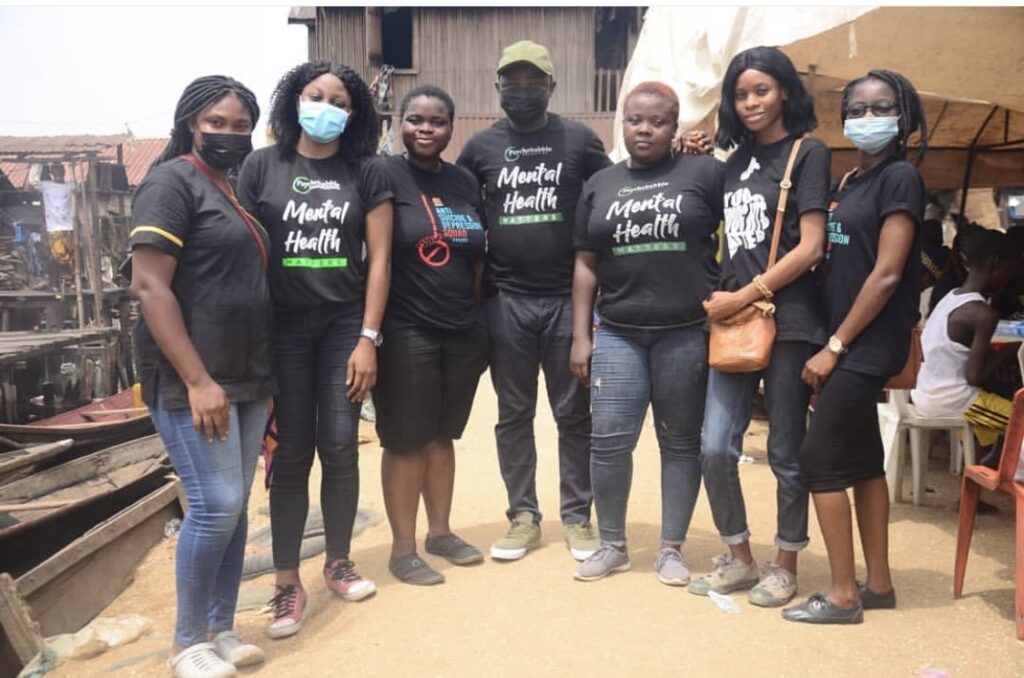
As part of the outreach team, she engaged in group sensitization sessions and also offered individual support to community members.
“We had counselors and trained mental health first aiders available for one-on-one conversations,” she explains. “The impact was profound, for many, it was their first time hearing that mental health challenges are real, valid, and treatable.”
Several individuals came forward to share emotional burdens they had carried in silence for years. Several people opened up about long-held struggles they had never shared before. Some even expressed interest in receiving ongoing support. “It was a reminder that access, language, and empathy can truly change lives,” she says.

Her academic trainings play a critical role in shaping how she supports others. Through models like Cognitive Behavioral Therapy (CBT), Fiyinfoluwa has learned that behavior is rarely random, it’s often the visible surface of a deeper story.
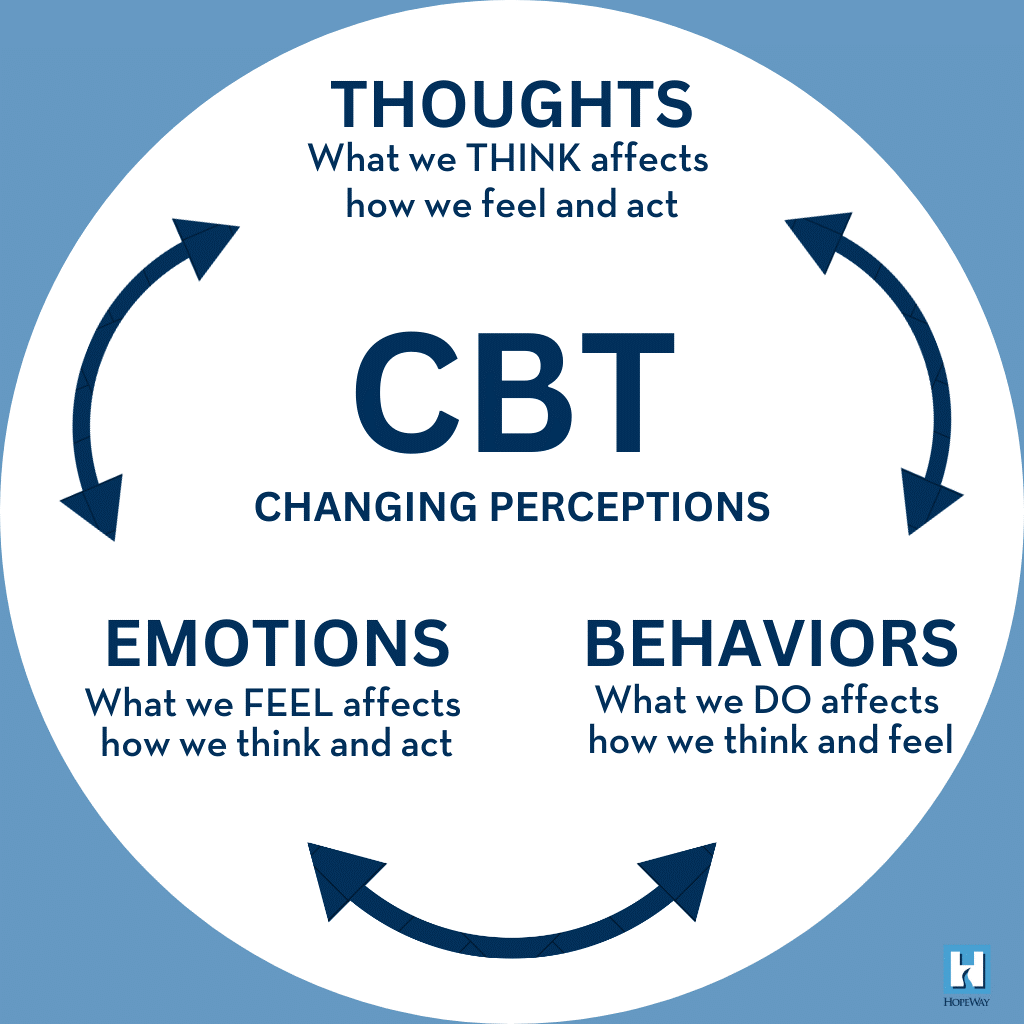
“Studying psychology has really shaped how I support people in everyday life. Learning how our thoughts affect our emotions and behavior has helped me understand that people aren’t just ‘acting out’ or ‘being difficult.’ Often, there’s a story behind their pain.”
Fiyinfoluwa Onajoko
This dual lens, of practitioner and scholar, gives her a unique advantage. “I’m not just listening. I’m thinking about what might be happening underneath, and how I can gently help them make sense of it.”
Balancing the demands of postgraduate coursework with on-the-ground advocacy is no small feat. “It’s definitely a lot to juggle,” she admits, “but I’ve learned to see both sides, the academic and the practical, as feeding into each other. What I study gives me deeper insight, and my field experiences make the theories come alive.”
Intentionality is her anchor. She organizes her time to stay grounded in the advocacy work that fuels her passion.
“It reminds me why I’m in this field to begin with. It’s not always easy, but knowing that both aspects are helping me grow into the kind of psychologist I want to be keeps me going.”
Fiyinfoluwa Onajoko
Still, the road hasn’t been without its challenges.
“One major challenge I’ve faced is overcoming the stigma and misconceptions people still have about mental health,” she explains. In some communities, the mere mention of emotional distress can provoke discomfort or shame. And when speaking to youth, especially, creativity becomes essential. “Getting people to engage means using language and methods that feel relatable and respectful to their realities.”
Through these challenges, Fiyinfoluwa has learned that patience, cultural sensitivity, and intentional listening are often as powerful as any intervention. It’s a lesson she carries forward, as both a student and a changemaker.
Writing About Mental Health in a Digital Age
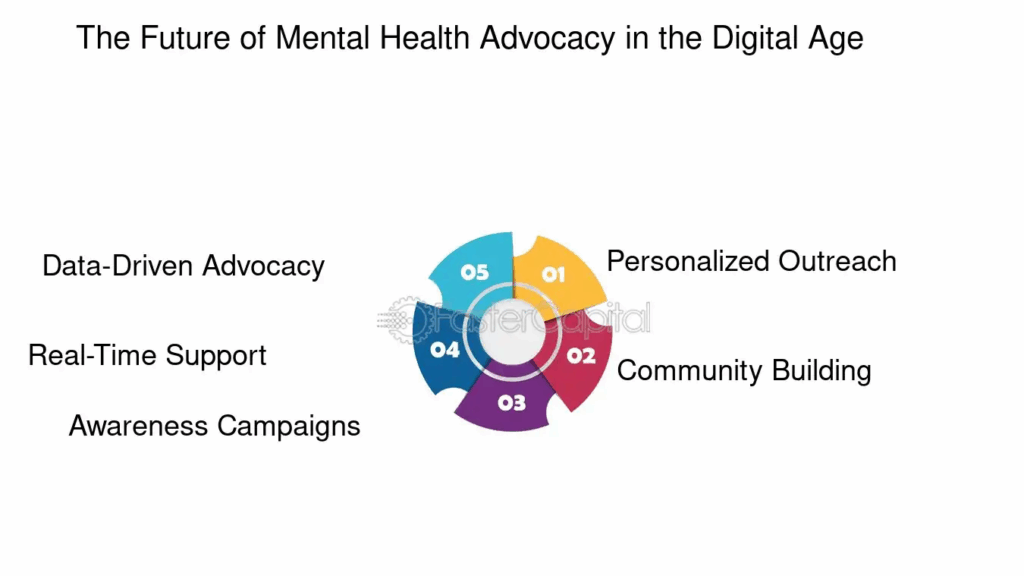
For Fiyinfoluwa, digital advocacy is a space where empathy meets accessibility. Though her roots in advocacy go back over five years, her venture into the digital sphere came with a clear purpose: to make mental health relatable, especially for young people trying to cope up with overwhelming emotions in a fast-paced online world.
“While I’ve been involved in mental health advocacy for over five years, my journey into digital advocacy started more recently. In this space, I focus on making mental health more understandable and relatable for young people.”
She writes with the intention of demystifying mental health, stripping away the heavy jargon and presenting complex ideas in ways that feel familiar and human. Her articles focus on everyday well-being, the influence of technology on emotional health, and how misinformation can sometimes do more harm than good.
For instance, on May 9, 2025, she published an insightful article on her Medium Blog “Does Everyone Have a Personality Disorder?”, she addressed the blurry line between awareness and misrepresentation.
“The piece focused on how misinformation can easily spread online, especially when it comes to mental health diagnoses. After it went live, several people reached out to say they had held some of those same misconceptions. One person shared that she had always believed bipolar disorder was a personality disorder, but reading the article helped her understand that it’s actually a mood disorder. That kind of feedback reminded me of why digital advocacy matters, it’s not just about raising awareness, it’s about offering clarity and helping people unlearn what could be harmful or misleading.“
In her writing, she writes like a friend, warm, open, and careful not to invalidate the quiet battles many of her readers are fighting. “I think about someone scrolling on their phone late at night, overwhelmed, looking for something that doesn’t just talk at them, but makes them feel seen,” she says. She often includes actionable tools, “I also intend to have my writings include resources, crisis lines, or steps they can take, so they’re not left with just empathy, but with actual support they can act on.”
Medium and LinkedIn are currently her platforms of choice. On her Medium Blog, she unpacks mental health concepts in longform, digestible essays. On LinkedIn, she connects with fellow mental health advocates and young professionals. Both platforms allow for meaningful interaction and deeper reflection. But she’s not stopping there, she’s preparing to step into more visual storytelling through Instagram and YouTube. “I believe video and short-form content can meet young people where they are and make these conversations even more engaging,” she explains.
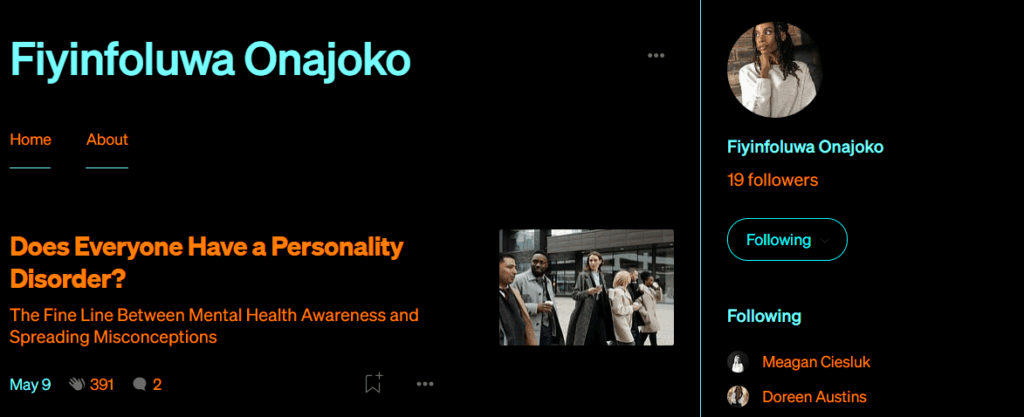
You can check out her Medium blog here for insightful reads and connect with her on LinkedIn to stay informed and engaged in meaningful mental health conversations.
While she’s still completing her master’s in clinical psychology, Fiyinfoluwa maintains strong ethical boundaries in her online presence. She’s transparent about her trainee status, refrains from clinical advice, and focuses on psychoeducation. “I’m not here to diagnose; I’m here to educate,” she emphasizes. Credibility, for her, is not just about citing sources, it’s about knowing when to guide and when to step back.
“I always clarify to people who reach out to me that I’m not yet a licensed professional, and I stay away from offering clinical advice or making diagnoses. Instead, I focus on psychoeducation, breaking down concepts, raising awareness, and guiding people toward trusted resources.I ensure that I speak only within the scope of my professional training and knowledge, recognizing the limits of my expertise.”
Fiyinfoluwa Onajoko
That balance of humility and insight is what defines her voice, and sets the tone for the kind of psychologist she’s becoming.
What Comes Next in Advocacy
As Fiyinfoluwa looks to the future, her aspirations are anchored in both clinical excellence and expansive social change. Her next steps: she intends to complete her path toward becoming a licensed clinical psychologist, a milestone that will solidify her ability to offer evidence-based care while continuing her work in advocacy. But even more than holding a title, she wants to hold space, for healing, for growth, and for systems that serve communities better.
Professionally, she envisions a future where her clinical work is not confined to an office, but reaches into neighborhoods, schools, and screens. She’s passionate about building a practice that doesn’t just treat individuals but uplifts communities. Her heart remains with the youth, particularly in Nigeria, across Africa and beyond, where digital platforms can serve as powerful bridges to support. “Relatability matters,” she says, and she plans to continue creating mental health content that is culturally relevant, engaging, and safe for young people seeking to understand their well-being in silence.
Fiyinfoluwa’s vision goes far beyond borders. She’s already thinking globally, aspiring to be part of high-level conversations that shape international mental health policies. She wants a seat at the table where agendas are set and priorities determined, particularly in amplifying African perspectives that are often underrepresented.
“I want to be in the rooms where those decisions are made, shaping the agenda, influencing policy, especially for young people in Africa.
Fiyinfoluwa Onajoko
We need policies that reflect our realities, and I want to be part of that change.”
In the long term, she hopes to contribute to reshaping mental health systems to be more inclusive, proactive, and rooted in dignity. Whether through policy influence, psychoeducation, or personal storytelling, her mission remains: to help create a world where mental health is a shared priority. One where young people, no matter where they are, feel empowered to speak, seek support, and thrive.
In Fiyinfoluwa Onajoko’s work, may many rise, finding their feet again, their voices restored, and their strength renewed. May her journey inspire a new wave of advocates. Through her story, may others be reminded that healing is possible, and so is leading change.

- The Rise of Suicide Posts in Digital Spaces Reflects a Growing Mental Health Crisis - February 22, 2026
- How Kenya’s Silent Lifestyle Disease Crisis Is Reshaping Public Health - February 12, 2026
- The Rise of Lifestyle Diseases Emerges as a Crisis Among Kenya’s Youth - February 9, 2026