For Carolpilly Wangechi Gitahi, the journey into mental health advocacy has been anything but accidental. As a 26-year-old junior secondary school teacher in Murang’a County, Kenya, and an aspiring therapist currently pursuing a part-time course in Guidance and Counselling at the University of Nairobi, her passion for mental health is deeply rooted in her own lived experiences.
“My journey into mental health has encompassed key elements of acceptance, insight, commitment, self-awareness, and coping skills,” she shares. “It has been a personal and winding path of self-advocacy, healing, and growth, building a fulfilling life despite the challenges that come along.”
This profound personal understanding is what shapes her vision of what a safe space truly means for men struggling with mental health challenges. To Gitahi, a safe space is not limited to a physical setting.
“A safe space for men can either be physical or metaphorical; where they can feel comfortable, safe and be able to express themselves without fear of judgment or criticism, especially in regards to their emotions, feelings and masculinity.”
Carolpilly Gitahi
Such spaces allow men to drop the heavy mask society often demands of them and connect authentically with their struggles and inner selves.
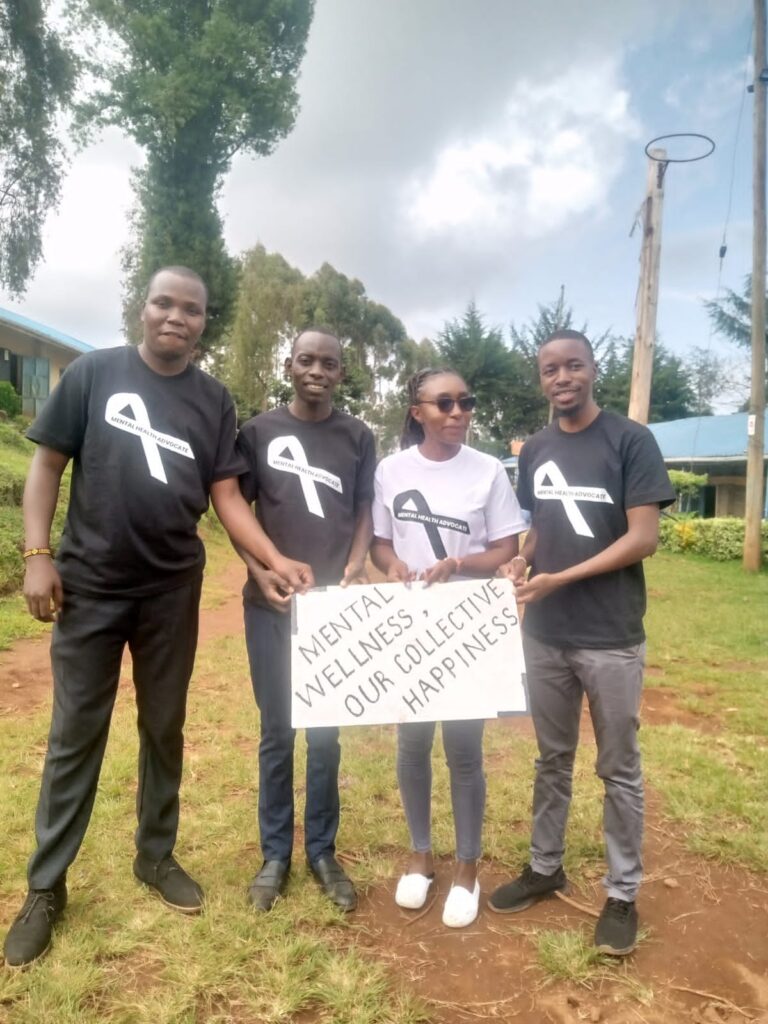
Her initiative, ONGEA USIKIKE, embodies this very belief. Through this program, Gitahi has intentionally created environments where male junior secondary teachers, who themselves are often overlooked in conversations on emotional wellbeing, are included, heard, and validated. “I included male junior secondary school teachers to be part of the powerful team where they are heard, listened to, and accommodated without fear of judgment, discrimination, and stigma in the community we live in,” she notes.
One moment that stood out for Gitahi was during the commemoration of World Menstrual Day on May 28th, a day typically centered on girls’ and women’s health. She broadened this occasion’s meaning by also supporting her male colleagues. “As I supported my students mentally, I also supported my colleagues, male teachers, recognizing that their mental health matters just as much,” she reflects.
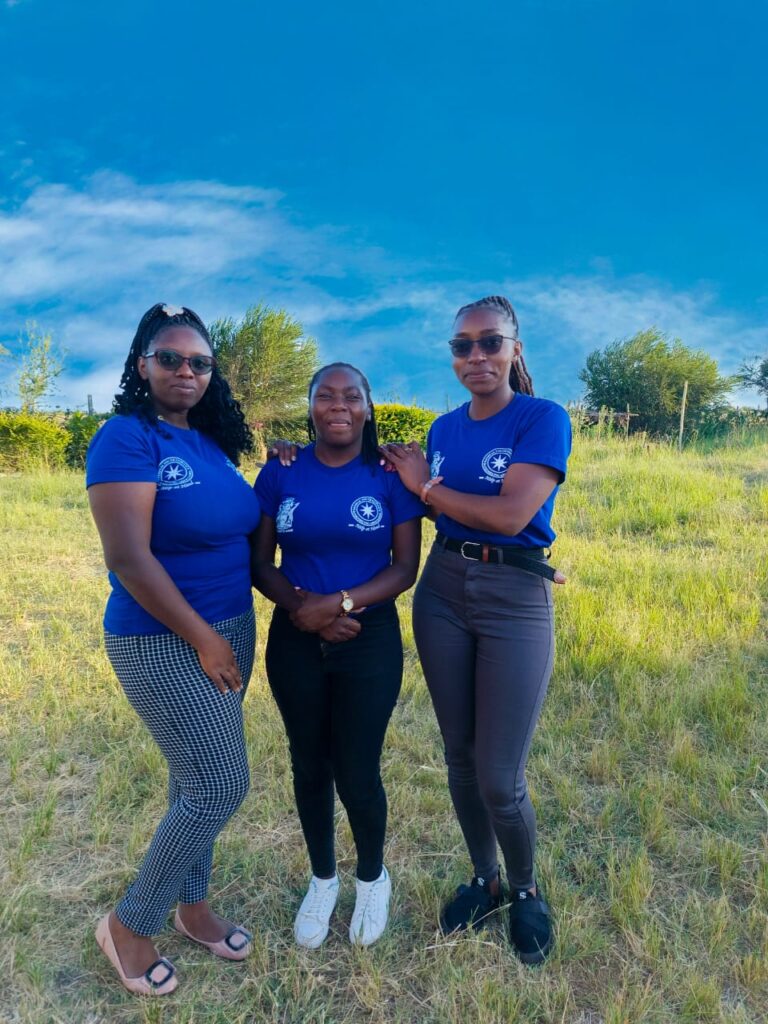
But Gitahi’s advocacy doesn’t stop at her colleagues. She has also had to step in for male students going through mental health struggles in and outside the classroom. These moments have been profound teachers for her as well.
“I’ve learned the importance of creating a supportive environment where male students feel comfortable to share their struggles and seek help. Trust-building and promoting a culture where seeking mental health support is seen as normal,” she says.
She also points out that masculinity stereotypes deeply affect boys and young men, making them reluctant to seek help for fear of judgment. Addressing these societal beliefs requires interventions that respect masculine ideals like strength and responsibility while promoting mental wellness as a valuable part of life, not a contradiction of manhood.
“I have been able to understand masculinity stereotypes and their impacts, male students are reluctant to seek help for fear of judgement or negative perceptions from the society. Also coming up with interventions which align with masculine ideals of strength, responsibility and role models rather than contradicting these traits to help male students.”
Carolpilly Wangechi Gitahi
Through her grassroots work and thoughtful reflections, Carolpilly Gitahi is not only supporting the emotional wellbeing of the men and boys around her but also challenging the very structures that keep them silent.
Challenging Masculine Stereotypes and Limiting Beliefs
At the heart of Carolpilly Gitahi’s mental health advocacy lies a deep understanding of the harmful lessons society continues to teach boys about emotions, vulnerability, and masculinity. These ingrained beliefs, she observes, have shaped generations of men who silently struggle under the weight of expectations that discourage emotional expression.
“From a young age, boys receive messages from society, both directly and indirectly, about what it means to be a man,” she explains. “For example, boys are told not to cry, to ‘man up,’ not to be sensitive. These qualities are expected to be equivalent to being ‘tough’ and ‘male.’”
Such teachings do more harm than good. Carolpilly points out that these beliefs reinforce toxic masculinity, the false notion that vulnerability is a weakness.
She also notes another troubling belief boys are taught, the desire to dominate others or assert power over their peers and even women. This hierarchy of control, she warns, distances men from their own emotional truth and prevents them from forming authentic, fulfilling relationships.
“Men have been taught the desire to seek power over others, want to dominate over other men and boys and even participate in the subjugation of women in the society. Men who find themselves subscribing to these beliefs often ignore their mental health struggles, don’t allow themselves to feel free to share wholly with loved ones, and fail to enjoy life to the fullest.”
Carolpilly Gitahi
For Gitahi, this journey into understanding masculinity has meant unlearning some of these limiting beliefs. One lesson stands out: vulnerability as strength, not frailty. “Through education and awareness, I’ve unlearned the toxic idea that being vulnerable makes one weak,” she admits. “In fact, vulnerability is a sign of courage, self-care, honesty to oneself, and the foundation for trust, emotional intelligence, and personal growth. It can be challenging to be vulnerable, but the benefits are worth it.”
However, challenging these harmful narratives has not come without resistance. Gitahi acknowledges that speaking openly about men’s mental health has sometimes been met with misunderstanding and skepticism, precisely because these damaging stereotypes are so deeply ingrained.
“The narrative around men’s mental health has been surrounded and dominated by damaging stereotypes which have been made to seem positive but are actually negative, like the belief that men don’t cry and should remain strong and silent.”
Carolpilly Gitahi
This societal script has led many men to suppress their emotions, suffer in solitude, and resist seeking mental health support for fear of appearing weak.
But these obstacles only strengthen her resolve to keep challenging the status quo. She believes that only by dismantling these harmful beliefs can men begin to reclaim their full emotional humanity.

Raising Emotionally Intelligent Boys
For Carolpilly Gitahi, transforming the way boys are raised is a critical step in breaking the cycles of silence and emotional suppression that have long defined masculinity. As a mental health advocate and aspiring therapist, she is convinced that promoting emotional intelligence from an early age can create a new generation of men who are both strong and emotionally aware.
“If I could redesign how we raise boys,” she reflects, “I would focus on three core values: love, empathy, and trust.” These values, she believes, are essential to reshaping societal expectations and nurturing boys who feel safe to express themselves openly and authentically.
First on her list is love. “Nurture boys with love,” she urges. “There is no reason to tear boys away from their mother’s arms at a young age to somehow toughen them up. All kids need love to help their brains grow, regardless of their gender.” Love, in this context, lays the foundation for emotional security, helping boys to understand that they are valued not for their toughness, but for their whole, vulnerable selves.
Next comes empathy, the ability to connect with and understand the feelings of others. “Boys have feelings just as girls do,” Gitahi reminds us. Teaching boys empathy not only helps them handle their own emotions but also promotes healthier relationships with others. “Try fitting into their shoes as they express their emotions and guide them in a way that validates their experiences rather than shutting them down.”
Lastly, she emphasizes trust. “We need to help remove barriers that hinder boys from expressing emotions by building trust,” she says. “This also includes checking our own reactions when boys express strong feelings, like anger, by responding with respect rather than dismissal or ridicule.” By doing so, boys learn that their emotions are valid and manageable, not shameful or dangerous.
However, changing the way boys are raised also means confronting the damaging language society uses to define manhood. One phrase that Gitahi highlights is “man up”, a term that has left a trail of emotional harm among men and boys alike. “The phrase ‘man up’ has negatively impacted people around me,” she states plainly.
“It has created reluctance among men to seek help because mental health issues are viewed as personal failings, not legitimate concerns. This phrase has fueled stigma, discrimination, fear of judgment, and shame. As a result, many men are suffering silently because they don’t want to appear weak in the eyes of society.”
To replace this harmful norm with something healthier, Gitahi believes in a systematic shift, one that changes both language and behavior. “Society needs to challenge harmful gender stereotypes that discourage emotional expression in men and instead promote a broader view of masculinity, one that values vulnerability, empathy, and emotional intelligence,” she explains. This means replacing “man up” with more supportive alternatives like “take responsibility” or “speak up.”
Furthermore, she sees the creation of safe spaces, such as her ONGEA USIKIKE initiative, as a key step toward this goal. “We must promote open communication by creating spaces where men feel free to express their emotions, feelings, and thoughts without fear of judgment,” she says. Encouraging public dialogue about men’s mental health and normalizing the act of seeking help are essential to bringing about meaningful change.
The Role of Women in Men’s Mental Health Advocacy
A common question Carolpilly Gitahi encounters in her work is simple, but revealing: “Why would a woman focus on men’s mental health?” For her, the answer feels simple and grounded in the way people naturally connect with each other.
“Women in society are known to be caring and nurturing, not only to children but also to the men in their lives,” she says. In fact, she points out that research shows men are 72% more likely to open up emotionally to women, whether they are friends, partners, or relatives, than to other men. “As a woman in mental health advocacy, there is a need to create a safe and supportive environment where men find solace and eventually open up on issues affecting them,” she explains.
Why Men Tend to Open Up More Readily to Women than to Other Men
Research consistently shows that men are more likely to open up emotionally to women than to their male peers. A meta-analysis of 205 studies involving nearly 24,000 participants revealed that while women generally disclose more across all relationships, men specifically disclose more to women than to other men. In contrast, women’s willingness to share emotions remains steady whether they are speaking to men or women.
Further studies support this pattern. Men are found to confide mainly in their partners, whereas women tend to share personal matters equally with friends, family, and partners. This indicates that for many men, intimate conversations are largely reserved for their female partners, creating an emotional reliance that is less evident in male-to-male friendships.
A recent study published in the Journal of Experimental Social Psychology (January 2024) found that men are just as likely as women to share positive experiences. However, they are significantly less likely to share negative or vulnerable emotions, especially with other men. This hesitation stems from restrictive masculine norms, which discourage vulnerability and emotional openness in same-sex male interactions, a pattern psychologists refer to as “restrictive emotionality.”
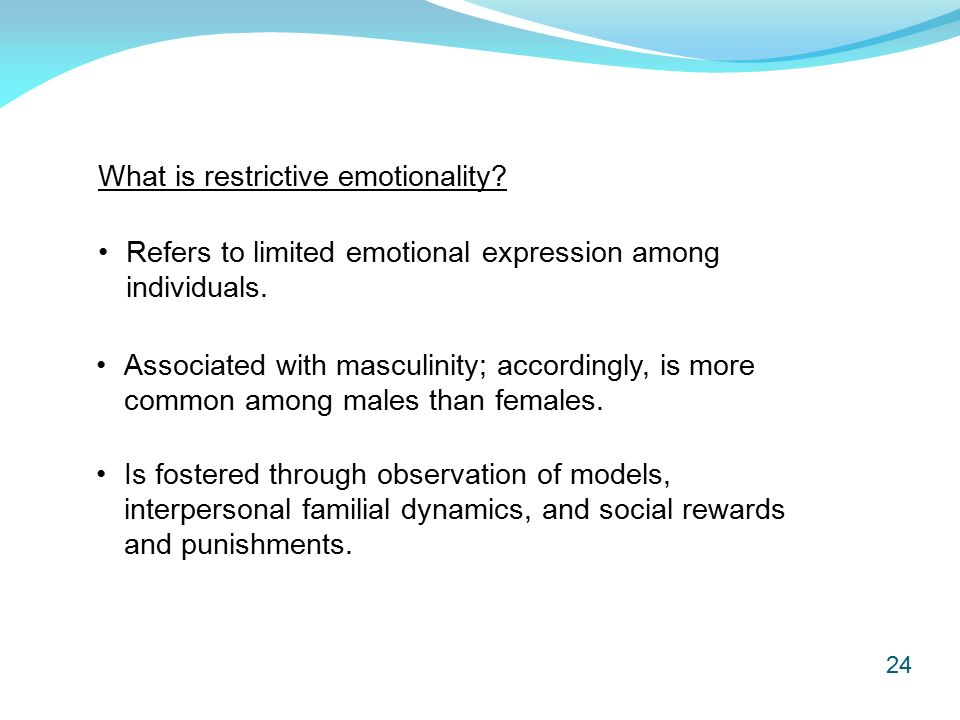
As a result of these social and cultural pressures, men often form thinner “deep friendship” networks with other men and lean more heavily on female confidants for emotional support. Experts suggest that promoting vulnerability within male friendships could help build stronger social support systems and improve men’s overall emotional well-being.
Gitahi argues that women hold a crucial key to transforming the narrative around men’s mental health, not by replacing men’s voices but by creating bridges of trust, openness, and compassion. Challenging stigma and promoting awareness, she believes, is one of the most powerful roles women can play. “Women are actively working to reduce the stigma that surrounds men’s mental health through research and advocacy,” she notes. Their efforts help unravel the damaging belief that vulnerability in men is weakness, and instead present it as a sign of strength and humanity.
Her vision also includes creating inclusive communities, spaces free from gender bias, culturally sensitive, and accessible to all. Through community outreaches, open dialogues, and grassroots conversations, women can help dismantle barriers that discourage men from seeking help and expressing themselves fully. “By engaging in diverse groups and holding space for these conversations, we can build societies that genuinely value men’s mental wellness,” Gitahi affirms.
In a world that often sidelines men’s emotional needs, Carolpilly Gitahi is a reminder that women’s involvement is essential. Their empathy, advocacy, and influence can help shape a future where men are not left to struggle in silence, but are supported, understood, and empowered to heal.
Hopes for the Future of Men’s Mental Health
As the world observes Men’s Mental Health Awareness Month, Carolpilly Gitahi holds a hopeful vision for what these conversations and campaigns should ultimately achieve, not only in June but as a lasting cultural shift.
“I hope we can build a culture and spaces where men feel safe speaking up and reaching out,” she says. Her deepest desire is to see a society where men no longer suffer in silence, weighed down by stigma and outdated expectations of toughness. Through her work as a mental health advocate, Gitahi is determined to help break the cycle of shame and silence,, supporting more men to seek help without fear or hesitation.
She envisions a future of bold, resilient, and open-minded men who understand that admitting vulnerability does not diminish their strength but deepens it. “Sometimes, it’s okay not to be okay,” she emphasizes, a simple truth that many men have been discouraged from embracing. Her hope is that these men will also come to normalize therapy and support groups, recognizing these as tools for growth and wellness rather than signs of weakness.
Looking ahead, Gitahi is optimistic that her voice in this storytelling campaign will ripple far beyond this moment.
“I believe that my story has power to change how people think about men’s mental health issues and influence their behaviors positively and eventually advocate for mental wellness in the communities they live in for the best results for the society at large.”
Carolpilly Gitahi

By openly sharing her insights, she hopes to inspire not just individuals but entire communities to become more supportive, understanding, and proactive in promoting mental wellness for men.
Her final message, a powerful reassurance to every man silently struggling:
“There is somebody that cares, accommodative, non-judgmental, and will always give a listening ear.”
In a world that often expects men to bear their burdens alone, this reminder could make all the difference.
Through her passion, lived experience, and bold advocacy, Carolpilly Gitahi is not only challenging outdated notions of masculinity but also paving the way for a future where men’s mental health is openly acknowledged, supported, and prioritized. By sharing her insights, she ignites a call for more advocates, both men and women, to rise and carry this mission forward.
Her voice reminds us that the responsibility for change does not rest on men alone; women, families, institutions, and society at large must all play their part in creating spaces where vulnerability is seen as strength, and seeking help is celebrated, not shamed. In this collective effort lies the promise of a healthier, more compassionate generation of men, and a better world for us all.

- The Rise of Suicide Posts in Digital Spaces Reflects a Growing Mental Health Crisis - February 22, 2026
- How Kenya’s Silent Lifestyle Disease Crisis Is Reshaping Public Health - February 12, 2026
- The Rise of Lifestyle Diseases Emerges as a Crisis Among Kenya’s Youth - February 9, 2026