Anya stared at her reflection in the bathroom mirror at 6:47 AM, watching a single tear trace down her cheek. Another hair. This time, sprouting defiantly from her chin like a tiny rebellion against everything she thought she knew about being a woman. She plucked it with surgical precision, the same ritual she’d performed every morning for three years now.
What Anya didn’t know was that across the globe, millions of women were fighting the same invisible war.
The Mystery Begins
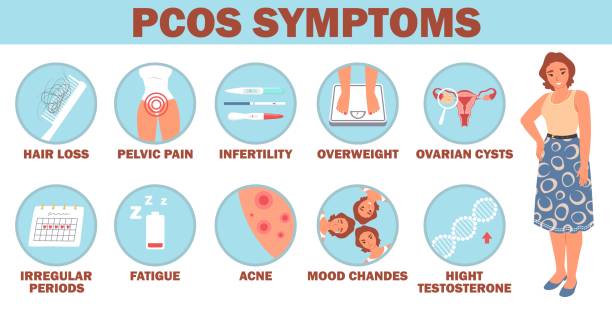
It started innocuously enough. Anya’s periods, once as predictable as sunrise, began playing hide and seek. Three months would pass in silence, then suddenly she’d be doubled over in agony, bleeding through super tampons like they were tissue paper. Her friends joked about being “lucky” to skip periods, but Anya felt anything but fortunate. Her body had become a stranger.
The weight crept on like fog – slowly, then all at once. Despite religiously attending spin classes and swapping her beloved pasta for sad desk salads, the scale climbed mercilessly upward. Her favorite jeans became casualties of war, relegated to the back of her closet like forgotten dreams.
But perhaps the cruelest twist was the acne that bloomed across her jawline and back like some twisted garden. At 28, Anya found herself sneaking into the teenage skincare aisle at Target, feeling like an imposter in her own skin.
The Revelation
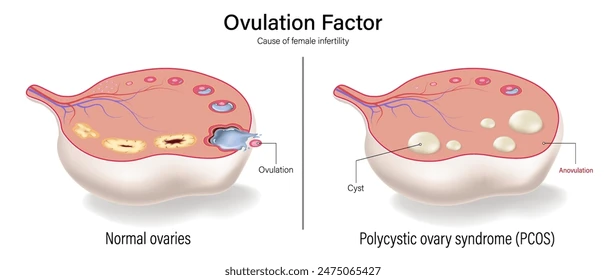
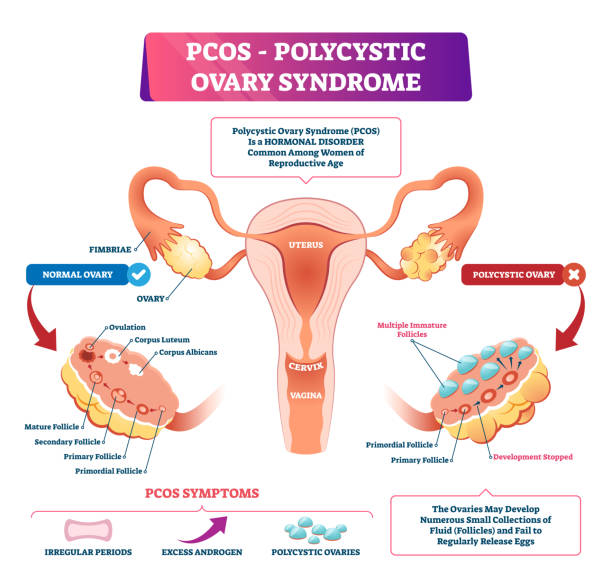
After eighteen months of dismissed concerns and “just stress” diagnoses, Anya finally met Dr. Sarah Chen, an endocrinologist who actually listened. The ultrasound revealed what had been hidden all along: her ovaries resembled pearl necklaces, dotted with tiny cysts that told a story of hormonal chaos.
“Polycystic Ovary Syndrome,” Dr. Chen said gently. “PCOS.”
The name felt foreign on Anya’s tongue, but suddenly everything clicked into place like pieces of a jigsaw puzzle she’d been trying to solve blindfolded.
The Hidden Epidemic
What Anya discovered next was staggering. PCOS affects 1 in 10 women of reproductive age – that’s roughly 200 million women worldwide. It’s more common than diabetes, yet somehow remains shrouded in whispers and shame. The syndrome doesn’t just steal periods; it commandeers entire lives.
PCOS is like having a rebellious hormone factory in your body. Insulin resistance causes weight gain that refuses to budge despite Herculean efforts. Elevated androgens (male hormones) trigger unwanted hair growth in places women never expected to find it – faces, chests, backs – while simultaneously thinning the hair on their heads with cruel irony.
The Daily Battle
For women like Anya, every day becomes a strategic military operation. Mornings begin with medication timing – metformin with breakfast to combat insulin resistance, birth control pills to regulate hormones that clearly never read the instruction manual. The bathroom cabinet becomes a pharmacy of hope: supplements for insulin sensitivity, spearmint tea for hormone balance, omega-3s for inflammation.
Shopping for clothes transforms into an exercise in camouflage. Dark colors hide the unpredictable bloating that can add inches to waistlines overnight. High necklines conceal the acne that decided adulthood was merely a suggestion. Careful styling masks the hair that’s thinning on top while growing everywhere else.
The psychological warfare is perhaps the most exhausting battle. Self-worth becomes tied to scale numbers that fluctuate wildly due to hormonal water retention. Social media becomes a minefield of seemingly effortless beauty and fertility announcements that feel like personal attacks.
The Fertility Phantom
For many women, PCOS transforms the biological clock into a ticking time bomb of anxiety. The syndrome is the leading cause of female infertility, turning what should be a natural process into a medical obstacle course of ovulation tracking, fertility treatments, and heartbreaking disappointments.
Sarah, Maya’s online PCOS support group friend, has endured three miscarriages and countless negative pregnancy tests. Each baby shower invitation feels like a cruel reminder of her body’s betrayal. The “just relax and it’ll happen” advice from well-meaning relatives cuts deeper than any intentional insult.

The Ripple Effect
PCOS doesn’t exist in isolation – it brings uninvited guests to the party. Women with PCOS have dramatically higher risks of developing type 2 diabetes, heart disease, and depression. The syndrome creates a perfect storm of physical and mental health challenges that compound daily stress.
Career ambitions can be derailed by unpredictable symptoms. Important presentations coinciding with hormonal crashes that leave women feeling foggy and exhausted. Business trips complicated by dietary restrictions and medication schedules. The invisible nature of PCOS means suffering in silence while maintaining professional facades.
Relationships strain under the weight of mood swings that feel uncontrollable, low libido caused by hormonal imbalances, and the constant stress of managing an unpredictable condition. Partners often feel helpless, watching the women they love battle an invisible enemy they can’t understand or fix.
The Silver Lining
But here’s where Maya’s story takes a powerful turn. Knowledge became her weapon. She discovered that while PCOS couldn’t be cured, it could absolutely be managed. Small dietary changes – reducing refined carbohydrates, increasing protein and healthy fats – helped stabilize her blood sugar and energy levels.
Exercise shifted from punishment to medicine. Strength training improved insulin sensitivity more effectively than hours of cardio. Stress management through meditation and therapy addressed the cortisol spikes that worsened every symptom.
Most importantly, Maya found her tribe. Online communities and local support groups connected her with women who spoke her language fluently – the language of missed periods, unexplained weight gain, and bathroom cabinet pharmacies. She realized she wasn’t broken; she was just different.
The Call to Action
Maya’s journey illuminates a critical truth: PCOS awareness isn’t just about medical education – it’s about validation, community, and hope. Every woman deserves to understand her body’s signals, to advocate for proper healthcare, and to know she’s not alone in her struggle.
Today, Maya runs a PCOS awareness blog that reaches thousands of women worldwide. She’s turned her pain into purpose, her struggle into strength. Her morning mirror ritual now includes affirmations instead of just hair removal, and while the journey isn’t easy, she’s no longer walking it alone.
The silent storm of PCOS affects millions, but silence is no longer the answer. It’s time to speak up, seek help, and support each other through the beautiful, challenging complexity of being women with PCOS.
Because every woman deserves to feel at home in her own body, hormonal chaos and all.

- Must-Watch Movies Releasing in 2026: Your Complete Enterta1nment Calendar. - February 11, 2026
- World Tropical Diseases Day: The Silent Suffer1ng of 1.6b Lives. - January 31, 2026
- The El Molo Tribe: Kenya’s Last Fisher People Fight1ng for Survival on Lake Turkana’s Shores - January 30, 2026