Tatyana Mumbua is a passionate psychologist, mental health enthusiast, and consultant who has dedicated her career to understanding and supporting individuals facing emotional challenges. Currently serving as a Consultant Psychologist at Ahmed Kalebi Consultancy and TIBU Health, she also pursues a Bachelor of Arts in Counseling Psychology at KCA University.
In this feature, Mumbua shares her insights on the ambivalence experienced during suicidal crises, offering a rare window into the delicate balance between the desire to live and the urge to escape overwhelming pain.
She works with individuals across all stages of life with a focus on psychological counselling and mental health advocacy.
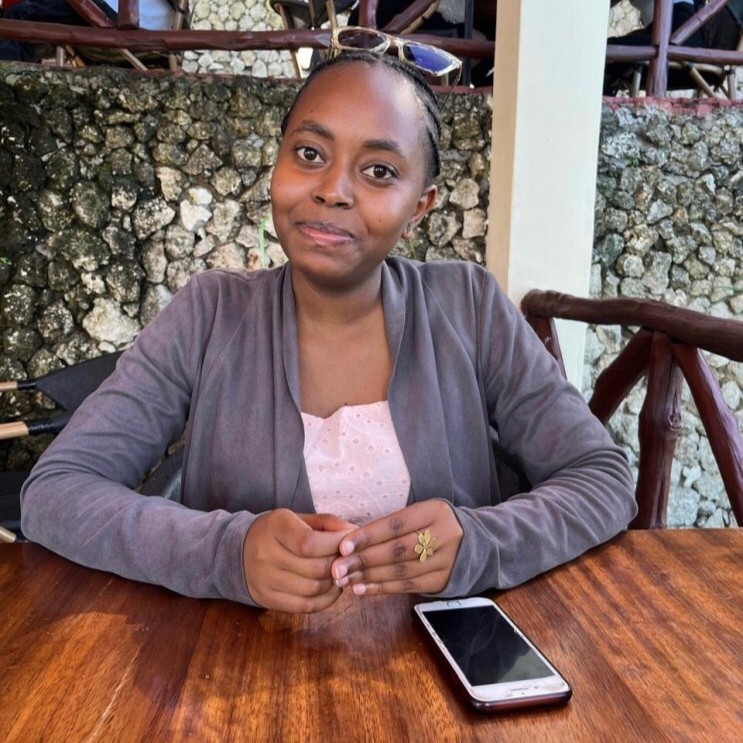
“I’m Tatyana Mumbua. I’m a mental health professional focusing on psychological counselling.”
Tatyana
Her background highlights the lived experience and professional perspective she brings to one of the most challenging areas in mental health today.
Understanding Suicide Ambivalence
Suicide ambivalence, the conflicted state between wanting to die and wanting relief from pain, is a complex and often misunderstood phenomenon. Mumbua explains:
Tatyana
“The idea of a permanent solution to a temporary problem, of pain to find relief. This is the dilemma that people on the outside of its grasp (suicide) can’t seem to understand. The concept is contradictory and complex; therefore, explaining it poses the same challenge.”
Several psychological theories have attempted to explain the phenomenon of suicide ambivalence.
Shneidman’s Psychache Theory suggests that suicide stems from intense psychological pain, or psychache, caused by unmet needs and emotional distress. Ambivalence arises here because an individual seeks relief from unbearable pain while simultaneously desiring to live or avoid death.
Shneidman stated that the most common sentence in suicide notes was “I can’t stand the pain any longer”, which led him to conclude that suicides are caused by psychache, referring to the hurt, anguish, soreness, aching, psychological pain in the psyche, the mind.
The Interpersonal-Psychological Theory of Suicide (IPTS) by Thomas Joiner highlights perceived burdensomeness, thwarted belongingness, and acquired capability for suicide as key factors; ambivalence emerges when a strong desire for death coexists with hope, attachment, or fear that restrains action.
Similarly, Baumeister’s Escape Theory frames suicide as an attempt to escape overwhelming self-awareness or negative self-evaluation, with ambivalence arising from the tension between wanting to escape pain and the permanent nature of the act.
Baumeister outlined six key steps that explain the progression from distress to suicidal action:
- Falling Short of Expectations: A perceived failure to meet personal or societal ideals creates intense self-criticism.
- Attribution of Failure to the Self: Individuals blame themselves for these perceived shortcomings, reinforcing negative core beliefs.
- Heightened Self-Awareness: An acute focus on one’s flaws intensifies feelings of inadequacy.
- Negative Affect: This self-awareness generates emotions like shame, guilt, and despair.
- Cognitive Deconstruction: Individuals disengage from meaningful thought, focusing only on immediate relief from pain.
- Escape Through Suicide: Suicide becomes seen as the ultimate escape from these overwhelming emotions.
Distinguishing between the desire to die and the desire for pain to end is critical. Mumbua notes:
“Because wanting to die is final, but wanting the pain to end provides the opportunity to explore alternatives. Also, it brings about the issue of motivation; we get to understand that the person doesn’t really want to die, they just want relief. So, death feels like the only way out because they sincerely can’t see any other favourable options.”
Her observations point to multiple triggers that push individuals into this conflicted state. She identifies the main factors as: mental health struggles like depression or bipolar disorder; overwhelming emotional pain, including loss, trauma, or breakups; life stressors such as finances, unemployment, or sudden retrenchment; and family conflicts, including parental pressure, neglect, abuse, or separations.
Through her explanation, Mumbua provides framework to understand that suicide is rarely a simple decision, it’s a struggle shaped by multiple pressures, where the desire for relief can easily be mistaken for a desire to die.
Recognizing and Supporting Those Struggling
Recognizing suicide ambivalence can be challenging, especially because not everyone shows obvious signs. Tatyana Mumbua explains that there are verbal, behavioral, and emotional cues to watch for:
“Victims can start talking about wanting to die, expressing hopelessness or feeling like a burden. They may withdraw from friends and family, or even start giving away possessions they love. Reckless behaviour can increase, particularly in individuals who were usually composed. Emotionally, they may experience persistent sadness, anxiety, feelings of being trapped, or extreme mood swings. And sometimes, sudden calmness after a long period of distress is alarming, it often means a decision has been made.”
She stresses the importance of taking any combination of these signs seriously, even if someone appears to be hiding their struggles:
“Not everyone will show these signs, some can mask them really well, but any pattern should be treated with care and attention.”
Mental health professionals play a critical role in guiding individuals through this difficult state. According to Tatyana:
“We act as lifesavers, guides, emotional first aiders, and healers. Our aim is to help individuals move from crisis and hopelessness toward safety, stability, and recovery.”
When it comes to interventions, she highlights a combination of approaches:
“Providing emotional support alongside therapeutic interventions is particularly effective. For those who need it, medical and psychiatric support also play a key role.”
Vision for Suicide Prevention
Tatyana says her vision for suicide prevention is rooted in one word: reducing stigma. She believes that human beings are not built to accommodate pain or discomfort for long, we naturally run from it, avoid it, or try to ease it.

“Human beings cannot accommodate pain or discomfort for long; naturally, we are wired to run from it, avoid it or ease it.”
Tatyana
“My vision is simply to reduce stigma. Human beings cannot accommodate pain or discomfort for long; naturally, we are wired to run from it, avoid it or ease it. We do this every day by avoiding people we don’t like, eating ice cream after breakups, quitting a toxic job, and reporting bullies. Suicide is extreme, but it’s just people trying to escape pain and discomfort like the rest of us. We need to help our people because they are in pain, and they are our people. A brother, sister, mother and father, they are OURS!”
Tatyana Mumbua
As a society, we must recognize that those struggling are not “others”, they are our brothers, sisters, parents, friends. They are ours. Suicide prevention should be rooted in compassion, community, and understanding. If we can normalize conversations about mental health, create spaces of support, and replace judgment with empathy, we give people reasons to hold on to life, even when pain feels overwhelming.
Tatyana’s vision is a reminder that suicide is not about weakness, but about human beings responding to pain in the only way they feel they can. As she explains, human beings cannot accommodate pain or discomfort for long; naturally, we are wired to run from it, avoid it, or ease it. We do this every day.
Whether it’s walking away from toxic relationships, indulging in small comforts, or quitting jobs that drain us, the instinct to escape pain is universal. Suicide, though more extreme, springs from this same drive. Understanding this truth allows us to see those in crisis not as strangers making incomprehensible choices, but as people mirroring our very own human impulses, only magnified by suffering.
If we are to take suicide prevention seriously, we must stop pretending that the instinct to flee pain is foreign. We need to meet people in their distress with compassion instead of judgment, with empathy instead of silence.
In her rising, may many rise, to bring more clarity, compassion, and understanding, and to change the narrative on suicide. It is my hope that this feature has given you a deeper perspective, so that the next time you hear of suicide, you will approach it with a different, more open mindset. By doing so, we take a step toward destigmatizing suicide and ensuring that those affected receive the help and support they so desperately need.

- The Rise of Suicide Posts in Digital Spaces Reflects a Growing Mental Health Crisis - February 22, 2026
- How Kenya’s Silent Lifestyle Disease Crisis Is Reshaping Public Health - February 12, 2026
- The Rise of Lifestyle Diseases Emerges as a Crisis Among Kenya’s Youth - February 9, 2026