Christine Gichira is opening up critical conversations on the “suicidal mode” of the brain, helping people understand the hidden psychological states that shape suicidal crises.
A licensed psychologist passionate about mental health, she has the privilege of walking with individuals through some of their most difficult and defining moments. Her work is rooted in the belief that no one should have to face life’s storms alone, and that healing begins when we create a safe space to speak our truth.

In every session, Christine Gichira witnesses the strength of the human spirit, a reminder that even in moments of profound pain, people can rediscover hope, meaning, and purpose.
Understanding the “Suicidal Mode” of the Brain
Christine describes the suicidal mode in a way that makes it suddenly obvious: the brain can flip from debate to decree.
“Think of the brain as a courtroom where logic, memory, and emotion usually debate together before making any decision. In suicidal mode, emotion takes over the entire courtroom, silences the other voices, and rushes to a verdict: ‘End the pain at all costs.’”
That image reframes suicide away from cold calculation and toward a clinical emergency, one that asks for compassion and urgent care rather than blame.
In practice, this takeover looks like cognitive narrowing or tunnel vision. Christine often sees people whose mental field has shrunk to a single, unbearable fact: the pain.
“Their thinking is no longer expansive or flexible, it narrows into a tunnel where only pain and hopelessness exist,” she explains. To someone in that state, suicide isn’t a plan so much as the only visible exit; their mind temporarily blocks out other possible paths forward.
“This state, often called cognitive narrowing or tunnel vision makes it feel as though suicide is not just an option, but the only option. To them, it’s not about wanting to die but it is about wanting the pain to stop.”
Christine Gichira
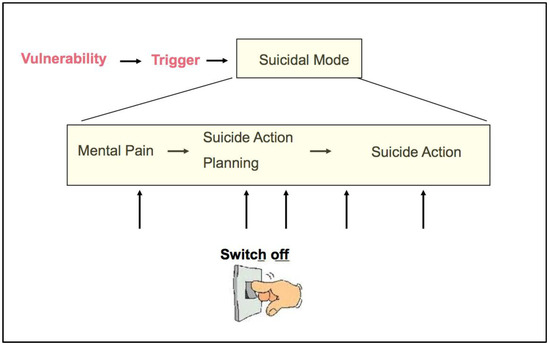
Neuroscience helps make sense of the experience: during extreme distress the brain shifts into survival mode.
“The prefrontal cortex, the part responsible for logic, planning, and weighing long-term consequences, temporarily goes offline, while the emotional center, the limbic system, takes over,” Christine explains.
That biological switch explains why reasoning and persuasion often fail in the moment: the machinery for weighing options is simply not fully online. This is why someone in crisis may seem unable to consider other options or imagine that life could improve at all. Understanding this gives us a more humane response, one focused on safety, stabilization, and restoring the person’s ability to see alternatives again.
Breaking Through Cognitive Narrowing
One of the most hopeful truths about suicidal crises, Christine notes, is that they are temporary. “No feeling, regardless of how intense it is, lasts forever,” she says. Emotions rise and fall, stress hormones eventually settle, and the brain slowly regains its ability to think more clearly. This knowledge can be life-saving. It allows people to “buy time” to hold on just a little longer until the storm passes and the mind can see reasons to stay that felt invisible before.
“Often, just surviving the moment can be enough to see that there are still reasons to stay.”
But before a crisis peaks, there are often subtle clues. Christine highlights early indicators such as shifts in how someone talks about the future, focusing more on endings, giving up, or disappearing. Withdrawal from relationships or activities once cherished, sudden mood changes that feel out of character, or rigid “all-or-nothing” thinking can also signal that a person’s mental field is narrowing. These early signs are invitations for friends, families, and communities to lean in with presence and care.
When someone’s perspective collapses to only pain, interventions that gently widen their view can be powerful. “Active listening is one of the most underrated but life-saving interventions,” Christine emphasizes. Simply sitting with a person in silence, without judgment or interruption, communicates. Professional help and practical grounding techniques also play a vital role, helping individuals reconnect with the present and remember that options do exist beyond the tunnel.
A Vision for Awareness and Recovery
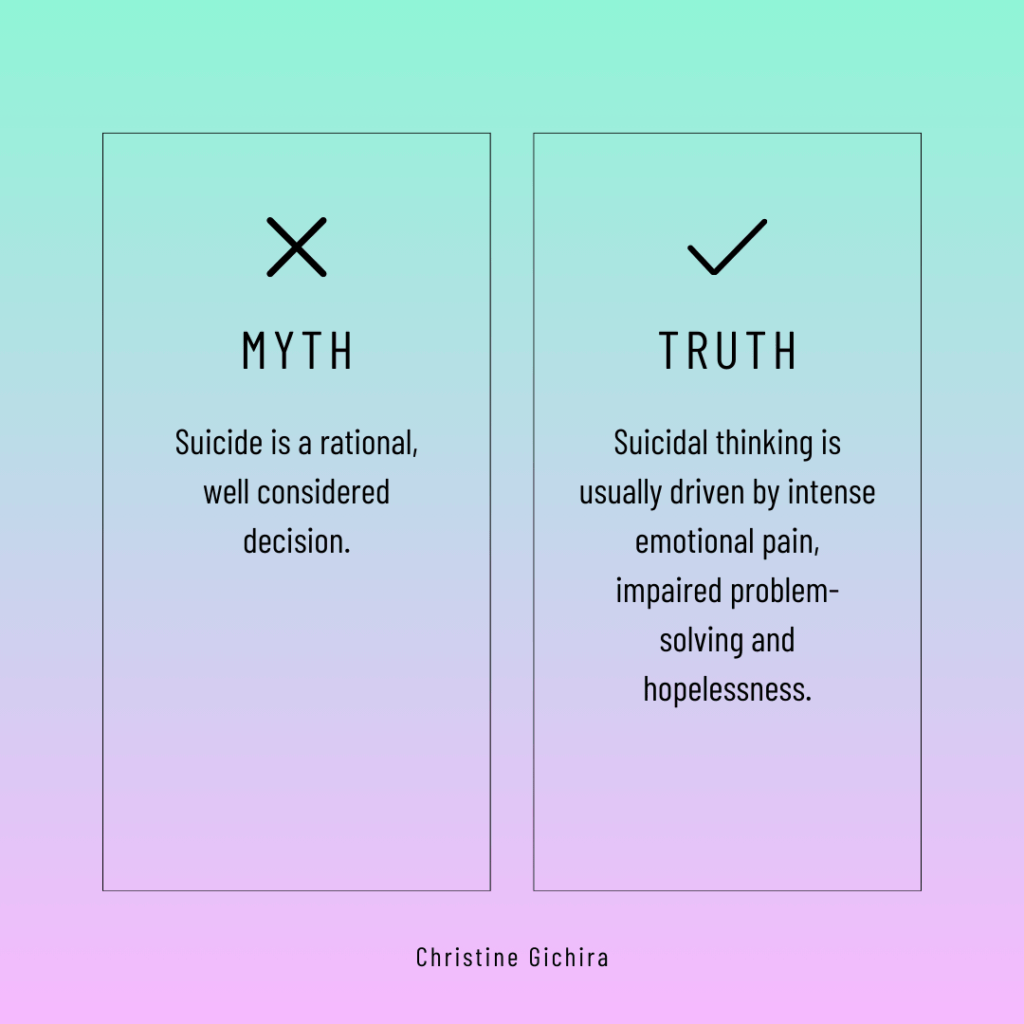
Christine is clear about one of the most damaging misconceptions she encounters: the belief that suicide is a deliberate, logical choice.
“Suicide is not a choice made in full freedom, it’s a reaction to pain so overwhelming that the person can’t see another way out.”
Christine Gichira
Correcting this narrative matters because it shifts our response from judgment to compassion, creating safer spaces for people to speak up and reach for help.
Recovery, however, does not end once a crisis passes. Sustaining it requires strong social connections where honest conversations about life can unfold without fear. Celebrating small wins, practicing problem-solving and emotional regulation skills, and tending to the basics of well-being, sleep, nutrition, movement, and mindfulness, all help to stabilize mood and reduce stress.
Christine also stresses the importance of having a personal safety plan: writing down warning signs, coping strategies, supportive contacts, and crisis numbers so that if suicidal thoughts return, a lifeline is already in place.
Looking ahead, Christine’s vision is to transform how society understands and talks about suicide. She wants people to recognize that suicidal crises are not signs of weakness or character flaws, but temporary states of mind where pain overwhelms hope. By teaching this, she hopes to strip away the shame that keeps so many silent.
Carson Anekeya
More often than not, society gets it wrong. We judge quickly, framing suicide in ways that suit our comfort and convenience. Yet suicidal crises are temporary, what happens within those short windows of time can change everything. Instead of offering compassion, we too often respond with judgment or shame, especially toward those who have survived suicide attempts. Why? Because responsibility scares a society built on denial. It is easier to look away than to accept that our role is to listen, support, and create safer spaces for healing.

“My work aims to create safe spaces where people can talk openly about suicidal thoughts and normalize these conversations, so that saying ‘I need help’ feels as acceptable as saying ‘I have a fever and need to see a doctor.’”
Christine Gichira
In her vision, communities that can talk openly and compassionately about suicide will be better equipped to notice the warning signs early, intervene with care, and walk with people toward recovery. For Christine, that is the ultimate goal of advocacy: building a culture where awareness, compassion, and connection save lives.
In her doing so, Christine reframes how we understand the “suicidal mode” of the brain, shaping a culture where compassion replaces judgment. Her vision points to a future where no one suffers in silence, and communities stand ready to listen, support, and walk with those in pain. May many rise with the courage to continue this work, creating spaces where seeking help is seen as strength and recovery is always within reach.

- The Rise of Suicide Posts in Digital Spaces Reflects a Growing Mental Health Crisis - February 22, 2026
- How Kenya’s Silent Lifestyle Disease Crisis Is Reshaping Public Health - February 12, 2026
- The Rise of Lifestyle Diseases Emerges as a Crisis Among Kenya’s Youth - February 9, 2026