Alice Kalekye, a psychologist and mental health advocate, is working tirelessly to shine a light on the often-overlooked mental wellbeing of healthcare workers, a topic that has long been neglected in Kenya’s healthcare system.
For the longest time, hospital staff have borne the emotional weight of trauma, grief, and high-pressure decision-making with little to no support. It is high time that voices like Alice’s take center stage, advocating for structured mental health care for those who care for others.
This feature explores what she has been doing to change the narrative and support the unsung heroes of our hospitals.

Alice Kalekye is a psychologist and mental health advocate with a profound commitment to supporting healthcare workers. She explains,
“My name is Alice Kalekye. I’m a psychologist and mental health advocate passionate about supporting healthcare workers. Currently, I focus on providing counseling, emotional support, and training programs that address the unique mental health challenges faced by hospital staff. I also create awareness content on platforms like LinkedIn to normalize conversations around mental health in healthcare settings. My work is deeply rooted in the belief that those who care for others also need to be cared for.”
Alice Kalekye, psychologist and mental health advocate
Her journey into advocacy began with a personal realization. While patients routinely receive emotional and psychological attention, healthcare workers are expected to suppress their own struggles and keep going. Alice recalls a poignant moment with a doctor friend:
“A doctor friend of mine reached out to to vent about how they missed those days when nights were just for sleeping. On probing further I realized how much sacrifices healthcare workers needed to make in their line of profession. The emotional weight they carry-from witnessing trauma, grief, and high-stakes decisions-was too significant to ignore. That realization is what sparked my advocacy.”
Most people don’t really understand what burnout, compassion fatigue, or secondary trauma can do to a healthcare worker. The cumulative effect of witnessing suffering, making life-and-death decisions, and constantly prioritizing others over oneself can quietly erode mental health, sometimes with devastating consequences. Alice recently shared a post on “The Silent Weight of Secondary Trauma in Hospitals“, offering valuable insights into these hidden pressures. You can explore and engage with her post here to learn more about the realities healthcare workers face.
By highlighting these realities, Alice is helping us understand that supporting healthcare workers’ mental wellbeing is essential for both their health and the quality of care patients receive.
Sadly, on World Mental Health Day (October 10, 2024), the World Health Organization (WHO) and its partners observed this day under the theme “Mental Health at Work”, but many of us thought this applied only to other industries. We forgot about our very own healthcare workers, who silently carry enormous emotional burdens. It’s time we advocate more strongly for them.
Why Healthcare Workers Need Support
For many healthcare workers, the emotional toll of their profession is invisible but immense. Alice Kalekye recalls a moment early in her career that left a lasting impact:
“I once worked in a hospital, and a client, a teenager I had just attended to, passed away while having their first dose of chemotherapy. I remember how the parents came crying uncontrollably to the counselling room, calling me their daughter’s name. It took me hours in that space until the shift was finally over. For sure, this incident traumatized me, but I couldn’t share any of the experience with my family to protect them.”
Even as a trained counsellor, Alice needed her own support.
“I had to seek personal counselling, and after a series of sessions, I was able to move on and regain my focus. Ever since, I have always thought of the frontline medical workers who never get time to receive the services that I received.”
She has met healthcare workers who quietly break down after shifts or smile through grief just to protect their families from the emotional toll of their work. One nurse, she recalls, “lost two lives in a day and went home completely shattered and unable to talk about it.”
The consequences of this hidden strain often affects the patient care directly. Alice explains,
“When a healthcare worker is emotionally drained, their ability to offer quality care diminishes. Burnout can lead to increased errors, lack of empathy, or emotional detachment, while compassion fatigue makes it hard to connect with patients on a human level and this explains why sometimes patients report ‘rude treatment’ from healthcare workers especially nurses. Grief, if unaddressed, lingers and impacts their mental clarity and emotional availability. In short, when healthcare workers suffer silently, patient care inevitably suffers too.”
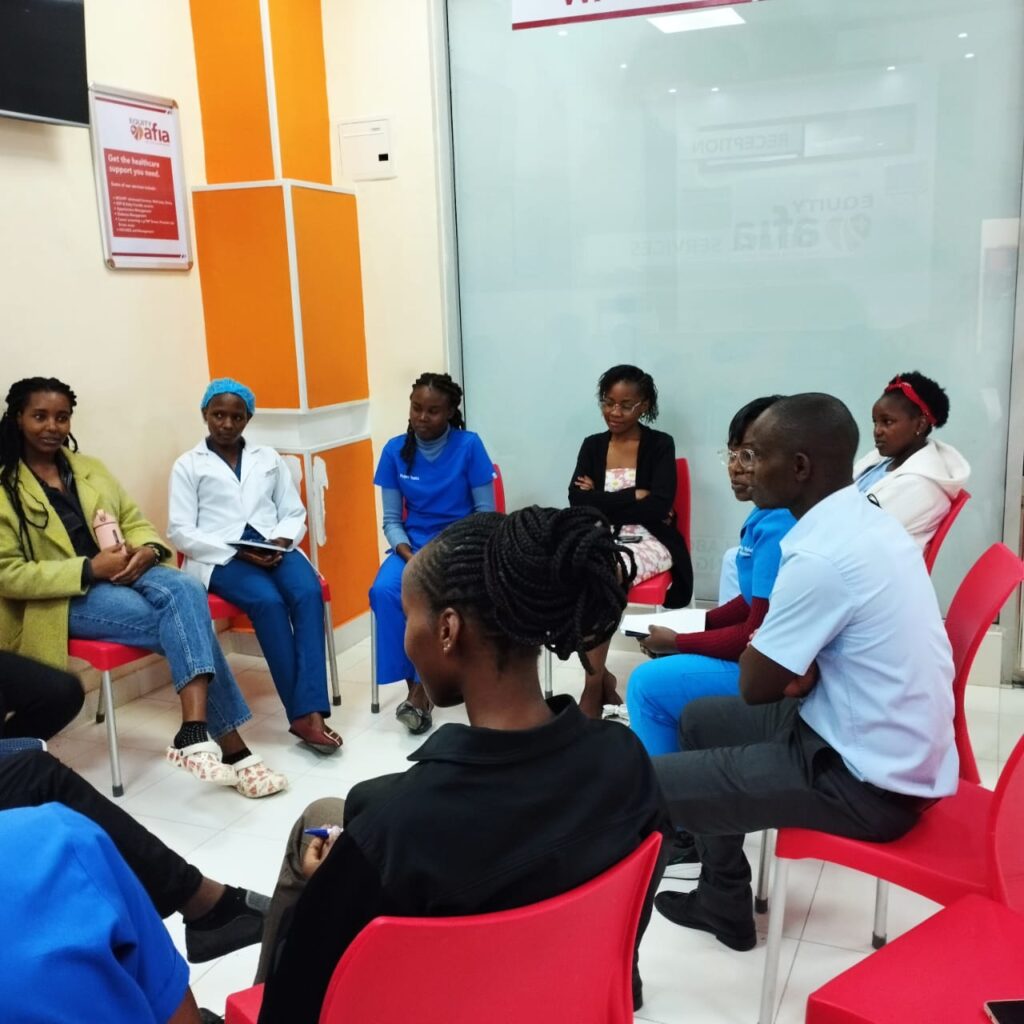
These stories make one thing clear: hospitals cannot wait any longer to provide mental health support for their staff. It’s not just about helping healthcare workers cope, it’s about ensuring patients receive the care they deserve. Without structured support, the emotional strain on staff will continue to grow, and the quality of care will inevitably suffer.
Venting in the Digital Age of Healthcare

Recently, we’ve seen many health workers, nurses, medical students from KMTC, doctors, even surgeons after their operations, and midwives coming from labor wards, turn to content creation during their free time. There has been a noticeable rise in healthcare professionals opening social media accounts, especially on TikTok, and increasingly on Facebook and Instagram Reels, health workers not only share medical guidance but, more importantly, use these spaces to vent and talk about their daily experiences.
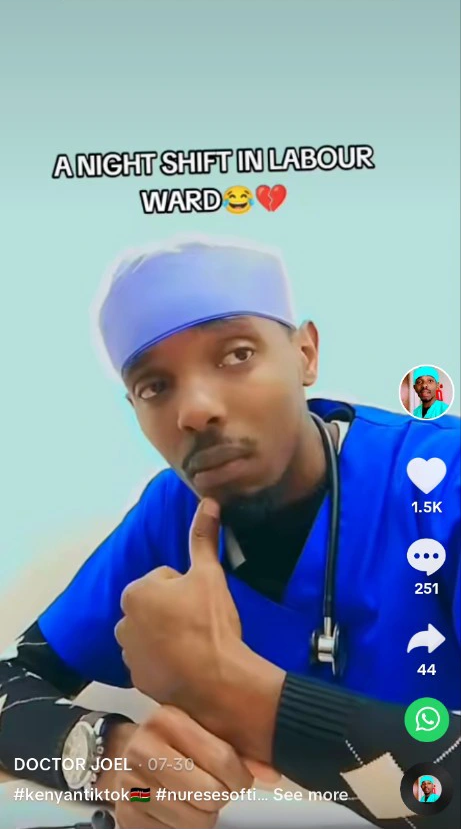


Such posts often spark wide conversations, and for many of them, it has become a way of coping with the heavy emotional toll of their work. They usually have no one to talk to about the traumatic encounters they face each day, so these online platforms fill that gap. Is it okay? No. Is it helping them in coping? Yes.
These spaces have become informal outlets for venting about the day’s challenges, from the pressures of surgery to the emotional weight of labor wards. While posting such reflections online may not always be the most ideal or professional avenue, it has offered a form of coping for many. These conversations often spark engagement and open up dialogue, helping professionals process experiences they otherwise have no safe outlet to discuss.
Institutional Gaps in Support Systems
Despite the growing awareness of mental health, many hospitals in Kenya have been slow to integrate structured support for their staff. We have seen patients always given the first priority, yet we forget the service provider, the one who actually interacts with more people daily. If a healthcare worker is not well, it affects their work, and, in turn, many patients. Alice points to a mix of cultural and systemic barriers:
“There’s still a prevailing stigma that mental health struggles equal weakness. Many institutions prioritize physical health and overlook emotional wellbeing. There’s also the misconception that healthcare workers should naturally be ‘resilient’ because they are trained professionals. Budget limitations and lack of awareness among hospital leadership also contribute to the slow adoption of structured mental health programs.”
Yet, her advocacy has begun to resonate. Alice shares that some healthcare workers have expressed relief at having their struggles acknowledged:
“They appreciate having safe spaces to open up. At the same time, there’s hesitation because mental health discussions are still stigmatized. But overall, I’ve seen growing openness and a willingness among healthcare professionals to seek help when they realize they are not alone and are not being judged for being humans with emotions.”
Her message to those silently struggling is compassionate:
“You don’t have to carry the weight alone. Your mental health matters as much as your patients’ lives do. It’s okay to pause, speak up, and take care of yourself. Remember that you can’t pour from an empty cup.”
Alice Kalekye
It’s evident that Alice’s work is gaining recognition, so much so that I first came across her advocacy on LinkedIn. Curious to learn more, I decided to check her profile and reach out. Her efforts remind us that this is urgent work. We can all play a part in supporting healthcare workers, whether by amplifying voices like Alice’s, advocating for policy change, or simply promoting awareness in our communities.

Vision for Change – Towards a Mentally Healthy Healthcare System
Alice Kalekye believes that meaningful change starts at the top. “Leadership sets the tone,” she explains. Hospitals can foster a culture of care by establishing counseling units, peer-support groups, regular debriefing sessions, and trauma-informed training for staff. Policymakers also play a critical role, by allocating resources and setting regulations that make mental health support a mandatory component of the healthcare system. “When leadership prioritizes staff wellbeing, it improves retention, patient outcomes, and the overall hospital culture,” she adds.
Looking ahead, Alice envisions a healthcare system where mental health support is as routine as medical rounds.

“I envision a healthcare system where mental health is embedded into hospital culture-where emotional support is as normal as medical rounds. A place where healthcare workers are routinely debriefed, where counseling is readily available, and where no one feels ashamed to ask for help.”
What drives her to continue advocating for the mental wellbeing of healthcare workers is this:
“What keeps me motivated is knowing that every conversation we have chips away at stigma and saves someone from silent suffering. I’ve seen how acknowledging a healthcare worker’s pain can restore their hope and strength. That’s what drives me to keep advocating for the mental health of healthcare workers.”
Alice Kalekye
More often than not, we talk about change, we long for it, yet we hesitate to be part of it. Alice Kalekye’s journey reminds us that meaningful transformation starts from the ground up. She is not just speaking about supporting healthcare workers, she is actively building systems, creating awareness, and offering practical support. Her work shows that anyone can contribute to change, starting with what they have. Whether it’s using your platform, lending your voice, or offering small acts of support, you can be part of the movement. Don’t just talk about change, be the change, as Alice is doing, and help ensure that those who care for others also receive the care they deserve.
In doing so, we may see many rise, healthcare workers who are not just physically present, but mentally and emotionally present, ready to give their best to every patient they serve.

- The Rise of Suicide Posts in Digital Spaces Reflects a Growing Mental Health Crisis - February 22, 2026
- How Kenya’s Silent Lifestyle Disease Crisis Is Reshaping Public Health - February 12, 2026
- The Rise of Lifestyle Diseases Emerges as a Crisis Among Kenya’s Youth - February 9, 2026
