What does it truly mean for a man to be whole? Is it strength without softness? Leadership without vulnerability? For years, society has shaped men to believe that showing emotion is weakness, that silence is strength, and that asking for help is failure. But at what cost? Magdalene Wambui challenges this narrative, inviting us to consider: could men’s mental wellbeing depend not on choosing between masculine or feminine energies, but on embracing both? What if balance, not suppression, is the missing piece in how men care for their minds and souls? In a world that rewards toughness and self-reliance, her perspective raises the question: are men truly thriving, or merely surviving?
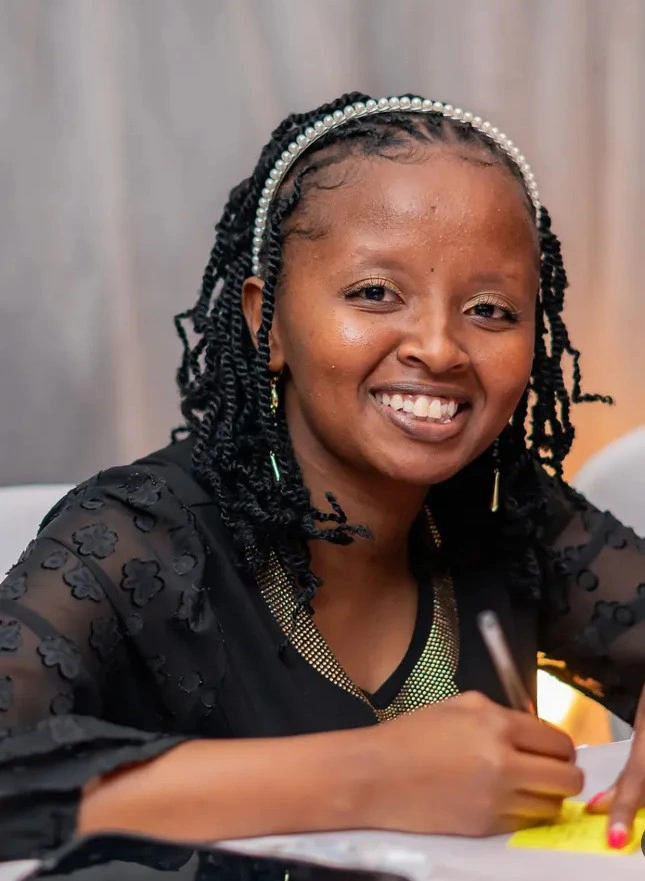
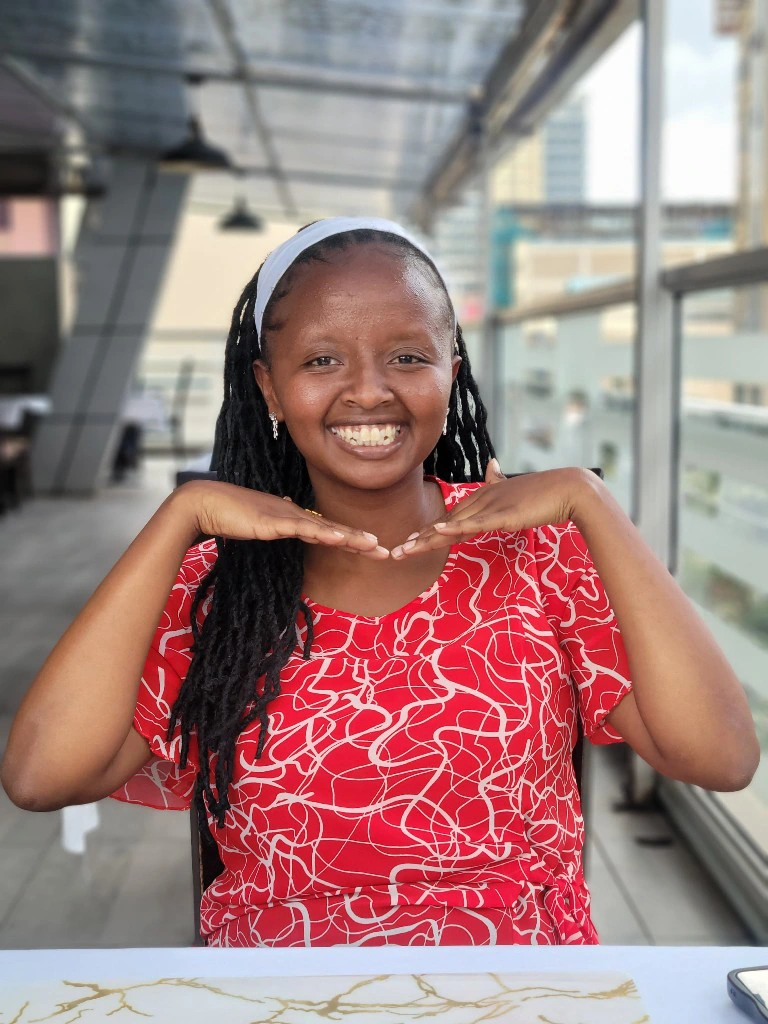
“I’m Magdalene Wambui, a calm and passionate psychologist who loves nature. I offer therapy sessions, mental health talks, and also handle administrative roles to support wellbeing in both individual and corporate spaces.”

“What motivates me to advocate for mental wellness is the need for wholeness and sanity in individuals. I desire to see people in the right shape mentally because off of that, they are able to create and maintain meaningful connections and become extensively productive. And you know what happens when a society is productive, transformation effortlessly happens and the world becomes a better place to live in. Additionally, wholeness allows us to make sound decisions that lead to success and offer good judgement to situations.”
According to Magdalene Wambui, a Certified Counselling Psychologist and a graduate of Kenyatta University, part of this crisis stems from an inner imbalance that most men are unaware of, the neglected harmony between masculine and feminine energies.
“Masculine and feminine energies are not just tied to gender, they are two sides of the same human coin. When men deny their feminine energy, the part of them that allows rest, receiving, intuition, and vulnerability, they disconnect from their wholeness. That disconnection is what silently erodes their mental wellbeing.”
Magdalene Wambui
This perspective challenges the conventional approach to men’s wellness. Rather than viewing strength as constant action and control (the traits of masculine energy), Magdalene invites us to see mental health through the lens of energy balance, where masculine doing and feminine being coexist.
Her reflections, drawn from her published work on Masculine and Feminine Energies on her WordPress page Thriving Mentally (November 6, 2023), offer a fresh and thoughtful framework for understanding why so many men today feel mentally exhausted, emotionally unfulfilled, and spiritually restless.
Magdalene Wambui doesn’t see masculine and feminine energies as opposing forces pulling men in different directions. She believes men need both energies, not as opposites to be suppressed or chosen between, but as complementary forces that, when balanced, allow men to truly thrive.
Masculine and Feminine Energies: Insights from Magdalene Wambui
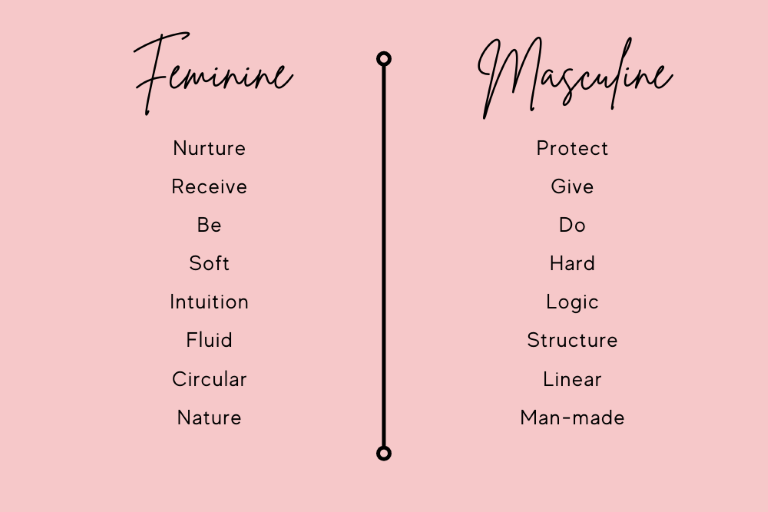
At the heart of Magdalene Wambui’s reflections on men’s mental wellbeing is the timeless concept of masculine and feminine energies, two complementary forces that exist within every individual, regardless of gender.
“Masculine energy is the energy of doing, focused on action, leading, providing, and protecting. Feminine energy is the energy of being, centered on nurturing, receiving, adapting, and intuiting. These energies are not bound to biology or gender; they flow through every person, shaping how we relate to ourselves, others, and the world.”
Magdalene Wambui
This idea finds strong support in psychological theory. Carl Jung, the father of analytical psychology, proposed the concepts of anima (the feminine inner self in men) and animus (the masculine inner self in women). According to Jung, true individuation, personal wholeness, requires integrating these inner opposites. When men reject or suppress their inner feminine traits (intuition, emotional openness, receptivity), they risk becoming emotionally rigid, disconnected, or deeply anxious.
Modern psychology also reinforces this balance. Positive psychology points to the importance of emotional intelligence, empathy, self-compassion, and relational connection, qualities often labeled as feminine traits, as crucial for mental health in both men and women. Likewise, gender role strain theory suggests that when men are pressured to over-conform to traditional masculine roles (dominance, self-reliance), they experience psychological distress, emotional suppression, and higher rates of anxiety or depression.
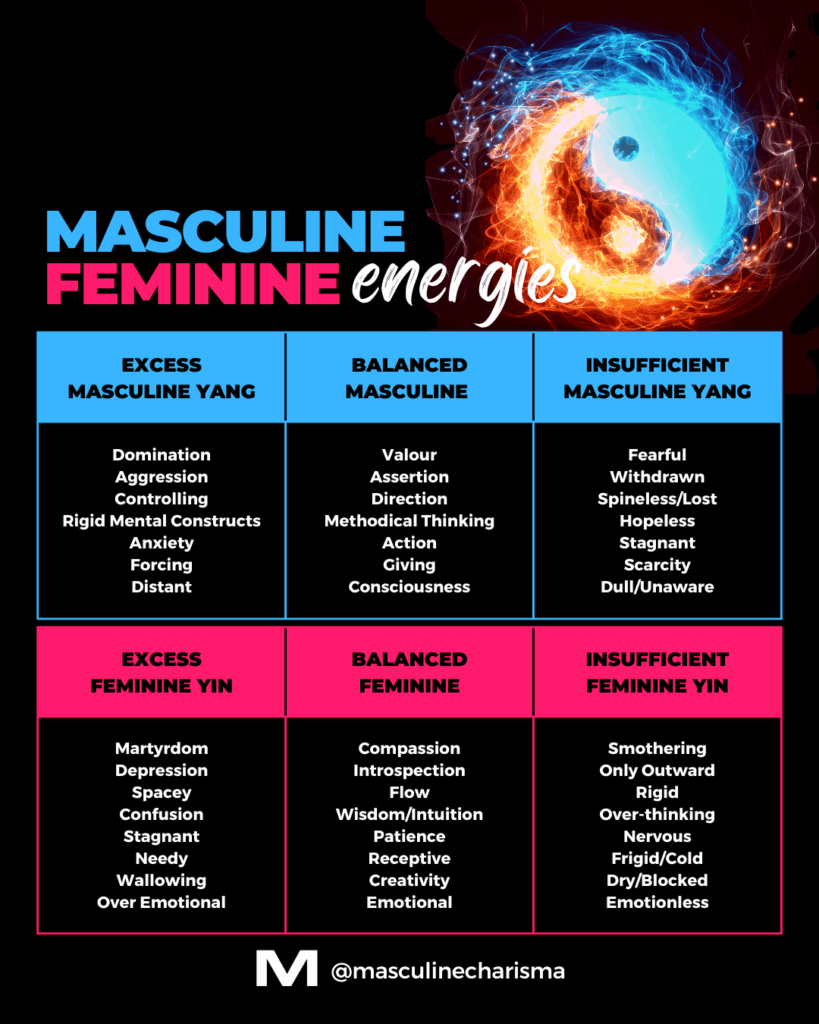
Magdalene echoes these insights by cautioning against the dangers of imbalanced energy.
“When masculine energy is wounded, it turns into control, aggression, avoidance. When feminine energy is wounded, it becomes neediness, people-pleasing, overdependence. Every man needs both energies whole and healthy to thrive mentally and emotionally.”
Magdalene Wambui
She adds, “There are times when a man must rest, receive, feel, without guilt. That is his feminine energy helping him recharge, reflect, and reconnect. Ignoring this is like driving a car without ever stopping for fuel, you eventually break down.”
By framing these energies as human, not gendered, Magdalene offers a liberating perspective. Men are not betraying their masculinity by nurturing their feminine side; they are, in fact, restoring their wholeness.
These insights form the foundation for understanding why so many men silently suffer under the weight of “one-sided” living an inner imbalance that this energy model seeks to correct.
The Impact of Energy Imbalance on Men’s Mental Health
When masculine and feminine energies within a man fall out of balance, the effects can ripple through every area of his life, mentally, emotionally, and socially. Magdalene Wambui refers to this state as operating from a “wounded masculine”, where the natural strengths of masculine energy, leadership, provision, action, become distorted into control, aggression, emotional detachment, or chronic avoidance.
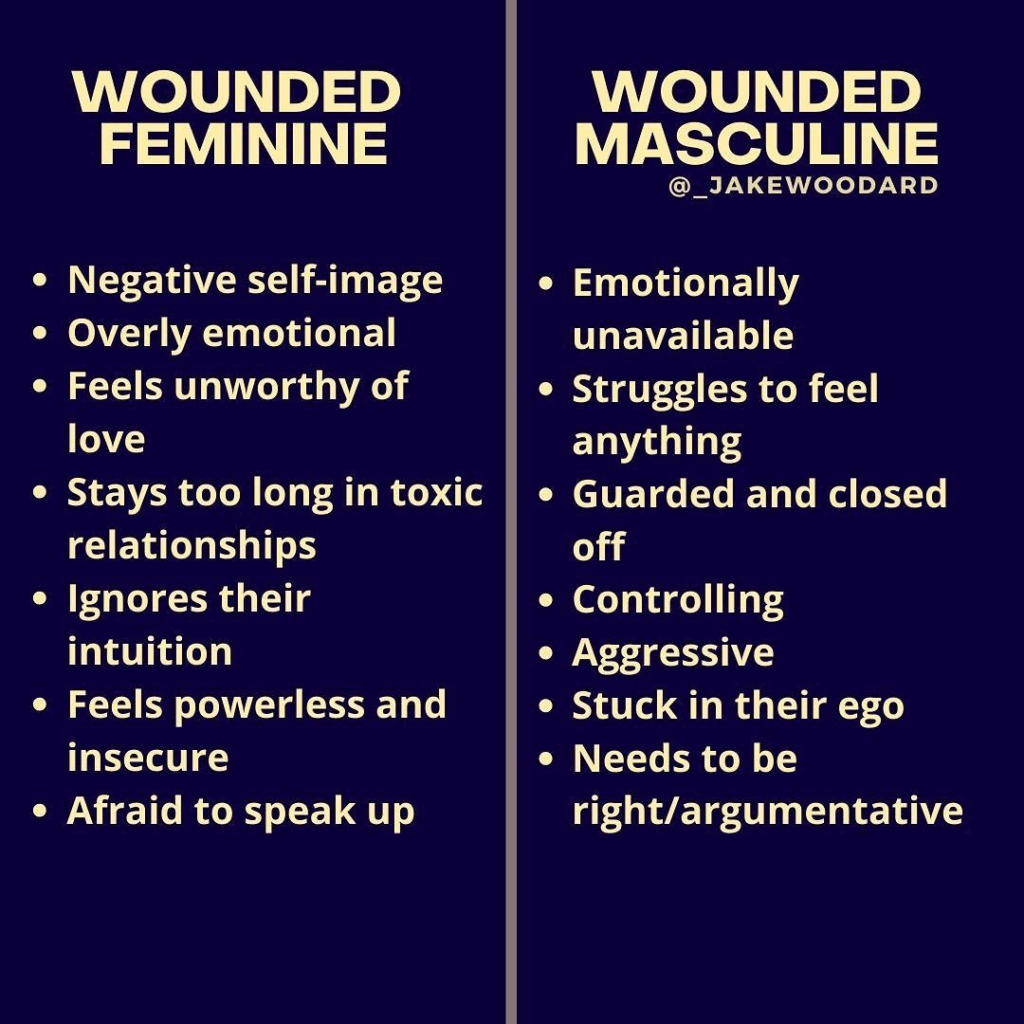
“A man who over-identifies with doing but neglects being becomes restless, burnt out, and emotionally distant, not because he is ‘strong,’ but because he is disconnected from himself,” Magdalene explains.
This over-functioning masculine energy often pushes men into cycles of workaholism, emotional numbness, and isolation. They become uncomfortable with rest, vulnerability, or receiving support, seeing these as weaknesses rather than necessary parts of wholeness.
Psychology explains why this happens. According to Emotion Regulation Theory, emotions that are suppressed rather than expressed tend to resurface in distorted ways, through irritability, anger outbursts, or psychosomatic symptoms like headaches, high blood pressure, or chronic fatigue. In men, this suppression is often encouraged by rigid gender norms that label sadness, fear, or dependency as “unmanly,” leading to what researchers term “restricted emotionality“, a condition strongly linked to depression, anxiety, and even substance abuse.
Restricted emotionality refers to the learned habit of holding back emotions that are perceived as socially unacceptable for men, especially feelings like sadness, fear, tenderness, or uncertainty. From an early age, many boys hear messages like “man up,” “boys don’t cry,” or “be tough,” shaping them to believe that expressing vulnerability makes them weak or less masculine. As adults, this emotional restriction can show up in everyday life: a man choosing anger over admitting he feels hurt in a relationship; avoiding deep conversations with friends out of fear of seeming ‘soft’; or staying silent about workplace stress because speaking up might be seen as incompetence. Over time, this emotional bottling can erode mental health, contributing to isolation, anxiety, or even risky behaviors like substance use as a way to cope with what remains unspoken.
Magdalene highlights this dynamic clearly:
Magdalene Wambui
“When a man disconnects from his feminine energy, his capacity to feel, receive, nurture, he becomes like a tree without roots. He may appear strong on the outside, but inside he is hollow, fragile, and ungrounded.”
Magdalene believes that when men begin to welcome both energies within, leading but also listening, doing but also resting, they unlock confidence, clarity, and emotional resilience. “A whole man is not afraid to feel. He is strong because he knows when to pause and receive,” she says.
How Men Can Integrate Both Energies for Mental Wellbeing
Do you think societal expectations make it hard for men to embrace their ‘being’ side?
From an early age, men are shaped by a world that praises action over stillness, doing over being. Magdalene Wambui observes this reality clearly: “The ‘being’ side is closely linked to women, and men are, without a shadow of doubt, known to be always ‘doing’ things.” In her view, societal and cultural expectations have made it nearly impossible for men to comfortably embrace traits such as receiving, nurturing, or emotional openness. “Naturally, men can’t stand receiving, nurturing, or getting emotional,” she says, noting that even when men try, their ego instinctively resists. The idea of a man openly reacting to kindness or softness, like “a gentleman screaming and acting up after receiving a gift from a lady”, seems illogical within the masculine world.
Magdalene reflects on how deeply this conditioning runs: “As a boy is growing into a man, he sees older men naturally leading, and this norm makes it hard for him to undo what he has grown into seeing.” Boys watch their fathers provide, protect, and act, rarely witnessing the quieter, receptive side of manhood. “At home, he sees dad providing and grows into believing this is just it, this is how men do it!” she adds. Such ingrained social patterns make it clear that societal expectations indeed create a silent but firm barrier, preventing men from fully embracing their ‘being’ side, an imbalance that has lasting effects on their mental and emotional health.
For men to thrive mentally and emotionally, Magdalene Wambui believes they must begin the gentle yet profound work of nurturing their often-neglected feminine energy. This is not about becoming less masculine, it is about becoming whole. “When a man embraces both sides of his inner self, he becomes unshakeable, not because he hides weakness, but because he owns his full humanity,” she says.
Magdalene suggests simple, intentional practices to help men reconnect with their feminine energy:
- Embracing Rest: Allowing the body and mind to slow down without guilt. “Rest is not laziness, it is preparation for deeper strength,” she notes.
- Expressing Feelings: Giving space for sadness, fear, joy, and uncertainty, without the fear of judgment. Journaling, open conversations, or therapy are practical ways to do this.
- Practicing Mindfulness: Tuning into the present moment to notice emotions, thoughts, and bodily sensations. Mindfulness softens overactive ‘doing’ and awakens the receptive ‘being’ energy.
- Receiving Support: Letting others help, guide, or comfort without perceiving this as weakness. Magdalene reminds men, “You don’t lose strength by receiving, you gain connection, which is the true source of inner power.”
At the core of these practices is self-awareness, the ability to notice when one is slipping into over-functioning masculine patterns (control, avoidance, aggression) and to consciously make space for the softening influence of feminine energy. This inner noticing allows men to break free from the heavy expectations of “always leading, always providing” and to give themselves permission to just be.
As the conversation on men’s mental health grows louder, this lens of energy balance offers a refreshing, holistic approach. Men are not meant to carry the world on their shoulders in silence; they are meant to live as whole beings, strong and gentle, active and restful, doing and being.
I hope that by sharing Magdalene Wambui’s insights on the importance of balancing masculine and feminine energies, this article will spark deeper conversations around men’s mental health and challenge the long-held perceptions that limit men to only one way of being. May this perspective encourage not only men but society as a whole to embrace a fuller, more compassionate understanding of masculinity. After all, if we desire a truly thriving, emotionally healthy society, we must play our part in supporting and caring for men just as intentionally as we do for others. A balanced man contributes to a balanced world.

- The Rise of Suicide Posts in Digital Spaces Reflects a Growing Mental Health Crisis - February 22, 2026
- How Kenya’s Silent Lifestyle Disease Crisis Is Reshaping Public Health - February 12, 2026
- The Rise of Lifestyle Diseases Emerges as a Crisis Among Kenya’s Youth - February 9, 2026
