In a country where mental health conversations are often silenced by stigma, Oshilagun Opeyemi, a passionate Nigerian mental health advocate in her mid-twenties, stands out as a voice of clarity and conviction. A recent graduate of psychology from the University of Ibadan, Nigeria, she is already reshaping how young people engage with emotional wellbeing, both on campus and beyond. Her journey is one of intentional service and lived advocacy.
From university corridors to national mental health spaces, Opeyemi’s impact reflects the possibilities that unfold when education meets empathy, and when students are empowered to lead with purpose. As the mental health landscape in Nigeria slowly evolves, voices like hers are helping to drive that change, one act of service, one conversation, and one courageous role at a time.
The Genesis of a Mental Health Advocate
“My name is Opeyemi Oshilagun, a recent Psychology graduate from the University of Ibadan, Nigeria. During my undergraduate studies, I gained a solid foundation in psychological theories, research methods, and practical applications, which prepared me for a career in mental health.”
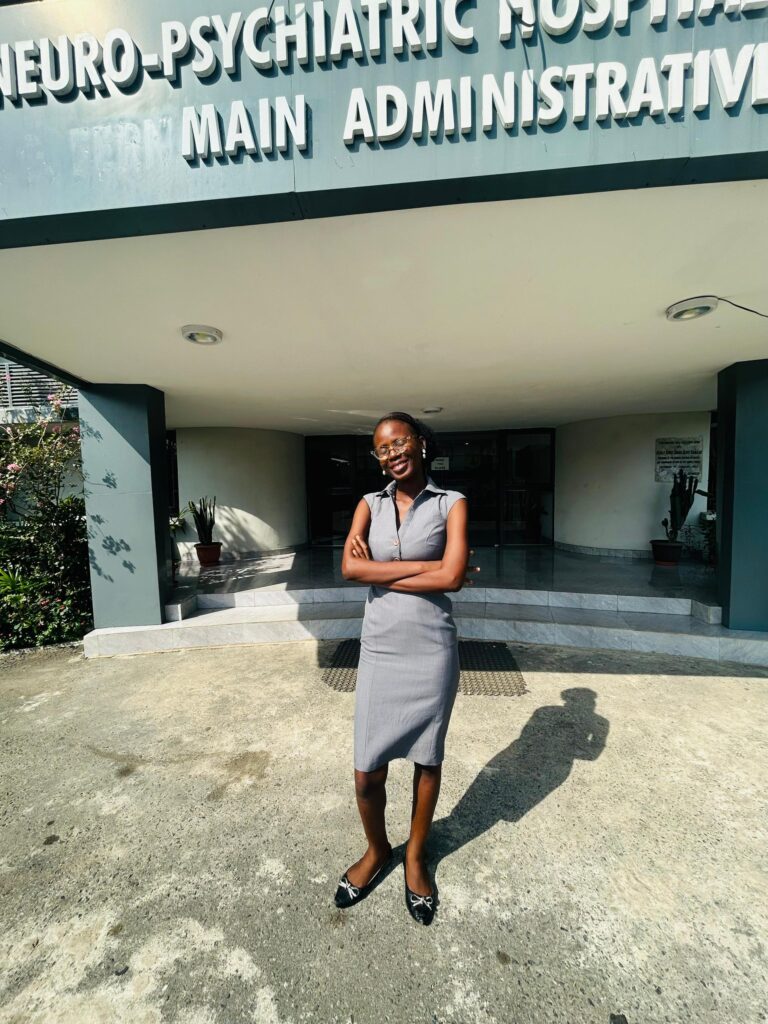
Currently, Opeyemi Oshilagun wears many hats across Nigeria’s growing mental health space. She volunteers as an intern at a Federal Neuropsychiatric Hospital, where she gains hands-on experience in clinical care. Simultaneously, she serves as an in-house counsellor at Mentally Aware Nigeria Initiative (MANI) one of the country’s largest youth-led mental health organizations and contributes as an intern with the Coalition for the Advancement of Nigeria Mental Health (CANMH). Her leadership role as the Mental Health Coordinator of the University of Ibadan Student Union, even after graduation, speaks to a commitment to promoting change.
Her journey into mental health advocacy didn’t start with formal roles, it began with a personal reckoning. Confronting bullying and the struggle to adjust during her university years, she found herself seeking support, and soon after, offering it.
“My decision was fueled by my personal struggles with bullying and adjustment issues which inspired me to seek help and later volunteer with MANI. I wanted to support others who might be going through similar challenges, and I also saw it as an opportunity to gain hands-on experience as a psychology student.”
That desire led her to join MANI, an experience she calls transformative. There, she didn’t just offer support, she grew into her identity as a mental health advocate.
“Working with MANI was a transformative experience that shaped my early professional journey in mental health. I developed essential counseling skills, including active listening and empathy, and gained a deeper understanding of mental health complexities. This experience gave me a sense of purpose and direction, and I discovered my passion for mental health advocacy. I realized that I wanted to become a clinical psychologist, someone who could walk alongside individuals and support them through their mental health struggles. MANI equipped me with the skills and knowledge needed to make a positive impact in the lives of others.”
Yet advocacy within the university space came with its own battles, a journey no one had prepared her for. As the first to hold the position of Mental Health Coordinator in her student union, she stepped into a new state, confronting structural delays, cultural resistance, and the slow pace of institutional change.
“As the first Mental Health Coordinator in the student union of University of Ibadan, Nigeria, I faced challenges like understanding peer perceptions, working through administrative processes that sometimes took a long time, and dealing with financial constraints. But I pushed forward, driven by my passion for mental health and commitment to the welfare of the students. When collaborating with external bodies, I had to follow procedures to ensure the welfare and safety of students, which was understandable but sometimes time-consuming. Despite these challenges, I was able to engage with students through surveys, received support from the authorities by highlighting the importance of mental health, and carefully vetted potential partners to ensure genuine collaborations. It was not easy, but I and my colleagues were determined to create a supportive community on campus.”
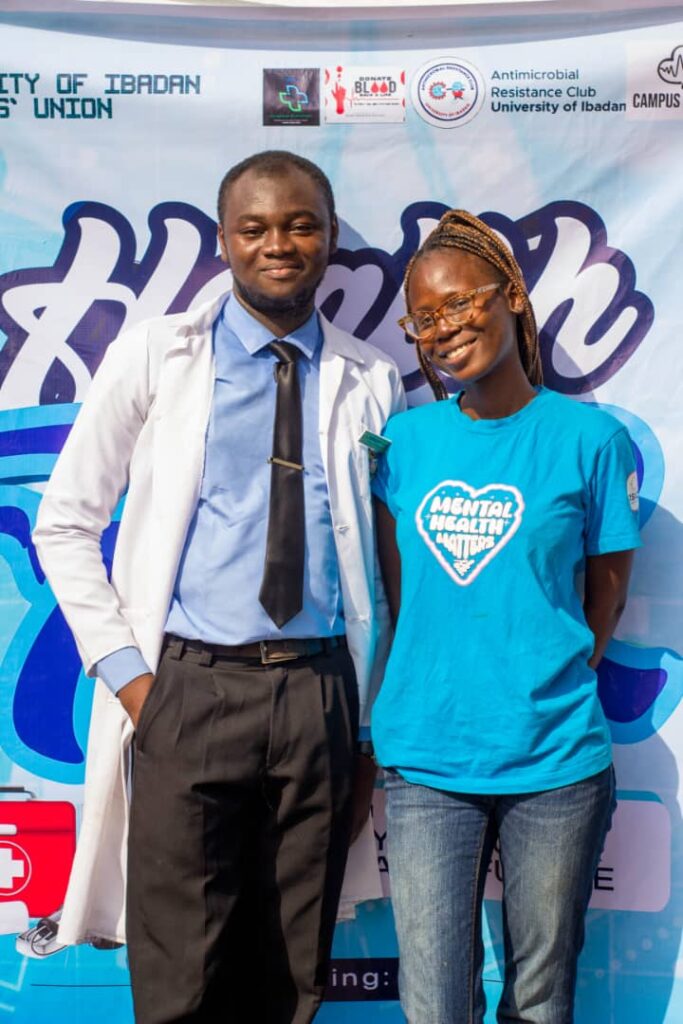
Opeyemi Oshilagun pictured alongside the Head of the Health Committee, University of Ibadan Student Union, building alliances that strengthen student mental health advocacy on campus.
Mental health advocacy in institutional spaces is often an uphill battle, one that demands far more than passion. Ask any student, employee or even a youth advocate who has tried to bring change in the mental health space, and you’ll often hear very sad stories filled with exhaustion, frustration, and heartbreak. It’s rarely about lack of effort. It’s about systems that stall, peers who don’t fully understand, and gatekeepers who require endless justification for something as fundamental as mental well-being.
I’ve often wondered: Why must mental health advocates fight so hard to be heard? When it comes to implementing other programs or initiatives, things move quickly, sometimes even overnight. But when the conversation shifts to mental health, the very core that determines how we function, relate, and survive, we are met with hesitation. We’re asked to explain, to justify, to prove its worth. As if our minds must be falling apart before anyone takes it seriously.
What many institutions, communities, and even organizations fail to grasp is that mental health is not a luxury, it never was. It is not an added benefit or a side campaign. It is the bedrock of every student’s ability to learn, connect, and thrive. And until that is recognized not just in policy, but in practice, mental health advocates will keep pushing, keep educating, and keep holding space, often at great personal cost, until change is no longer a fight, but a shared responsibility.
Reshaping the System
How Opeyemi helped build structures where none existed.
Opeyemi Oshilagun’s advocacy journey has never been limited to personal experience, it extends into systemic transformation. While still a student, she not only led conversations but helped institutionalize mental health support at one of Nigeria’s premier universities.
Her most impactful win came during the University of Ibadan’s annual Health Day, an event that, up until her intervention, lacked any focus on mental well-being.
“I volunteered for the event and realized mental health was not initially prioritized,” she recalls. “So I spoke with the committee head, who valued my opinion.”
That conversation catalyzed a shift. Working alongside the committee and the Students’ Union Vice President, Opeyemi pushed for the integration of mental health resources and succeeded. Through her coordination, a reputable counseling organization with qualified therapists was brought in, ensuring student safety and confidentiality.
“We counseled over 50 students. Though we hoped to reach more, the experience was rewarding,” she says. “Creating a safe space for students to share their concerns without judgment was the real success.”
Her impact has also extended beyond campus walls, as a panelist and facilitator in mental health discussions and workshops across diverse platforms. Two conversations remain especially close to her heart. One tackled the generational gap in how Nigerians understand mental health.
“It’s amazing how different generations view mental health, from being stigmatized and spiritualized to becoming more open and discussed. The various insights from professionals across different generations was enlightening and it made me realize how far we’ve come.”
The second one among the many thought-provoking conversations Opeyemi has engaged in, one topic stood out for its raw honesty and emotional weight: the delicate decision of whether, and when to share a mental health struggle with a romantic partner. It’s a situation that doesn’t come with clear answers, yet it’s one that many people silently wrestle with. In a culture where mental health is still misunderstood or dismissed, opening up in intimate relationships can feel risky, even dangerous. But it’s also where some of the most powerful shifts in perception can begin.
“The other discussion that really got to me was about when someone struggling with mental health should inform their partner. This is a really tough one because you don’t know how they’ll react, and the fear of being judged or not understood is real. It’s a complex issue, but talking about it openly can help create a more supportive environment. I feel like these discussions are important, especially for young people in Nigeria where mental health stigma is still prevalent. We need to address these gaps and ensure accurate information is shared to reduce stigma and promote mental wellness.”
For many young people, especially in Nigeria where mental health is still heavily stigmatized, this fear is very real. But having honest conversations like this is so important. It helps break down the silence and creates space for healthier, more supportive relationships. As Opeyemi shared, these moments of vulnerability can be powerful steps toward changing how we approach mental health in our personal lives and as a society.
Her evolving understanding of Nigeria’s mental health landscape has been deeply enriched by her volunteer roles across three distinct spaces: MANI, AIESEC University of Ibadan, and the Federal Neuropsychiatric Hospital.
“These organizations taught me the importance of cultural sensitivity, research, and collaboration. Through my current work at the Federal Neuropsychiatric Hospital, I’ve seen how culture deeply shapes how people perceive and respond to mental illness.”
Whether engaging students on campus or supporting patients in clinical environments, Opeyemi’s lens is both wide and empathetic. Her advocacy is about transforming the systems that shape how mental health is seen, treated, and valued in Nigeria.
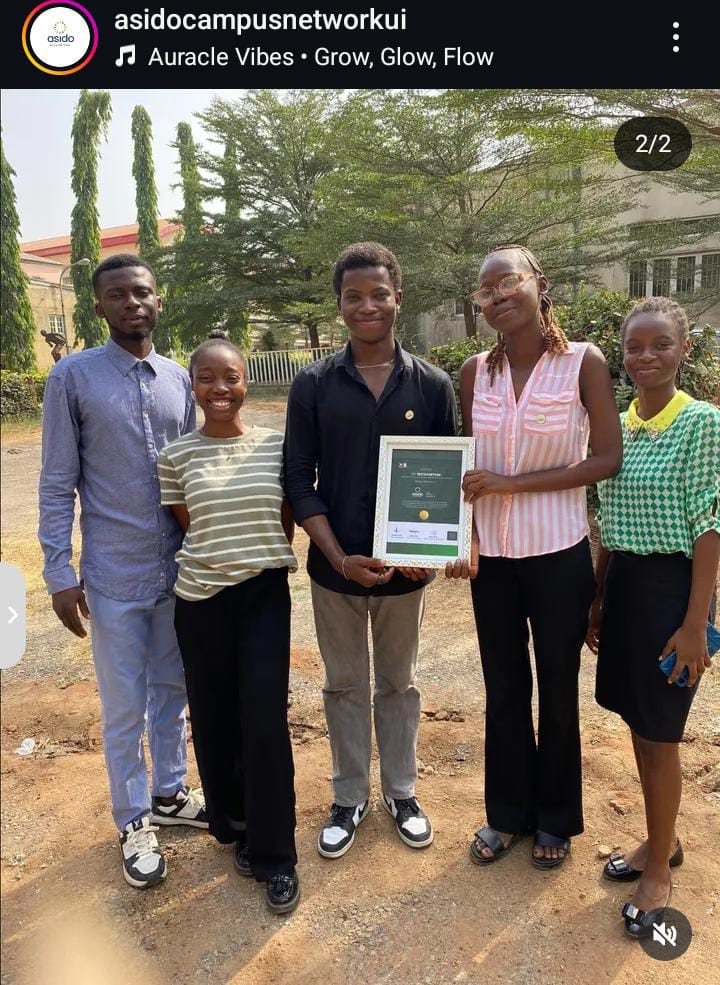
Opeyemi Oshilagun, a former Asido Foundation ambassador and now proud alumna, joins fellow ambassadors in receiving certificates of recognition during Health Day, honoring their commitment to mental health awareness and fostering safe spaces for students on campus.
Holding Space with Empathy
For Opeyemi Oshilagun, mental health advocacy is about showing up for people in quiet, consistent ways, listening, supporting, and creating safe spaces where they can be themselves. In a community where many still misunderstand mental health or see it as weakness, she knows that change begins with empathy, not arguments.
“I do this by prioritizing understanding and empathy. I try to see things from their point of view, which helps me understand where they’re coming from and why they think or feel a certain way. This perspective-taking enables me to build a stronger therapeutic alliance, create a good rapport, and address potential barriers.”
Opeyemi has also come to see empathy as something you work at, not just something you have.
“Empathy is an important skill that requires practice and is rooted in emotional intelligence. To me, empathy means being present, genuinely understanding others’ feelings and perspectives, and seeing things from their point of view. It’s about truly understanding where they’re coming from, setting aside my own judgments and biases.”
In her work as a peer supporter and crisis counselor, Opeyemi discovered just how powerful empathy can be. Through this, she learned that helping someone isn’t always about having the answers, but about seeing things from their point of view and gently offering new perspectives. “It helps me understand the person better, guides me in finding practical ways to support them, and enables me to show them different perspectives they might not have considered,” she says.
The experience also taught her that empathy demands ongoing self-awareness and intentional practice. Over time, it transformed how she connected with others, strengthening her relationships and deepening her ability to support those in distress.
But caring deeply comes with its own challenges. “I used to say yes to everything,” she admits. “But I realised I was burning out. Now I take breaks, especially during exams. I’ve learnt that saying no doesn’t make me selfish, it helps me stay strong for others.” Setting boundaries hasn’t always been easy, but it’s helped her protect her own well-being while still being there for others.
“Planning ahead has been helpful, as it enables me to manage my responsibilities and commitments more effectively. By being intentional about my schedule and workload, I can ensure that I am not overextending myself.”
Even after graduation, Opeyemi continues to create safe spaces both online and in real life. Through WhatsApp and Instagram, she shares content about mental health and encourages honest conversations. One time, she posted about accepting mental health struggles, and someone reached out, saying, “Your post helped me realise that acceptance is the first step to healing.” Moments like that remind her why she does this work.
She’s also part of her school’s mental health awareness team, and often invites students to join events where mental health is being discussed. “Even when I’m not leading, I want them to feel like they have a place to be heard,” she says.
For Opeyemi, the internet is a platform for healing, learning, and connection. But in a world full of performative posts and half-truths, she takes care to ensure that her voice remains rooted in truth and impact. “When I’m online, I focus on sharing genuine, accurate info that helps people,” she says. “I want my posts to be a resource, not just noise.”
She doesn’t just repost trends. Her advocacy draws from real experience, and her words reflect both honesty and care. Whether it’s being featured on MANI’s platform or speaking through her own social media, she’s intentional. Her aim is always to leave someone feeling seen, informed, or a little more hopeful.
Looking ahead, Opeyemi sees her role expanding beyond digital spaces. She’s not only thinking about therapy rooms but also about courtrooms, classrooms, and government halls, places where real change is made. “I want to see mental health part of policy and student welfare laws,” she says. “Right now, if a student struggles mentally, they’re often told to take a break, and that can affect their academics. But we don’t treat physical illness that way, so why should we treat mental health any differently?”
She hopes for a future where schools across Nigeria, Africa and beyond, create space for open conversations, proper support systems, and policies that protect students’ mental well-being. And she wants to be part of that shift. “I don’t just want to practice in a clinic,” she explains. “I want to work in government or international spaces, pushing for reforms and new ideas like teletherapy, which really worked during the pandemic.”
“My goal is to contribute to a society that prioritizes mental wellness and provides comprehensive support systems for students and individuals alike.”
Opeyemi Oshilagun aims to create a world where mental wellness is a natural part of how we learn, live, and lead. In sharing her story, she is planting seeds. And perhaps, as her voice echoes through school corridors and digital halls, others will find theirs too. Maybe, in her rising, more mental health advocates will rise, carrying forward the work of care, compassion, and change.
Carson Anekeya is a Digital Journalist and feature writer at EpicPulse Magazine, passionate about digital storytelling that highlights special features, health, mental health, and social impact. His work spans powerful narratives and evidence-based reporting, aimed at educating, inspiring, and driving meaningful change.
Contains information related to marketing campaigns of the user. These are shared with Google AdWords / Google Ads when the Google Ads and Google Analytics accounts are linked together.
90 days
__utma
ID used to identify users and sessions
2 years after last activity
__utmt
Used to monitor number of Google Analytics server requests
10 minutes
__utmb
Used to distinguish new sessions and visits. This cookie is set when the GA.js javascript library is loaded and there is no existing __utmb cookie. The cookie is updated every time data is sent to the Google Analytics server.
30 minutes after last activity
__utmc
Used only with old Urchin versions of Google Analytics and not with GA.js. Was used to distinguish between new sessions and visits at the end of a session.
End of session (browser)
__utmz
Contains information about the traffic source or campaign that directed user to the website. The cookie is set when the GA.js javascript is loaded and updated when data is sent to the Google Anaytics server
6 months after last activity
__utmv
Contains custom information set by the web developer via the _setCustomVar method in Google Analytics. This cookie is updated every time new data is sent to the Google Analytics server.
2 years after last activity
__utmx
Used to determine whether a user is included in an A / B or Multivariate test.
18 months
_ga
ID used to identify users
2 years
_gali
Used by Google Analytics to determine which links on a page are being clicked
30 seconds
_ga_
ID used to identify users
2 years
_gid
ID used to identify users for 24 hours after last activity
24 hours
_gat
Used to monitor number of Google Analytics server requests when using Google Tag Manager