Christine Miloyo Ombima knows firsthand what it’s like to face the silent storms of postpartum depression and psychosis. A passionate mental health advocate, community trainer, and creative arts therapist, Christine has walked through the shadowed valley of postpartum depression, postpartum psychosis, and bipolar disorder. Today, as the founder of Stand Out 4 Mental Health, she channels her lived experience into creating safe spaces for mothers and youth who often suffer in silence.
But Christine’s journey is more common than many realize. Globally, 1 in 7 women experiences postpartum depression, according to the World Health Organization. The statistics are alarming. The WHO estimates that around 10% of pregnant women and 13% of women who have just given birth experience a mental disorder, primarily depression, with rates being higher in developing countries. Yet the silence is deafening, especially in Africa, where cultural stigma, limited mental health infrastructure, and lack of maternal mental health screening keep countless mothers in the dark. A systematic review on the burden of postpartum depression in sub-Saharan Africa published in the South African Journal of Science in 2024 estimated a pooled prevalence of 22.1%, emphasizing the significant burden and regional variations.
In Kenya, a 2022 study published in BMC Psychiatry titled “Predictors of postnatal depression in the slums Nairobi, Kenya” found that up to 37% of postpartum women showed depressive symptoms within the first 12 weeks after childbirth. This study found a postnatal depression prevalence of 27.1% in a sample of mothers in low-income settings in Nairobi. Other studies in Kenya have also reported high rates of postpartum depression.
Christine’s story brings urgency and humanity to these statistics. Through this candid and courageous conversation, Christine helps us understand the signs, the suffering, and ultimately, the strength that comes from surviving what so many women are afraid to name.
This Isn’t Just Baby Blues
How postpartum depression differ from the baby blues
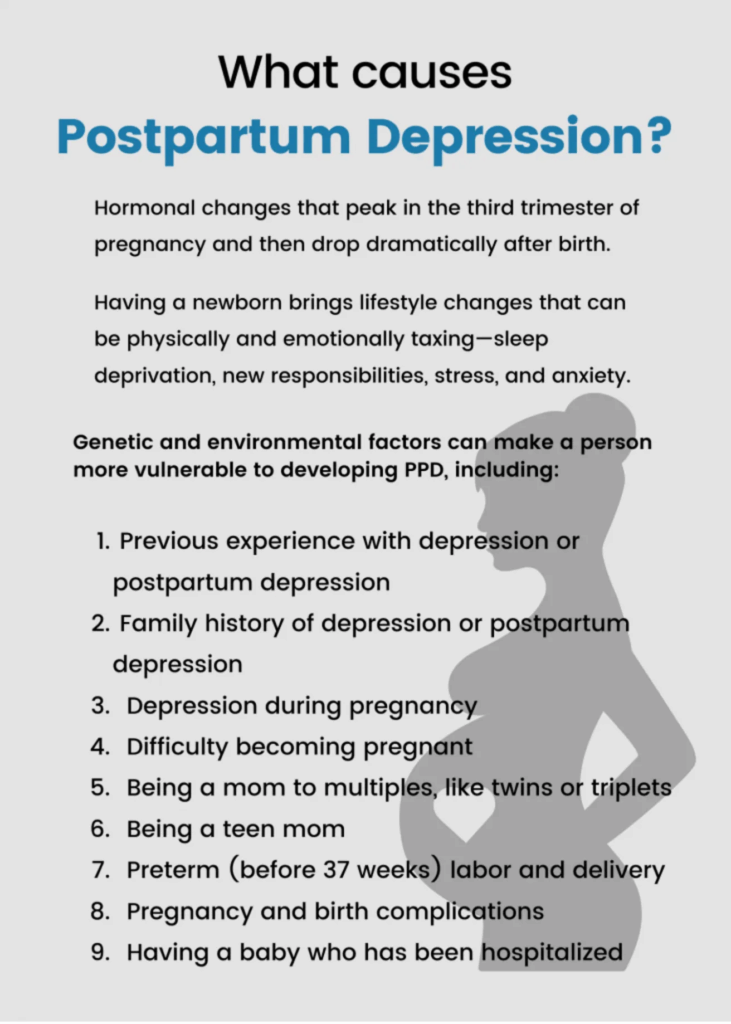
After giving birth, a woman’s body experiences a dramatic shift in hormones. Estrogen and progesterone, both of which rise significantly during pregnancy, drop sharply after delivery. On top of these physiological changes, new mothers often face intense lifestyle adjustments, including disrupted sleep, frequent feeding schedules, and navigating a new family dynamic. These combined shifts, both hormonal and environmental, can lead to emotional challenges, commonly known as the “baby blues.”
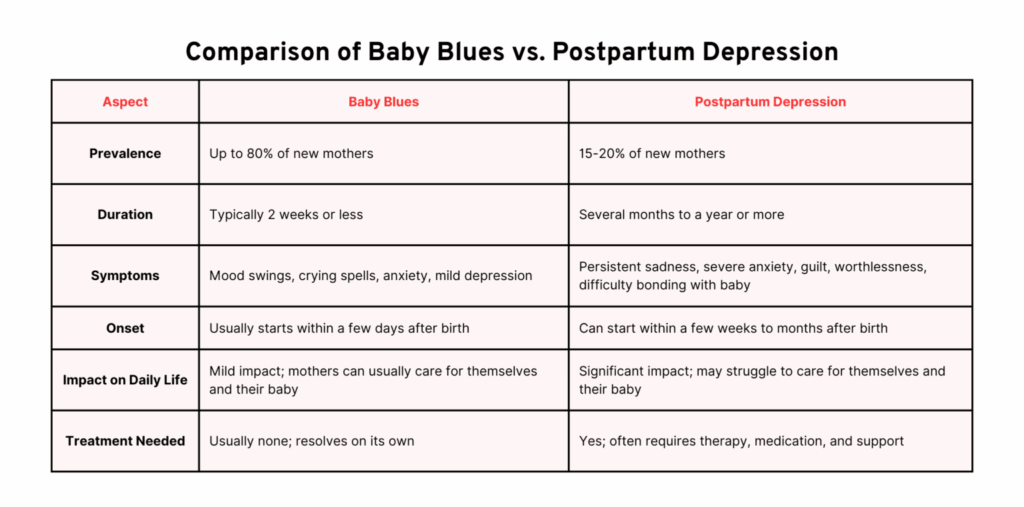
The baby blues are usually temporary, marked by mood swings, irritability, anxiety, crying spells, and trouble sleeping. While distressing, these feelings tend to ease within a couple of weeks. Postpartum depression, however, is more severe and long-lasting. It goes beyond typical hormonal fluctuations and often requires medical or therapeutic intervention. Unlike the baby blues, postpartum depression doesn’t simply pass with time, it can persist and deeply affect a mother’s ability to function and bond with her baby.
The birth of a child is often wrapped in ribbons of joy, anticipation, and new beginnings. But for Christine Miloyo Ombima, what should have been a celebratory moment quickly turned into a chapter marked by confusion, isolation, and overwhelming emotional darkness.
“To begin with, I had a distress delivery, I laboured for so long which led to my child having complications. Motherhood wasn’t rosy for me, it was my first experience, and nothing went as I had imagined.”
Christine Miloyo Ombima
Just three days after giving birth, Christine found herself forced to leave her newborn, still on oxygen and life-supporting tubes, in the hospital so she could sit for university exams. The emotional dissonance of walking away from her fragile baby at such a tender moment was devastating. She hadn’t even had the chance to bond.
“Staying in the hospital for two weeks was quite something,” she reflects. “And when we finally went home, we were constantly in and out of hospital again. It drained us financially and emotionally.”
Christine Miloyo Ombima
What began as exhaustion and stress began to morph into something deeper and darker. The hopes of cuddling her newborn, sharing soft lullabies, and soaking in moments of maternal bliss were replaced by medical emergencies, emotional numbness, and grief.
“Unfortunately, the baby passed on like three weeks later after leaving the hospital. My world broke into tiny pieces.”
The grief was compounded by abandonment. The baby’s father was absent, not just during delivery, but even during the burial. Christine was left to carry both the emotional and logistical burden of loss, without closure, without support. “I used to oversleep. I was withdrawn. I felt a lot of hopelessness. Even small tasks like washing a cup would take me hours. I would just sit there staring into space.”
This was far beyond the “baby blues”, a phrase often used too lightly to describe what, in reality, was an emotional landslide. “I just wanted to be alone in my bedroom,” she recalls. “Even reading the Bible or my books was hard. I had to be called like three times before I even realized someone was speaking to me.”
Her world became quieter. The days blurred into one another. Isolation wrapped around her like a fog, and the things that once brought her grounding or joy felt unreachable. Without realizing it, she was slipping further away from herself.
Eventually, the emotional weight became too much to carry. What had begun as sadness and fatigue deepened into despair, culminating in her first suicide attempt.
“Well, the feelings of sadness creeped in and that how I had my first suicide attempt. Clearly, my world was dark and bleak.”
Christine Miloyo Ombima
In that dark moment, Christine was not just mourning the loss of her child; she was also mourning the loss of her identity, her clarity, and her will to keep going.
This is where her journey with postpartum depression began. Not as a defined diagnosis, but as a slow descent into emotional fog, self-neglect, and disconnection. It’s a story that reminds us that postpartum struggles aren’t always loud or visible. Sometimes, they show up as a mother rubbing her hands in silence while the world assumes she’s okay.
Sometimes, these shifts happen faster than we can recognize. For Christine, the descent didn’t come with a warning label. One moment she was surviving a difficult delivery, and almost in the next, she was emotionally adrift. There was no clear line where exhaustion ended and depression began. That’s the unsettling truth about postpartum struggles: they can blur into daily life so seamlessly that even the mother herself doesn’t always realize she’s in crisis, until she’s already deep in it.
That’s why we must learn to embrace these experiences, talk about them openly, and create safe spaces where mothers don’t have to suffer in silence.
When Depression Spiraled into Psychosis
While postpartum depression (PPD) and postpartum psychosis (PPP) are often confused, they are very different in severity and symptoms. PPD is marked by intense sadness, fatigue, anxiety, and a sense of disconnection from the baby, often mistaken as a normal part of “new mom” exhaustion. But postpartum psychosis is far more acute and dangerous. It can involve delusions, hallucinations, extreme mood swings, and detachment from reality. What’s even more alarming is that PPD, if left untreated, can sometimes evolve into psychosis, especially in mothers with a predisposition to mental health conditions like bipolar disorder.
The story wasn’t different for Christine Miloyo Ombima.
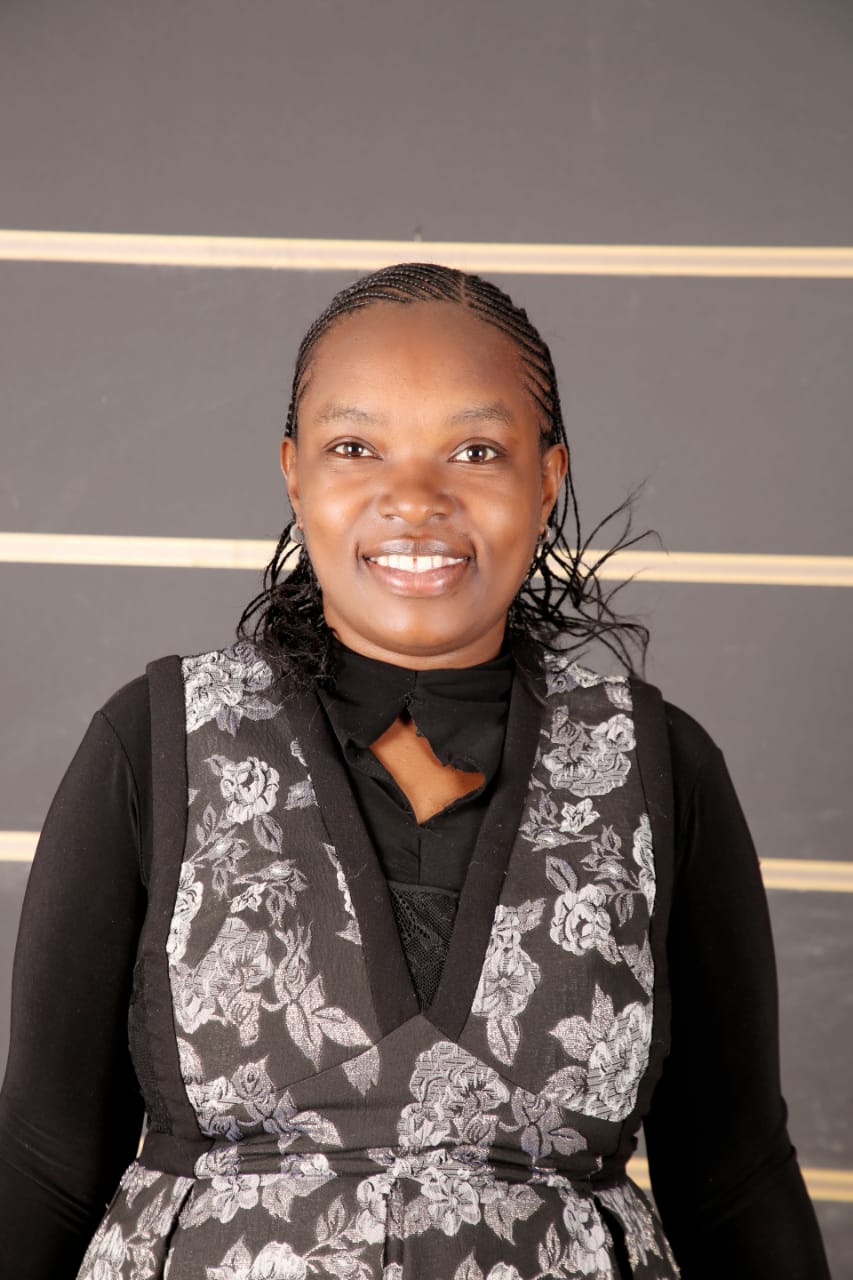
Postpartum depression (PPD) lingered in Christine’s life like a heavy fog, confusing, disorienting, but still somewhat familiar. “PPD went on for close to three months,” she recalls. “While my peers were doing their attachment, here I was hopping from one counselor to another, from one preacher to the next.” In those early days, help was more trial and error than treatment. But after some time and support, Christine felt like herself again. School resumed, and she threw herself back into her studies, regaining her academic momentum and social presence. For a while, life seemed to stabilize.
But this didn’t last. What came next was a slow unraveling of reality itself. “In my fourth year, second semester, I began changing. My dressing changed, and I started partying, this went on for a while as we wondered whats wrong with me,” she shares. What may have looked like a sudden burst of energy or newfound confidence on the outside was, in fact, the beginning of a manic episode. What followed were four years of turbulence, dropping out of school, trying to survive the unpredictability of her mind, all without a clear diagnosis. “At this time I hadn’t been diagnosed with any mental condition,” she says, “and we didn’t know what was happening.”
It wasn’t until 2015, after a full psychotic episode, that Christine was finally diagnosed with bipolar disorder. The clarity brought by that diagnosis was hard-won, but it also opened the door to real treatment. Still, psychosis didn’t retreat easily.
In 2017, after giving birth to her daughter, another episode came crashing down.
“In 2017, I was blessed with a daughter and I thought all was well, until I left my daughter at my granny’s place for a week. I could not even remember that I had a baby.”
Christine Miloyo Ombima
The disconnection was terrifying. At the height of her mania, she believed she had become a UN ambassador because of her many innovation ideas. She wandered through town picking up trash, convinced it was the key to one of her visions. Even her physical experiences of motherhood felt distorted.
“The pregnancy was smooth, but the belly had no kicks. Delivery was okay. But after the baby came, the grandiose thoughts took over. I couldn’t sleep. I barely touched my baby.”
Christine Miloyo Ombima
This was postpartum psychosis in full form: grandiosity, delusion, insomnia, impulsivity, and detachment from the child she had just birthed. “With PPD, I kept checking if my child was breathing. I’d call the nurses, my mum, even my siblings, just to make sure the baby was alive,” she explains. “But with postpartum psychosis, I was so busy all the time even had no time to hold the baby. Danger was not even on my mind I had impulsivity and did everything as I pleased.”
The consequences were severe. At her lowest, Christine had to be taken to the hospital by force, where she was sedated. “I became so stiff,” she remembers. “I was like a zombie. I couldn’t do anything.” What’s painfully clear in Christine’s story is how starkly PPD and postpartum psychosis can differ, and yet how easily one can evolve into the other if left unsupported. Depression dimmed her world. Psychosis tore it apart.
Held, or Left Hanging? What Helped (and What Didn’t)
When Christine hit her lowest point, the weight of her struggle was made heavier by the absence of most of her friends. “Friends deserted me,” she says plainly. “Apart from one or two, the rest just vanished.” In moments when she most needed presence, understanding, and patience, silence met her instead. Yet, through the silence, her family stood firm. “Family was there for me through it all,” she adds, a reminder that even one stable anchor can make a world of difference. Her loved ones didn’t always have the answers, but they stayed close, offering comfort, continuity, and care.
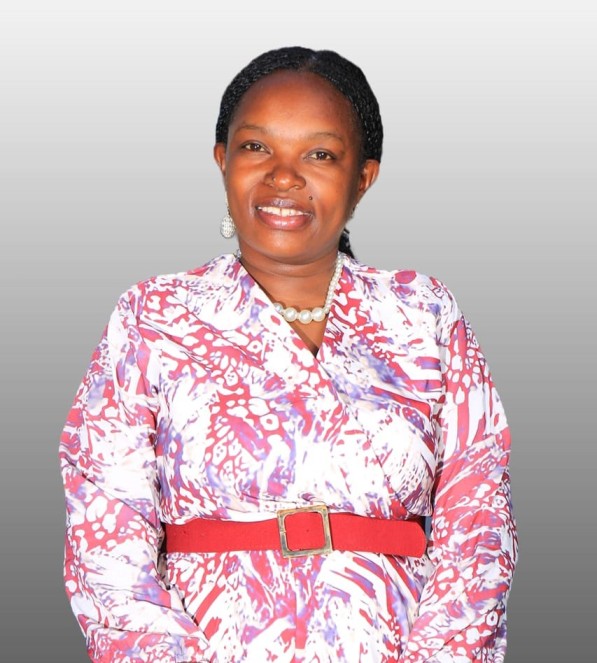
The healthcare system, too, played a significant role in her path to healing. While it wasn’t always perfect, Christine acknowledges the efforts made by medical professionals to support her, especially in understanding what it truly meant to live through motherhood while battling mental illness. “Medics did their best to help me understand motherhood,” she reflects. Treatment came in many forms, therapy, medication, and spiritual grounding. Each contributed a piece to her healing, but no single path was complete on its own. There were no instant breakthroughs, just small, quiet turning points, moments when she chose to stay, to trust, to try again.
Support systems, whether family, friends, professionals, or faith communities, are not just nice to have during postpartum struggles; they are often the difference between survival and sinking deeper into crisis. For a mother facing depression or psychosis, having someone to listen without judgment, to offer practical help like baby care, or simply to sit beside her in silence, can anchor her back to reality. Support doesn’t have to come in grand gestures, it’s in consistency, compassion, and the courage to stay when others pull away. Mental health challenges often isolate, but healing happens in connection. That’s why we must normalize being present for mothers, not just during baby showers and gender reveals, but when joy fades and shadows grow.
Becoming the Voice She Once Needed
Christine Miloyo Ombima didn’t just survive the dark tunnel of postpartum depression and psychosis, she emerged with a hand outstretched to others. Through the long road of grief, mental illness, and misunderstood pain, she discovered that storytelling and creativity could become her lifelines, and later, her purpose.
“Belonging to support groups helped me accept my diagnosis. Telling my story gave me confidence, because I realized I wasn’t alone,” she reflects. These moments of connection became catalysts for healing. Through creative arts therapy, she found ways to express emotions that had long been buried under silence and stigma. Christine took that personal transformation and built something bigger, Stand Out 4 Mental Health, a social enterprise offering creative healing spaces, peer support, group therapy, and psychosocial interventions, especially for mothers, youth, and underserved communities. Today, she runs art-based wellness programs and actively trains communities on mental health literacy, helping others name what once felt unspeakable.
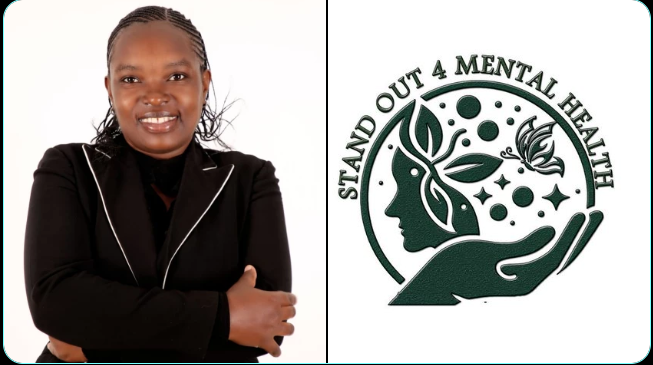
To the mother silently battling the darkness, unsure whether to speak up, Christine offers this truth:
Christine Miloyo Ombima
“It’s okay to ask for help. You are still a good mother, even on your worst days. Your voice matters, and your healing journey is worth fighting for. Reach out, share your story, and let others walk this path with you. You are not broken, you are becoming.”
Break the silence. Let others walk with you. Healing may be slow and messy, but it is possible. In Christine’s story, we don’t just see struggle, we see a woman who has become the voice she once needed. And now, she lends it to those still finding theirs.

- The Rise of Suicide Posts in Digital Spaces Reflects a Growing Mental Health Crisis - February 22, 2026
- How Kenya’s Silent Lifestyle Disease Crisis Is Reshaping Public Health - February 12, 2026
- The Rise of Lifestyle Diseases Emerges as a Crisis Among Kenya’s Youth - February 9, 2026