Unlike many for whom a bipolar diagnosis can feel like a death sentence, the story is different for Barbara Joyce Abang. Her story is one of quiet strength, healing, and renewal. With over two decades of service as a senior legal expert in Uganda’s Ministry of Justice and Constitutional Affairs, Barbara is not only an accomplished lawyer but also a mental health advocate who bears both wounds and wisdom.
Diagnosed with bipolar disorder while pursuing her Master’s degree in International Commercial Law at the University of Birmingham, Barbara turned her pain into purpose. “I am an advocate with a wound,” she declares, not out of defeat, but as a proclamation of power. She is a woman healing out loud, speaking from the scars of survival and using her voice to shape systems, stories, and spaces for others living with mental illness.
In 2024, she authored Be Kind To Your Mind, a memoir that would become the seedbed of a growing mental health advocacy movement in Uganda, Africa and beyond, one rooted in therapy, spirituality, and radical self-love.
Who is Barbara Joyce Abang?
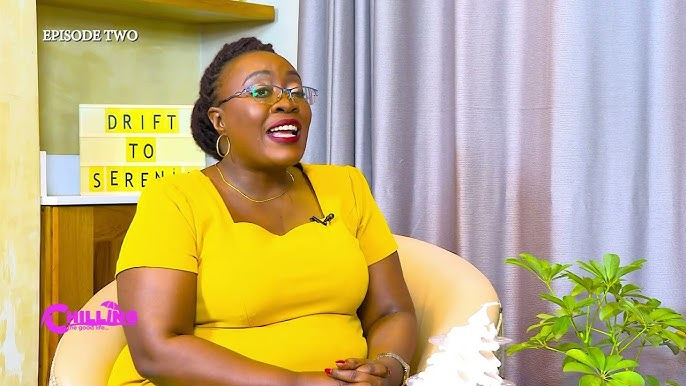
“I am a lawyer… a senior government legal specialist. I have worked as a State Attorney for more than 20 years,” Barbara grounds her identity in decades of public service. Her legal expertise spans multiple Ugandan ministries, including Gender, Labour, and Social Development, a fitting foundation for someone now championing mental health justice.
Born in Nairobi in the 1970s, Barbara later became Ugandan by birthright after losing her original proof of Kenyan citizenship. Of Luo heritage from the Lango tribe in Ayamo District, she was raised in Kampala and reflects on a multicultural upbringing shaped by both privilege and purpose. She is a second-generation Kampala girl whose education spans prestigious institutions: Naabisunsa Girls School from 1993 upto 1999, Makerere University, and the University of Birmingham. “I’ve lived in Nairibi, Ghana, Tanzania, Rwanda, Burundi, UK, Australia, the USA, …” she says a global citizen with deeply rooted African values, shaped by travels across East Africa and beyond, following her own legal and advocacy career.
“My advocacy started in 2024 when I launched ‘Be Kind To Your Mind‘, a book that leverages soft management tools for mental health, from therapy to the God factor.” She believes in what she calls “soft power”: the combination of cognitive therapy, spirituality, and loving oneself back to wholeness. “I believe when you absorb negative messages into your heart and mind, it intoxicates everything about you.”
Barbara’s work also confronts the toxic environments that intensify mental illness. “We live in a broken world,” she says. In many workplace conversations about mental health, there’s a growing recognition of how personal issues can spill over into professional environments. Unresolved emotional struggles, unaddressed trauma, and poor coping mechanisms don’t stay at home, they follow us into our interactions with colleagues, our communication styles, and our ability to collaborate. Barbara states that there’s a common saying for this;
“There’s a common saying that in workplaces, we are healing ourselves in therapy from people who should also be in therapy.”
Lawyer Barbara Joyce Abang
It’s a powerful observation. When people carry unprocessed pain into the workplace, it not only affects their well-being but can create toxic dynamics that impact others. That’s why she emphasized the importance of everyone embracing therapy.
“So people should just embrace therapy on things such as how to deal with their personal issues, then we can have a better world, healthier work places that are psychologically safe.”
Lawyer Barbara Joyce Abang
Healing shouldn’t be one-sided. When we all take responsibility for our emotional health, we create communities, at work and beyond, that allow everyone to thrive.
Through her blog Introspection, LinkedIn writings, and articles like Navigating Toxic Workplaces published in Tanzania’s Continental Magazine, she continues to address the link between trauma, toxic institutions, and mental wellbeing.
But behind the advocate is a survivor, someone who has lived, lost, and learned. “I was diagnosed with bipolar disorder in the UK after I lost my father to lung cancer,” she shares. “He was my best friend. I failed to cope with his death.” That grief triggered a series of emotional breakdowns and hospital visits, revealing what would be a lifelong journey of managing bipolar disorder. “I also have the ‘lazy eye,’ a chronic eye condition, and other disabilities. So, it’s not just mental health for me. I carry many wounds.”
Still, she rises. “I’m recovering. I haven’t had frequent episodes like I used to. I’m learning to manage grief and life’s detours.” Her advocacy is not born from theory but from the raw terrain of personal struggle, a long, winding journey. It is this unfiltered proximity to pain that lends her voice a rare and compelling authenticity, the kind that does not speak about wounds, but speaks through them.
Be Kind to Your Mind; The Memoir and Its Message
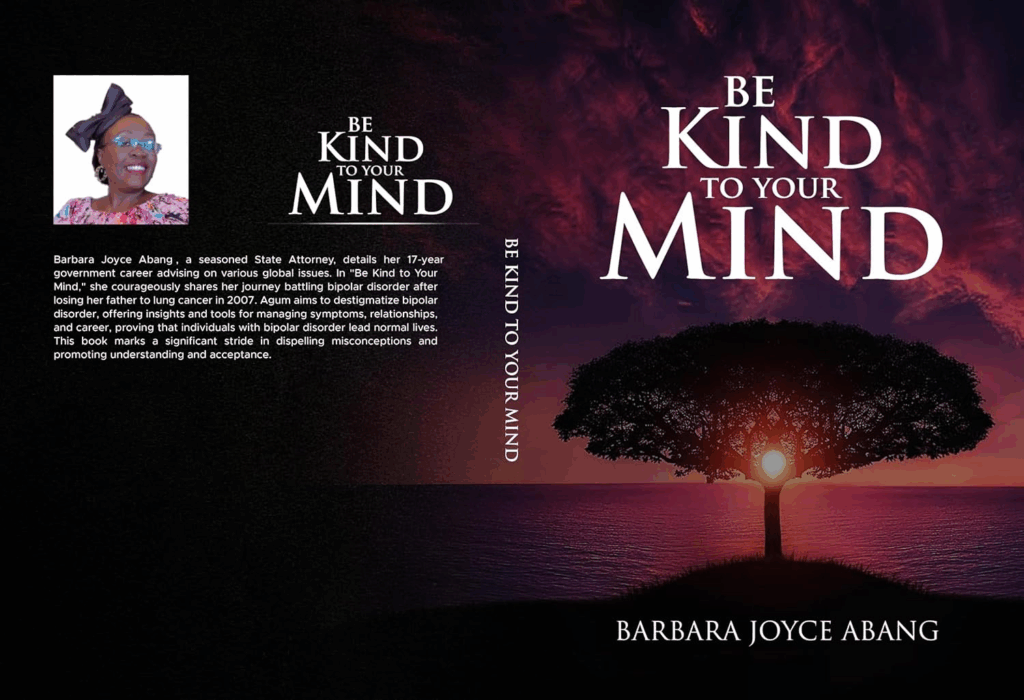
For Barbara Joyce Abang, writing Be Kind to Your Mind was not just an act of storytelling, but a profound mission to challenge the stigma and silence surrounding mental health. The memoir offers hope to those facing the often isolating journey of mental illness. “This is based on my story of surviving with bipolar disorder for over 10 years,” she explains. “It’s about showing people that they can manage and live a normal life despite the diagnosis.”
The book goes far beyond her personal journey, addressing the stigma that shrouds mental health issues, particularly in Uganda. “There’s so much stigma surrounding mental health. It’s often misunderstood, people associate it with demon possession or think it’s a ‘white person’s problem,’” she points out. With Be Kind to Your Mind, Barbara aims to dispel these misconceptions and start a conversation about mental health as a universal human challenge. Her work confronts the idea that mental illness prevents individuals from living fully.
Through her book, she emphasizes how mental health conditions, often dismissed or misrepresented, can stem from a variety of sources: grief, chronic illness, social isolation, or even the pressures created by social media. “The book addresses misunderstandings about mental health. People sometimes think it’s a lifestyle condition, but it can be genetic, the result of grief, or even arise from other chronic conditions like cancer or HIV,” she says, highlighting the far-reaching effects mental health has on so many people, regardless of background. Her book can be found here.

Barbara’s journey also sheds light on the challenges faced by people with mental health conditions in the workplace. “I once went to a group therapy session and realized I was the only one working. Most people with mental health conditions believe they cannot work. And those who have secured employment often face discrimination,” she shares, underlining a harsh reality: society’s judgment often prevents those struggling with mental illness from thriving professionally.
Above all, the book seeks to break the silence and isolation that often accompany a mental health diagnosis. “Self-isolation is common,” she says, noting how societal stigma often pushes individuals into quiet corners, believing that their mental health struggles disqualify them from living fulfilling lives. Her story, and her book, prove otherwise.
“My book promotes self-compassion. It’s common to think a diagnosis ends the possibility of thriving in life. But my story proves that it doesn’t.”
Barbara Joyce Abang
Barbara Joyce Abang is not just telling her story, she’s standing in it. On national platforms and at Rotary Clubs, she uses her voice to champion visibility for mental health awareness. “My message is simple, life is more than a diagnosis.” In a world where mental health is still wrapped in shame and fear, Barbara’s presence is radical. She leaves her audiences with a message of hope, grounded in the truth that people living with bipolar disorder can still live full, meaningful lives. Her advocacy dismantles the myth that mental illness limits one’s potential. Instead, she invites others to see their challenges not as dead-ends, but as detours toward purpose.
But the journey hasn’t been smooth. Living with a chronic mental health condition while advocating for others comes with its own weight. Barbara reflects on the painful contradiction of being a public voice for inclusion while privately facing exclusion in her own workplace. “My availability was questioned, my illness was held against me, and that hurt for sure,” she says. She describes the lack of understanding and accommodation she faced, where her condition was neither recognized nor supported. In 2024, she took the bold step of suing her workplace for discrimination. “I wasn’t asking for special treatment, just for fairness acknowledgment that I live with a disability and that should come with accommodations, not punishments.”
I recall in our interview how Barbara mentioned that she’s been advocating for others in different spaces. She’s the one who speaks when everyone else fears to address what’s wrong. She truly advocates for people’s rights, bold and vocal. I could hear it clearly in her tone.
Barbara’s fight is systemic. She envisions a future where workplaces don’t weaponize illness, but rather respond with empathy and structure: reduced workloads where necessary, supportive environments, and recognition of chronic conditions as legitimate disabilities.
“Don’t use my sickness to discard me, consider other aspects as well, what about my expertise, my education, my contribution ?”
Barbara Joyce Abang
Where Law Meets Lived Experience
Barbara Joyce Abang’s advocacy is sharpened by her training in law. Her legal background gives her a language of rights and systems, tools she wields with clarity and conviction. In a society where mental illness is often misunderstood or dismissed, she approaches advocacy not only as a survivor, but as someone equipped to challenge the status quo through legal reasoning. “Knowing the law has helped me understand where systems fail and how to push for accountability,” she says. Whether it’s advocating for workplace accommodations or contesting discriminatory practices, Barbara doesn’t just speak from emotion, she speaks from informed authority.
What inspired Barbara Joyce Abang to pursue a career in law was her passion for justice, shaped by her love for the arts, history, economy, and literature. These disciplines sparked her curiosity about society and human behavior, but it was her activist spirit that truly led her to the legal field. “I really get sad when I notice any form of injustice,” she admits, and law offered her the structure and tools to act. For her, justice isn’t simply about punishment; it’s about restoring balance, ensuring fairness, and holding power accountable. “I believe justice is not just about punishment, but making sure that the right thing is done at the right time and that people do not use their authority and power to abuse others,” she says. With law, she found both a voice and a vessel for her convictions.
Through her work, she challenges policies that overlook psychosocial disabilities and advocates for reforms that protect the dignity of people living with mental illness. “Mental health should be seen as part of the broader human rights conversation,” Barbara insists. “It’s not just about awareness, it’s about structural change.”
There have been pivotal moments in her legal career where her lived experience became her greatest asset. Sitting at policy tables or engaging in legal debates, Barbara brings a perspective others can’t replicate. She understands firsthand how the law can protect or harm, include or exclude. Her presence in these spaces is both symbolic and substantive, a reminder that those affected by the law should help shape it.
“I don’t speak on behalf of people with mental illness, I speak as one of them. And that makes all the difference.”
Barbara Joyce Abang
Challenge: Funding the Fight
Advocacy in Africa, especially in the field of mental health, often operates on passion rather than resources. “Funding is one of the greatest challenges,” Barbara admits candidly. Without institutional backing or major donors, she relies on affordable methods, sharing her personal story, speaking on accessible platforms, and attending mental health events that don’t require significant financial input. Despite the limitations, her impact is undeniable.
“If I had funding, I’d reach even more people.” In Uganda, where only about 1% of the national health budget is allocated to mental health and access is largely confined to urban centers like Kampala, her advocacy is a lifeline for many. World Health Organization’s Assessment Instrument for Mental Health Systems (WHO-AIMS) study noted that mental health services receive approximately 1% of the total health expenditure in Uganda.
Furthermore, a 2022 report by EPRC highlighted that just under 1% of the Ministry of Health’s budget is directed towards mental health issues . This limited allocation has raised concerns among health professionals and policymakers, who argue that the funding is insufficient to address the mental health needs of the population, especially considering that approximately 14 million Ugandans are affected by mental health conditions. The consequences are dire. Rising crime rates, youth suicides, and increasing psychosocial stress are often tied to economic instability and the lack of accessible care. The cost of basic necessities is unaffordable for many, triggering mental health crises that go unseen and untreated. For her, mental health should no longer be sidelined, it must be a national and continental priority.
Systems, Strategies, and the Road Ahead
Across much of Africa, mental health remains sidelined in policy, underfunded in national budgets, and misunderstood in public discourse. For Barbara, this must change, and urgently. “We need comprehensive legal protections that recognize mental illness as a disability, not a personal failing,” she asserts. She envisions reforms in workplace policies that accommodate chronic conditions, protect employees from discrimination, and create psychologically safe environments. Beyond legalities, she emphasizes the need for inclusive national strategies: “Mental health must be integrated into our public health framework, with outreach beyond urban centers. Rural communities, where the majority live, cannot be left behind.” Mmental health advocacy must be embedded in systems, not just sentiments.
Looking forward, Barbara’s vision is as expansive as it is grounded. She marks her memoir Be Kind to Your Mind as a milestone achievement, a personal and professional triumph that turned pain into purpose. But she isn’t slowing down. In her legal career, she is preparing to defend transformative projects, including her involvement in Uganda’s crude oil pipeline, an undertaking she helped shape and secure funding for. “It’s one thing to advocate, but another to change policy and enforce protections. That’s where I’m headed,” she says.

She’s poised to lead landmark legal initiatives both in Uganda and on global platforms. For Barbara, the next chapter is about scaling her impact, because when systems shift, so can lives. Barbara’s story is a masterclass in courage, conviction, and clarity of purpose. From boardrooms to courtrooms, she is proof that lived experience can fuel systemic change. Her journey challenges us to rethink what resilience truly means, not just surviving, but using one’s pain as a platform for progress. There is so much to learn from her: the power of using your voice, the strength in vulnerability, and the belief that change is not only possible, but necessary. And as she continues to rise, she reminds us all, advocacy begins with empathy, and ends in action.
She’s rewriting the system, in her rise, may many find their reason to begin.

- The Rise of Suicide Posts in Digital Spaces Reflects a Growing Mental Health Crisis - February 22, 2026
- How Kenya’s Silent Lifestyle Disease Crisis Is Reshaping Public Health - February 12, 2026
- The Rise of Lifestyle Diseases Emerges as a Crisis Among Kenya’s Youth - February 9, 2026