Every year on March 30, the world comes together to observe World Bipolar Day, a global initiative dedicated to raising awareness, dismantling stigma, and fostering understanding of bipolar disorder. The date is symbolic, it honors the birthday of Vincent van Gogh, the legendary painter who, despite his brilliance, struggled with mental illness, believed to be bipolar disorder. His story reflects both the beauty and the burden of living with this condition, a reality still faced by millions today.
World Bipolar Day 2025 carries the theme “Bipolar Strong” but what does strength really mean in this context? Strength is not just about enduring the unpredictable cycles of mania and depression. It’s waking up after days in the dark and trying again. It’s the exhaustion of explaining your diagnosis to people who still don’t believe in mental illness. It’s fighting for access to medication that should be a right, not a privilege. It’s the family members and friends who stand by you, even when they don’t fully understand.
But strength shouldn’t be an individual burden. “Bipolar Strong” should mean a world where no one has to fight alone, a world with better policies, real support systems, and workplaces that don’t penalize people for their mental health. It should mean a healthcare system where proper treatment isn’t reserved for the wealthy. Strength isn’t just in those living with bipolar disorder, it’s in the people, communities, and governments that decide to stop looking away.
This year, voices like Christine Ombima’s take center stage, shedding light on the urgent need for systemic reform, advocacy, community support, and an inclusive conversation on mental health. Christine is among those speaking up, pushing for change, and reminding us that strength is more than survival, it’s about creating a world where people with bipolar disorder can actually live, not just fight to exist.

Christine Ombima is a Kenyan social worker and mental health advocate who has dedicated her life to transforming pain into purpose. Diagnosed with bipolar disorder in 2015, she refused to let her diagnosis define her, choosing instead to use her experience to uplift others. In August 2016, she founded Stand Out for Mental Health, an organization that blends mental health advocacy with creative arts like dance, art, and fashion. Through this initiative, she has fostered peer-to-peer support groups, ensuring that individuals living with mental illness have a safe space to connect, share, and heal. Christine’s work embodies the spirit of “Bipolar Strong” not just in her own journey but in the community she continues to build for others.
The Current Reality
According to the World Health Organization (WHO), approximately 40 million people worldwide were living with bipolar disorder in 2019, representing about 1 in 150 adults . In the United States, the National Institute of Mental Health (NIMH) reports that an estimated 2.8% of adults experienced bipolar disorder in the past year, with lifetime prevalence reaching 4.4%. In Africa, the lifetime prevalence of bipolar disorder ranges from 0.0% to 5.2%, with studies in Nigeria and Ethiopia reporting estimates between 0.1% and 1.83%. In Kenya, estimates of bipolar disorder prevalence range from 9% to 13.8%.
Bipolar disorder is a mental health condition characterized by significant mood swings that include emotional highs (mania or hypomania) and lows (depression). There are two primary types:
- Bipolar I Disorder: Defined by manic episodes lasting at least seven days or by manic symptoms that are so severe they require immediate hospital care. Depressive episodes occur as well, typically lasting at least two weeks.
- Bipolar II Disorder: Characterized by a pattern of depressive episodes and hypomanic episodes, but not the full-blown manic episodes that are typical of Bipolar I.
In recognition of World Bipolar Day on March 30, 2025, the National Institute of Mental Health encourages the dissemination of information and resources to enhance understanding of bipolar disorder. This initiative aims to educate the public on the latest research findings, treatment options, and support strategies for individuals affected by this condition. The digital toolkit for world bipolar day can be found here.
Globally, mental health policies vary widely, with many countries striving to integrate mental health services into primary healthcare systems. In Kenya, the government has taken steps to address mental health challenges through the implementation of the Kenya Mental Health Policy (2015-2030), aiming to ensure accessible, equitable, and quality mental health care for all citizens . The subsequent Kenya Mental Health Action Plan (2021-2025) operationalizes these objectives by promoting effective leadership, service delivery, and community involvement in mental health initiatives .
The Role of Advocacy: A Conversation with Christine Ombima
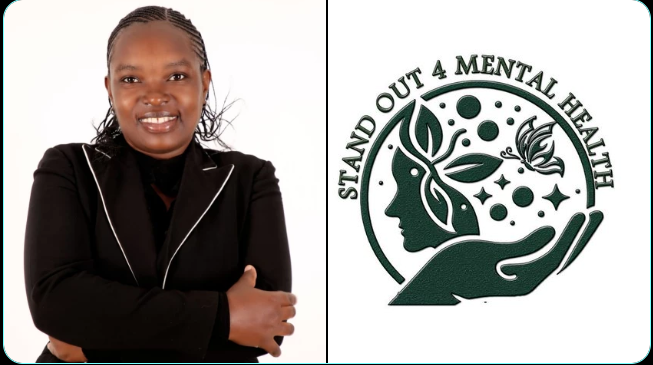
Christine Ombima’s advocacy is deeply rooted in lived experience, using her journey with bipolar disorder to challenge stigma and drive change. Beyond awareness, she actively pushes for policy reforms, engages in public speaking, and collaborates with mental health organizations to amplify the voices of those with similar struggles. Through Stand Out for Mental Health, she has reached thousands, promoting safe spaces and breaking stigma through creative arts. Despite challenges like limited resources and misconceptions, she remains committed to expanding her advocacy, strengthening peer support networks, and pushing for better mental health policies in Kenya.
Bridging Policy Gaps in Mental Health
“Despite existing mental health laws, Kenya and the global community still face significant policy gaps, particularly for individuals living with bipolar disorder,” says Christine Ombima. She highlights weak implementation, inadequate funding, and a lack of structured community-based care as some of the biggest barriers.
Drawing from her work with grassroots organizations, the Ministry of Health, and Mathari National Teaching and Referral Hospital, Ombima emphasizes how stigma isolates individuals, making them fearful of seeking support while also limiting access to employment opportunities. “Many individuals struggle to access consistent medication, psychosocial support, and specialized care,” she explains. The overreliance on institutionalized treatment, rather than community-driven approaches, further worsens the situation.
To bridge these gaps, Ombima advocates for increased funding, ensuring that essential medication and therapy are both affordable and accessible nationwide. She stresses the importance of peer-led interventions and lived experience advocacy, noting that they can foster more inclusive and practical solutions. Additionally, she calls for mental health education in workplaces and schools to help reduce stigma and promote early intervention. She believes the solution lies in shifting from a reactive to a proactive model, one that empowers communities, supports recovery-oriented care, and enforces mental health laws effectively.
The Future of Mental Health Advocacy
Christine Ombima envisions a future where mental health advocacy is community-driven, inclusive, and prioritizes lived experience, grassroots empowerment, and systemic change. She highlights the need to move beyond traditional models that rely solely on clinical interventions, advocating instead for an approach that embraces peer-led support, social inclusion, and policy advocacy.
Reflecting on her work at Stand Out 4 Mental Health, Ombima underscores the critical role of grassroots organizations in bridging the gap between policy and lived realities.
“Through my work at Stand Out 4 Mental Health, I have seen how grassroots organizations bridge the gap between policy and lived realities. They provide accessible, culturally relevant mental health support, challenge stigma at the community level, and create safe spaces for open conversations. Lived experience advocates, on the other hand, bring authenticity and urgency to the conversation, shifting narratives from illness to recovery and empowerment.”
To shape the future, Ombima believes grassroots organizations must be at the forefront of service delivery, policy influence, and awareness campaigns. She calls for governments and institutions to recognize and fund these efforts, integrating them into national mental health strategies. More importantly, she emphasizes that lived experience voices should not just be included but actively centered in decision-making processes.
“More importantly, lived experience voices should not just be included but actively centered in decision-making processes.”
Christine Ombima, CEO and Founder, Stand Out for Mental Health

Christine’s Call to Young Advocates
Christine Ombima’s journey in mental health advocacy, particularly through Stand Out for Mental Health, has reaffirmed the transformative power of peer support in the lives of individuals with bipolar disorder. She has witnessed firsthand how lived experience, when channeled through structured peer-led initiatives, creates safe spaces for healing and belonging. “Through peer support, we validate experiences, reduce isolation, and challenge harmful stigma,” she says, emphasizing that recovery is possible and that no one should struggle alone.
Beyond grassroots advocacy, Ombima’s role as a patient representative on the Institutional Research and Ethics Committee at Mathari National Teaching and Referral Hospital has allowed her to influence ethical, patient-centered mental health research and policy.
“This role allows me to advocate for more inclusive, accessible, and responsive mental health care, ensuring that individuals with lived experience are not just subjects of research but active participants in designing solutions.”
Christine Ombima, Patient Representative, Institutional Research and Ethics Committee at Mathari National Teaching and Referral Hospital
To young advocates pushing for systemic change, Ombima’s message is clear:
“To young advocates pushing for systemic change, your voice matters. Grassroots advocacy and lived experience are powerful forces in shifting policy, challenging outdated perceptions, and improving mental health services. Keep amplifying stories, pushing for inclusion in decision-making spaces, and building networks of support.
Christine Ombima, CEO and Founder, Stand Out for Mental Health
Change happens when we refuse to be silent.”

- The Rise of Suicide Posts in Digital Spaces Reflects a Growing Mental Health Crisis - February 22, 2026
- How Kenya’s Silent Lifestyle Disease Crisis Is Reshaping Public Health - February 12, 2026
- The Rise of Lifestyle Diseases Emerges as a Crisis Among Kenya’s Youth - February 9, 2026
