Grief is the one lesson life guarantees, yet the one we are never taught. We spend our formative years chasing knowledge, solving for X, dissecting the anatomy of plants, memorizing the rise and fall of empires, yet nowhere in the curriculum do we learn how to hold space for someone whose world has just collapsed. A viral post recently summed up this unsettling reality:

“More than 16 years of education, yet no one taught us how to console a grieving friend or what to say when someone we love is at their lowest. We spend years chasing grades, careers, and sometimes even the wrong people—while the things that truly matter remain unspoken!!”
@itspriionly on X
This struck a deep chord, exposing the emotional education gap in our society. We are prepared for careers, but not for the inevitable losses that shape our lives.
In an effort to bridge this gap, I recently had the privilege of interviewing Dawn Olichwier Luebstorf, from Cadott, Wisconsin, United States, a grief and loss coach who has dedicated her life to creating safe spaces for those processing sorrow. Since 2009, Dawn has been offering online grief support, training, and resources, helping countless individuals find healing in their darkest moments. She believes that while grief is universal, the way we support those experiencing it often falls short. In this article, she shares insights on how we can better show up for the grieving. This conversation is a step toward reshaping how we view loss, not as something to be endured alone, but as an experience that deserves understanding, education, and compassionate support.
Losing a close friend shattered her understanding of life and human connection, but it also revealed a profound truth: “People often want to help the grieving but don’t know how.” This realization became the foundation of her work in grief coaching, creating safe spaces where sorrow is not just acknowledged but supported with care and understanding.
Dawn’s journey into therapeutic coaching began long before she ever considered grief coaching. Living in Wisconsin, she has been a Therapeutic Coach since 2009, specializing in hypnotherapy and Neurolinguistic Programming (NLP) to help clients change limiting beliefs and behaviors.
Her career choice was deeply influenced by her experience as a foster parent. “My husband and I cared for foster children for over 25 years,” she shares. During this time, she witnessed firsthand the limitations of traditional therapy. “We would spend 45 minutes in a therapist’s office, dredging up painful past experiences, only to leave without resolving anything. I’d take the child home, upset and out of control, knowing that nothing was truly fixed.” This frustration led her to explore alternative healing approaches, ultimately shaping her career as a coach and hypnotherapist.
Over time, Dawn’s passion for healing expanded. In 2012, she and her husband opened a fitness center, integrating wellness practices like yoga, Guided Imagery, and Laughter Yoga. Through her business, Serenity Dawns Healing & Wellness Services, she continued to offer therapeutic coaching, helping people find relief from emotional pain.
A Life Marked by Loss
“I have had many losses in my life,” Dawn reflects. Her grief journey began in 1996 when her mother suffered a stroke, marking the start of what she now recognizes as anticipatory grief. “Knowing that I had lost her even though she was still here was a very difficult thing to accept—one area that society does not understand very well.“
Dawn helped care for her mother alongside her father until his passing in 1999. She continued to support her mother until she succumbed to Alzheimer’s in 2011, an experience that left deep emotional wounds. “It was tough having my own mother forget who I was.”
The losses continued. “In 2010, I lost my brother. In 2012, my father-in-law passed. In 2014, my brother-in-law followed.” Over the years, she and her husband also lost many aunts and uncles, and in 2023, they provided hospice care for his mother until her passing.
A Tragic Loss
But nothing prepared her for what happened in January 2024.
“My husband and I were two months into caring for his mom when we got the news no one ever wants to hear.” Their close friend, Mark, had been in a snowmobile accident. One friend died at the scene, and Mark was airlifted to University Hospital in Madison, Wisconsin, in critical condition.
At first, there was hope. “When we visited, it seemed as though he was just sleeping,” she recalls. But soon, doctors confirmed that his injuries were far worse than expected. On January 24, it was determined that Mark would never regain consciousness. His family made the heartbreaking decision to take him off life support on January 27.
Firefighters from across the state gathered in uniform for Mark’s honor walk as his bed was wheeled to the operating room. With tear-filled eyes, loved ones watched as his favorite music played. As Good Riddance by Green Day played, Mark took his last breath, then, unexpectedly, he snored, bringing a moment of laughter through the tears. With only minutes left before his organs would no longer be viable for donation, Sweet Emotion by Aerosmith played. Dawn leaned in, kissed his forehead, and whispered, “I love you, my dear friend. I’ll see you on the other side. You win. Goodbye, Sibbs.”
At 9:52 PM, Mark passed, leaving five minutes to spare, ensuring that his organs could save over 75 lives.
“Though we lost him, we were happy for him that evening,” Dawn says. “He helped so many people in his life, and even in death, he was still helping others.”
Yet, Mark’s passing was unlike any other loss Dawn had experienced. “I’d had countless others in my life pass away, and I cannot say why this one was so hard, other than he was such a big part of our lives. He was my person.”
Struggling with her own grief, she found herself questioning everything. “What the hell? I help others work through their issues, and I cannot get through my own?” It was in this darkness that she realized her next calling. Dawn had always been someone people turned to in times of grief. Now, she knew she wanted to do more. “People often don’t know how to support someone who is grieving,” she says. Her experiences, both personal and professional, positioned her to fill this gap.
After the loss of her friend, she found it a bit hard to move on, but one day, in a moment of deep introspection, she felt a shift, one that would define her calling. In the midst of her grief, she heard the words:
“Listen. I’m still here, and I always will be. But it’s time for you to pick yourself up and get your ass in gear. From your own grief, you can help others know they are not alone, too. Now get moving. You have the skills and the training. Get out there and do it.”
It was in that moment that Dawn Olichwier Luebstorf realized grief wasn’t meant to bury her in darkness. Instead, she chose to turn her pain into purpose, dedicating herself to helping others process their loss and find healing.
Today, Dawn dedicates herself to grief coaching, ensuring that no one has to face loss alone. She understands the depth of grief, the unspoken struggles, and the way it lingers in unexpected ways.
“I want to create a space where grief is not something to be fixed but something to be felt,” she says. “A space where people can be supported, understood, and given the tools to move forward, not away from their grief, but with it.” – Dawn Olichwier Luebstorf
The Missing Piece: Why We Were Never Taught About Grief

Despite grief being a universal experience, emotional education surrounding it remains alarmingly absent. Grief is one of the most profound human experiences, yet society often pushes it into the shadows, leaving people to process it alone.
“I do not think there has ever been enough education around grief and I’m hope I can make an impact doing what I do. I would love nothing more than to reach everyone around the world and start a movement just as the Mental health awareness movement. I am such a strong believer that we hide the pain and loneliness of grief because it is not socially acceptable to hold on to the pain of loss for long. You hear people say all the time “it takes time”, “they are in a better place”, “get over it”, move on”. When the truth is, this is the last thing we should be doing. Getting over it is not what we need. We need to get through it and live in it for a hot minute, it should be ok in our society to just be for a while. Grief is overlooked because it is not socially acceptable to stay in our sadness for a long period of time. Maybe because it is something that we face alone and it can be an invisible suffering and we are supposed to move on and get back to life without a set period of mourning. I have come across so many people who are carrying their grief in silence 25 years after the loss of their loved one.”
The discomfort around grief stems from societal norms that favor productivity and positivity, making it unacceptable to dwell in sadness for too long. “I have spoken with a few people who are embarrassed to come to grief support groups that I now have in our fitness facility monthly because they think that no one wants to hear their sad story or they feel like they should no longer be this sad. The truth is grief is crippling and breaks us down to the point of paralysis. I know parents who have lost their children (no parent ever wants to bury their child) yet life goes on.”
“We do not look down on those who hire a fitness trainer to help us through our struggles with food. We hire style coaches to help us change our image, but it is not acceptable to hire a grief and loss coach to walk the path of our grief journey with is. Why? The fact remains that Grief is overlooked by or society because it is a feeling that is not obvious. There is no road map to work through it. The Grief Coach meets each client where they are in their process and story and joins them where they are at and walks the path with them to move forward. Grief is not about forgetting it is about rising above our mess and moving forward while learning to carry our grief and pain with us. It is about holding our loved one and listening to our heart and allowing our emotions to surface and heal.“
Dawn is passionate about changing this. She envisions a world where grief education is as widespread as mental health awareness, where people are taught not just how to cope with their own grief but also how to support others. “It would be so easy to change my path and work with clients to help them build their business, become more fit, or any other of a multitude of things. I know this is where I need to be. I (We) need to educate the world about the emotional trauma of grief so we can move together to heal our world. Grief is not only about loss of life but it is all about loss (death of something) whether it is the death of a marriage (Divorce), so many other areas in our life that come to an end and Grief is absolutely present and real.“
Until society acknowledges and normalizes grief as part of the human experience, people will continue to suffer in silence. Dawn is committed to changing that, advocating for grief education to be an essential part of emotional well-being.
The Well-Intended Missteps: What Not to Say to the Grieving
Dawn shares expert advice on this. In times of loss, people instinctively reach for comforting words, but too often, these words miss the mark. Phrases like “They’re in a better place” or “At least they lived a long life” may be well-intentioned, but they can feel dismissive. Grief is not something that can be softened with logic or silver linings; it is raw, painful, and deeply personal. Attempts to rationalize loss often leave the grieving feeling unseen, as if their sorrow is something to be minimized rather than honored.
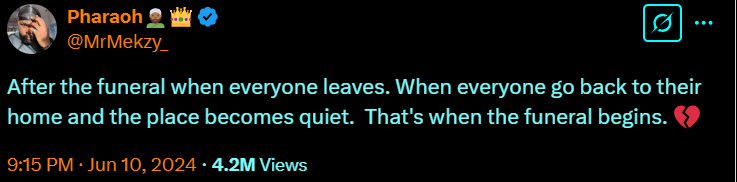
“Most always following the funeral /celebration of life. There is a meal, a gathering, and then the family fills out the thank you cards. They are expected to go back to life as though it never even happened. Who picks up the pieces of the family? Who helps them fill the void left behind? Who is there to help then navigate the path ahead? No one. It is left up to the individual to make it out of their sadness because we place a time limit on the length of time we are allowed to sad.” She states.
Society places an unspoken time limit on grief, expecting people to move forward before they are ready. Dawn believes that instead of offering clichés, the best thing we can do is simply be there. Words are often unnecessary. A hug, a presence, an acknowledgment of their pain without trying to fix it, these are the greatest gifts we can offer. If you don’t know what to say, say nothing at all. A grieving person doesn’t need explanations; they need space to mourn without judgment, without a deadline, and without the expectation to “move on.” Grief doesn’t go away, it becomes a part of us, and learning to carry it should never be rushed.
“Moving on doesn’t help a thing, it pushes our pain down and does not heal us at all. I know others mean well but the best piece of advice is “JUST GIVE THEM A HUG”, do not say a word or tell them you do not have words. That is ok to hear, because there is no way; unless it is you standing by the casket that you understand how the family feels. It is ok to say nothing at all.” She states.
The Right Way to Support Someone Grieving
If words often fall short, what truly helps? Dawn emphasizes that the most powerful support isn’t found in what we say, but in how we show up. Simple acknowledgments like “I’m here for you” or “I don’t know what to say, but I’m here to listen” create space for grief without rushing it. Small acts, checking in regularly, helping with daily tasks, and honoring the loved one’s memory, offer immense comfort in ways words cannot.
“I cannot speak for everyone, but for me it is best for you to just not say a word. Sit with me in silence, tell me you have no idea how I feel, let me know that you cannot imagine how much this hurts. I have sat with many people and I have said nothing at all, I have told friends that I hear them and I want them to share with me when they are ready to talk.” She says.
― Carson Anekeya
Dawn recalls welcoming too many friends into the painful “club” of losing a parent, the unspoken reality of suddenly becoming an orphan in adulthood. In those moments, what mattered most was not advice or platitudes, but presence. The grieving need to know they are not alone, that when they are ready to talk, someone will be there to listen, to hold their hand, to sit with them in their sorrow.
True support means allowing grief to unfold at its own pace, without expectation or judgment. We all have the capacity to show up for those in mourning. In the end, that is what a grieving person remembers, not the perfect words, but the presence of someone who let them just be.
Redefining Safe Spaces for Grief
Safe spaces for grief go beyond therapy rooms, they exist in friendships, workplaces, and communities. Dawn Olichwier Luebstorf is dedicated to shifting how society views mourning, emphasizing that it’s not a process to “get over” but an experience to move through. Through online grief support and education, she helps people create environments where vulnerability is met with empathy rather than avoidance.
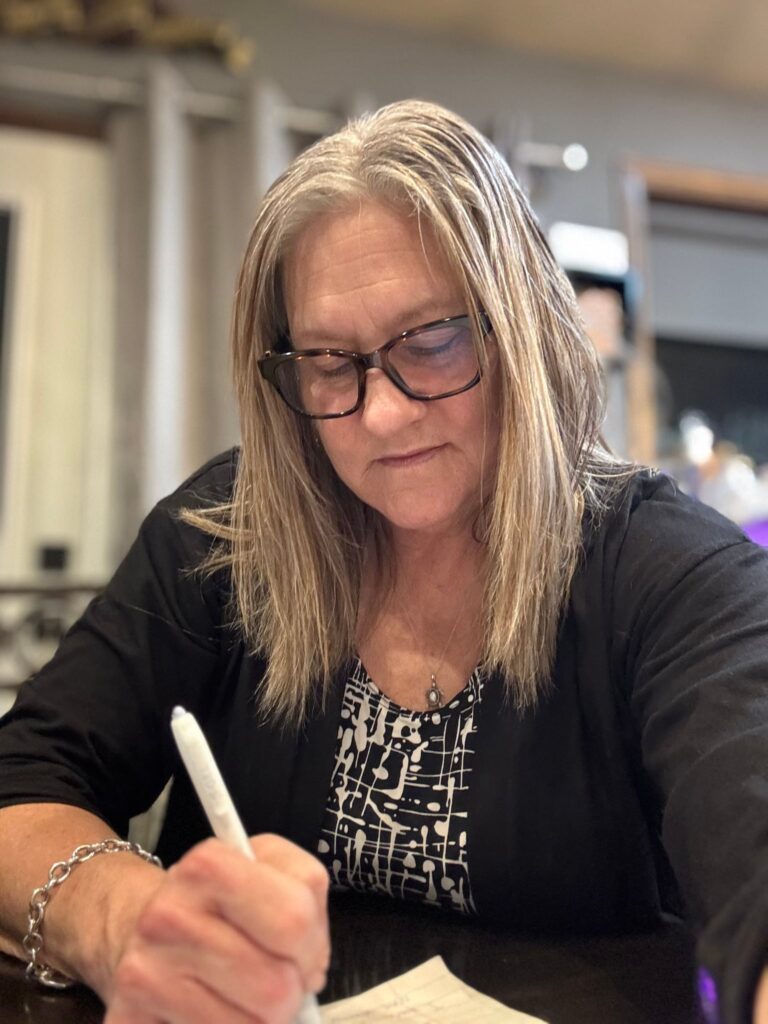
Dawn’s vision for grief support is simple:
“My vision is to create a world where grief is no longer hidden, dismissed, or rushed. I
~ Dawn Olichwier Luebstorf
want to make it acceptable to be sad—to normalize the pain that comes with loss in all its
forms.”
She believes grief should be acknowledged and supported just as we do with depression and other mental health challenges. When grief is ignored, it can grow into something darker, stealing more than just peace, it can take lives.
Her program, Rising After Loss: A 12-Week Journey from Grief to Peace, is designed to help people “rise from the ashes of their sorrow—just like the phoenix.” This isn’t about forgetting, but about learning to carry our loved ones with us while reclaiming peace, purpose, and the best path forward. She walks alongside her clients, helping them create a new reality that honors their loss without leaving them stuck in it.
Beyond individual coaching, Dawn is building sacred spaces for those in mourning. She hosts monthly in-person grief gatherings in her hometown and is working to expand these safe spaces online, ensuring that more people who are searching for connection and understanding can find it. Her message is clear: “You are not alone.” Whether it’s someone she knows personally or a stranger who stumbles across her work, her mission is to offer hope, healing, and companionship on this journey.
Dawn invites everyone to be part of this movement, by showing up for those in grief, by spreading this message, and by stepping into their own healing journey. “I want to create a more compassionate world, one where every kind of grief is recognized, supported, and met with open hearts.”
Because rising is possible. Healing is possible. And no one should have to walk this road alone. “I’ve got you. We’ve got one another. I will keep doing this important, heart-centered work. Let’s keep shining!” ???? #GriefGuru @dawnolichwierluebstorf
Dawn also shared a powerful Facebook post titled “When Grief Hits You Like a Freight Train,” where she opened up about the immense weight of loss and how it can feel like being hit by an unstoppable force. She reflected on the pain of losing her best friend, someone who had always been there for her, and how the silence left in his absence was almost unbearable. Through her journey, she realized that grief isn’t meant to bury us alive, it’s something we must learn to carry while still finding a way forward. Read the full post here ????: When Grief Hits You Like a Freight Train
“ So if this feels like your life—if you’re sitting in that same darkness, wondering if you’ll ever feel whole again
I see you. I am you.
And I promise you, there’s a way forward.
 You are not alone. ”

- The Rise of Suicide Posts in Digital Spaces Reflects a Growing Mental Health Crisis - February 22, 2026
- How Kenya’s Silent Lifestyle Disease Crisis Is Reshaping Public Health - February 12, 2026
- The Rise of Lifestyle Diseases Emerges as a Crisis Among Kenya’s Youth - February 9, 2026
