Victims of a Broken System Silenced by the Screen
The tragic death of Ladi Anzaki Olubunmi, a Nigerian content moderator, has reignited conversations about the grim realities of digital labor. Ladi Anzaki Olubunmi, a content moderator for TikTok employed by the subcontractor Teleperformance Kenya, died last week and her decomposing body was discovered in her house after three days. Olubunmi’s passing, reportedly linked to the mental health toll of her work, mirrors the distressing experiences of countless content moderators across Africa, including Kenya.
These workers spend hours sifting through violent, graphic, and disturbing content, shielding social media users while silently absorbing the trauma themselves. Yet, despite their crucial role in maintaining digital spaces, they remain overworked, underpaid, and psychologically unprotected. How many more lives must be lost before the mental health crisis in digital labor is treated with urgency?
In Kenya, global tech companies have built entire content moderation hubs, outsourcing the darkest corners of the internet to young workers desperate for jobs. The result is an industry where exposure to traumatic material is routine, but access to mental health care is rare. Many content moderators suffer from anxiety, depression, and post-traumatic stress disorder (PTSD), yet labor laws provide little recourse. What happens when an industry built on relentless exposure to distressing content fails to acknowledge its workers’ suffering? The government’s silence on these issues has allowed multinational corporations to operate with minimal accountability, leaving workers to bear the mental burden alone.
Despite growing calls for reform, real change remains elusive. Legal loopholes, weak enforcement of labor protections, and the stigma surrounding mental health continue to keep content moderators in the shadows. Tech companies reap massive profits while their outsourced workforce suffers in silence. Should companies be held legally responsible for the mental well-being of their workers? What role does the Kenyan government play in regulating an industry that thrives on invisibility? As digital labor expands, the need for stronger protections, ethical labor practices, and mental health safeguards becomes more urgent than ever.
The Kenya Mental Health Policy (2015-2030): Does It Protect Digital Workers?
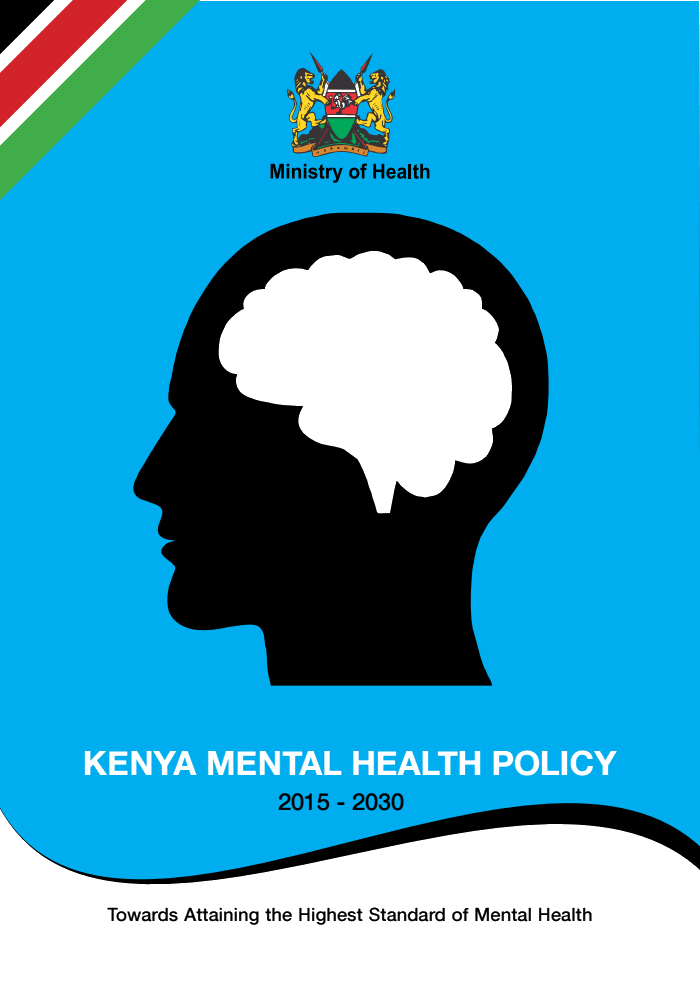
The Kenya Mental Health Policy (2015-2030) aims to reform mental health systems in alignment with the Constitution of Kenya 2010, Vision 2030, and global commitments. Its objectives include ensuring equitable, affordable, and accessible mental health services; promoting mental well-being; and strengthening leadership in mental health. The policy acknowledges the growing burden of mental health challenges in the country and emphasizes the need for a multi-sectoral approach that includes the workplace. It outlines commitments to integrating mental health into primary healthcare, reducing stigma, and enhancing legal protections.
Workplace mental health is briefly mentioned in the policy, but it largely focuses on traditional employment settings and general employee wellness programs. There is little recognition of the psychological toll faced by digital workers, particularly content moderators who spend hours reviewing distressing material. Unlike conventional jobs, content moderation involves prolonged exposure to graphic content, yet there are no clear provisions in the policy to ensure these workers receive mental health support, counseling, or trauma-informed interventions. Without explicit safeguards, many digital workers remain vulnerable to anxiety, depression, and post-traumatic stress disorder (PTSD), often with no structured mechanisms for seeking help.
Beyond policy, the real challenge lies in implementation. Despite Kenya’s commitment to mental health reforms, enforcement remains weak, leaving many employees, especially in high-risk digital jobs, without protection. Companies operating in Kenya’s digital economy continue to prioritize efficiency over employee well-being, often neglecting their duty to provide mental health resources. Can Kenya’s mental health policy evolve to address these modern workplace challenges? Or will digital workers continue to slip through the cracks of an outdated regulatory framework?
Workplace Mental Health and Labor Laws
Last year, in October 2024, during Mental Health Awareness Month, numerous companies launched campaigns promoting thriving workplaces and employee well-being in accordance with that year’s theme ‘It is Time to Prioritise Mental Health in the Workplace‘. However, the reality for many workers, particularly in the digital sector, contrasts these optimistic portrayals. Without genuine implementation of mental health initiatives, such campaigns risk becoming mere rhetoric, leaving critical issues unaddressed.
Kenya’s Occupational Safety and Health Act (OSHA) of 2007 is designed to ensure the safety, health, and welfare of all workers. The Act mandates employers to provide a work environment that is safe and without health risks, encompassing both physical and mental well-being. Specific provisions require employers to offer necessary information, training, and supervision to safeguard employees’ health.
Despite Kenya’s Occupational Safety and Health Act (OSHA) of 2007 mandating employers to ensure safe work environments, including mental health considerations, compliance among companies outsourcing content moderation to Kenya has been problematic. Notably, Meta, Facebook’s parent company, faces lawsuits alleging inadequate mental health support for Kenyan content moderators exposed to distressing material. Similarly, TikTok’s parent company, ByteDance, confronts legal action from a former Kenyan moderator claiming work-induced post-traumatic stress disorder (PTSD). On December 22, 2024, BBC and CNN broke a chilling report: over 140 Facebook content moderators in Kenya had been diagnosed with severe PTSD, generalized anxiety disorder, and major depressive disorder. Their crime? Spending years reviewing graphic and traumatizing content; violent murders, mutilated bodies, pornography, child exploitation, self-harm, and worse, without adequate mental health support.
Power Dynamics: The Government, Tech Giants, and Labor Rights Organizations
Multinational technology companies wield considerable influence over labor policies in Kenya, primarily due to their substantial investments and the employment opportunities they generate. Firms like Microsoft and Google have established significant operations in the country, attracting top local talent and shaping the employment landscape. While these investments contribute positively to economic growth, they also create a power imbalance where the interests of these corporations can overshadow the enforcement of robust labor protections. This dynamic often leads to a focus on economic gains at the expense of workers’ rights and well-being.
Trade unions, non-governmental organizations (NGOs), and advocacy groups are pivotal in advocating for improved labor protections in Kenya. They actively engage in raising awareness, lobbying for legislative reforms, and providing support to workers facing rights violations. For instance, organizations like the International Labour Organization (ILO) have been instrumental in highlighting the need for strong labor and social protections to ensure a thriving digital economy in Kenya. However, despite their efforts, cases of labor rights violations in the digital sector continue to surface, with little meaningful change in corporate practices or government enforcement. The cycle of advocacy, legal battles, and corporate denials persists, raising the question: Is justice for digital workers ever truly within reach?
What Needs to Change for Better Enforcement and Protection?
Kenya’s mental health and labor policies have made strides in recent years, yet they still fall short when compared to international best practices. The Kenya Mental Health Policy (2015-2030) aims to provide comprehensive mental health services and promote well-being. However, challenges such as limited resources, inadequate infrastructure, and persistent stigma hinder effective implementation. In contrast, countries like Australia and the UK have integrated mental health services into primary healthcare and established robust support systems, setting a higher standard for mental health care delivery.
Recent government reforms, including the development of the Kenya Mental Health Policy, have sought to address mental health challenges. However, these reforms have not sufficiently addressed the unique needs of digital workers, such as content moderators, who face high exposure to distressing content. Such cases should also be covered under Kenya’s Social Health Authority (SHA) to ensure that all workers, including those in digital labor, have equitable access to mental health services.
The government should allocate adequate resources to mental health services and enforce existing labor laws rigorously. The private sector must prioritize employee well-being by integrating mental health support into workplace policies and ensuring compliance with legal standards. Civil society organizations, including trade unions and NGOs, play a crucial role in advocating for workers’ rights and holding both the government and corporations accountable. By working together, these stakeholders can create a safer and more supportive environment for all workers, particularly those in high-risk digital sectors.
Unless we change our ways and take a proactive approach to labor rights and mental health protections, the stories of Ladi Anzaki Olubunmi and countless others will continue to unfold, each one a tragic reminder of systemic failure. Digital workers, especially content moderators, remain victims of a broken system, one that prioritizes profit over well-being, silence over accountability, and policy over true enforcement. Without urgent reforms, stronger oversight, and genuine commitment from both the government and corporations, these preventable tragedies will persist, leaving more workers to suffer in the shadows of a rapidly expanding digital economy.

- The Rise of Suicide Posts in Digital Spaces Reflects a Growing Mental Health Crisis - February 22, 2026
- How Kenya’s Silent Lifestyle Disease Crisis Is Reshaping Public Health - February 12, 2026
- The Rise of Lifestyle Diseases Emerges as a Crisis Among Kenya’s Youth - February 9, 2026