Misinformation has become a major challenge in governance, affecting communities like Kibera. To address this, the Tusidanganyike Campaign was launched to combat the spread of false information and empower residents with media literacy skills. According to research by Portland Communications, 87% of Kenyans have encountered deliberately false information, underscoring the widespread impact of misinformation. Read the full report here.
“In the digital age, democracy is just a click away, but so is misinformation.”
– Carson Anekeya
In such densely populated areas, where access to accurate information is limited, misinformation spreads rapidly, influencing perceptions and decision-making. The rise of social media platforms has further exacerbated this issue, making it easier for false narratives to infiltrate daily life.
The Dangers of Misinformation in Kenya
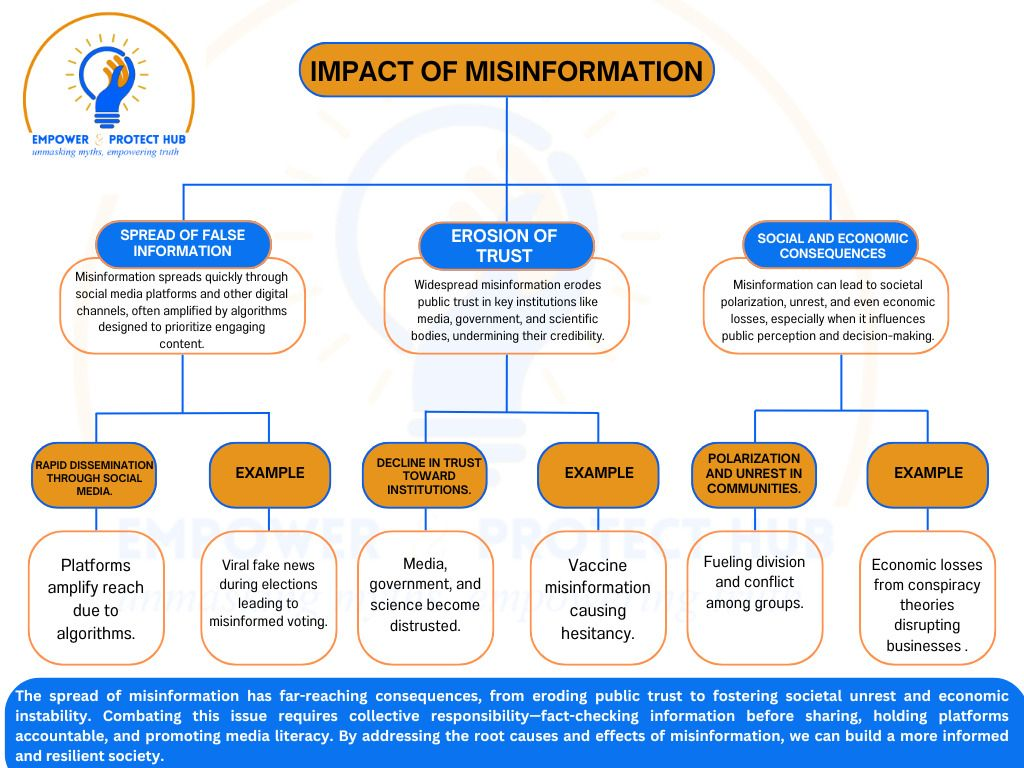
Misinformation has had far-reaching consequences, particularly in vulnerable communities. It distorts public understanding, leading to mistrust in vital institutions such as healthcare, education, and governance. In times of crisis, such as elections or public health emergencies, misinformation has incited fear, fueled divisions, and amplified social tensions.
For instance, during the COVID-19 pandemic, false information about vaccines hindered uptake and jeopardized efforts to combat the virus. In areas like Kibera, where access to verified information was already limited, misinformation deepened existing inequalities, affecting decisions related to health, safety, and livelihoods. The ripple effect of these falsehoods undermined progress and posed a significant threat to social cohesion.
Kibera, home to over 250,000 people, has long grappled with political and governance misinformation, which has significantly impacted civic engagement and trust in institutions.
Election misinformation, in particular, has been a major concern. During the 2022 general elections, false claims about the manipulation of voting results led to confusion and distrust among residents. Similarly, in 2024 and early 2025, widespread rumors about government abductions heightened fears, as the Kenya National Commission on Human Rights (KNCHR) reported a surge in enforced disappearances since June 2024. These developments fueled uncertainty and deepened mistrust, making it essential to equip residents with the ability to identify and counter falsehoods.
The Tusidanganyike Campaign
The Tusidanganyike Campaign was a groundbreaking initiative aimed at tackling governance and political misinformation in Kibera. Led by CRECO Kenya in partnership with the Embassy of Finland Nairobi. The Constitution and Reform Education Consortium (CRECO) is a network of civil society organizations committed to advancing constitutionalism, democratic governance, and the institutional development of civil society in Kenya and beyond. With a vision for a just and well-governed society, CRECO has actively championed initiatives that enhance civic engagement and promote informed decision-making.
In 2024, CRECO partnered with the Embassy of Finland Nairobi to launch the Digital Democracy Fellowship Program (DDF), a groundbreaking initiative designed to counter the growing threats of fake news and information disorders (misinformation, disinformation and malinformation) in Kenya. This fellowship aligned with Finland’s long-standing commitment to strengthening democratic governance, media literacy, and civic participation through local partnerships.
From July to December 2024, the DDF trained university students, digital journalists, content creators, activists, and human rights defenders across Kenya’s 47 counties. Through structured training, mentorship, and collaboration, the program empowered fellows to lead initiatives that enhance digital democracy and combat the spread of misleading information. Among the initiatives developed under the fellowship was the Tusidanganyike Campaign, a project implemented by select fellows to address governance and political misinformation in Kibera. Tusidanganyike employed a community-driven approach to equip residents with the knowledge and tools to identify and counter misinformation.
A dynamic team of fellows under the Empower and Protect Hub spearheaded the Tusidanganyike Campaign, including:
- Paul Isendi Jibendi – Content Creation Lead
- Daisy Peris Omung’ala – Communications Lead
- Neema Irene Munyasya – Stakeholder Engagement Lead
- Lucas Obadoh Mang’eni – Research and Literacy Training Lead
- Carson Anekeya – Partnerships and Community Mobilization Lead
Strategies and Implementation
The Tusidanganyike Campaign employed a strategic, well-rounded approach to counter misinformation and its impact on governance in Kibera. Through a combination of targeted interventions, the campaign sought to empower the community with accurate information and critical thinking skills. These efforts were carried out through the following key strategies:
1. Content Development
The campaign developed and disseminated fact-checked content to debunk false claims and provide accurate information. Infographics were created to simplify complex issues related to governance, elections, and human rights, making them more accessible to Kibera residents. These were shared across the campaign’s online platforms, along with social media posts addressing prevalent rumors and misconceptions.
2. Media Literacy Workshops
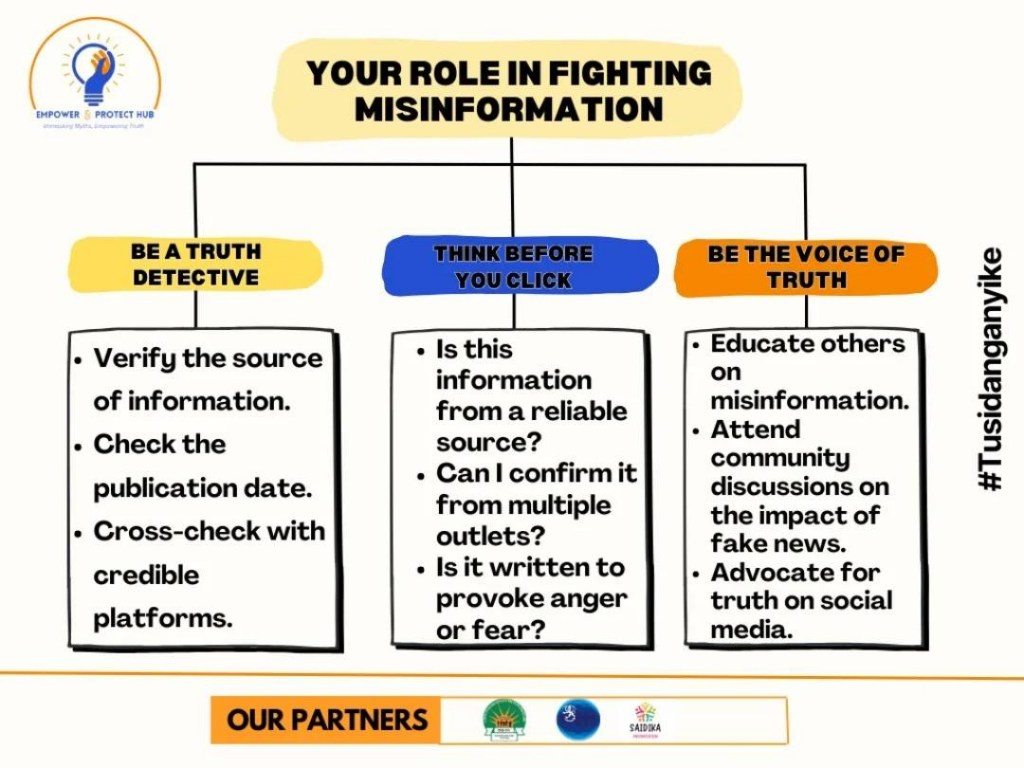
Workshops and online training sessions were conducted to equip Kibera residents with the skills to critically assess information. Participants learned to verify information using tools such as Google Reverse Image Search, TinEye, and Africa Check. These sessions, facilitated by key figures in the media space, provided hands-on learning experiences. Among the speakers was:
1. Prof. Kelvin K. Omieno, Ph.D., an Associate Professor of Information Technology at Kaimosi Friends University
2. Everlyn Kimibei, Senior Media Technologist, Kisii University
3. Edgar Odhiambo, Freelance Journalist & Digital Content Creator, Durga’s TV Show
4. Media enthusiasts Burning Opiyo and Bradley Mukabi from Zetech University.
Their expertise helped ensure that community members could confidently engage with both digital and traditional media spaces.
3. Community Engagement
Recognizing the power of local voices, the campaign mobilized influencers and organizations to serve as ‘truth champions’ in the fight against misinformation. Partnerships with trusted organizations; such as Saidika Organization, Nubian Rights Forum, and Encode Hub Africa, helped extend the campaign’s reach and credibility within the community. These collaborations fostered a network of truth advocates dedicated to challenging false narratives.
Impact and Looking Ahead
The Tusidanganyike Campaign played a crucial role in enhancing media literacy and countering misinformation in Kibera. As a result of its interventions, many residents gained the knowledge and skills needed to critically evaluate information, reducing their vulnerability to misleading narratives. The campaign contributed to greater civic engagement, with more individuals making informed decisions based on verified information rather than rumors.
While the campaign officially ended in February 2025, Empower and Protect Hub and other stakeholders remain open to future collaborations and initiatives aimed at combating misinformation and promoting digital democracy. The lessons learned from Tusidanganyike provide a scalable model that can be replicated in other parts of Kenya, ensuring that the fight against misinformation continues beyond Kibera.
How to Get Involved
Misinformation is a global challenge that threatens democratic processes and societal well-being. Whether through promoting media literacy, volunteering, or advocating for policy reforms, everyone has a role to play in countering the spread of false information.
You can stay connected with Empower and Protect Hub, the driving force behind the campaign, through:
Facebook: E and P Hub
X (formerly Twitter): @HubEmpower
Instagram: @empowerandprotecthub
Email: empowerandprotecthub@gmail.com
The fight against misinformation is ongoing, but through collective action, we can build well-informed communities that actively shape their governance and future. We appreciate organizations like CRECO Kenya for spearheading such impactful initiatives for the greater good.
Let’s work together to ensure that truth prevails, because the time to act is now.

- The Rise of Suicide Posts in Digital Spaces Reflects a Growing Mental Health Crisis - February 22, 2026
- How Kenya’s Silent Lifestyle Disease Crisis Is Reshaping Public Health - February 12, 2026
- The Rise of Lifestyle Diseases Emerges as a Crisis Among Kenya’s Youth - February 9, 2026