
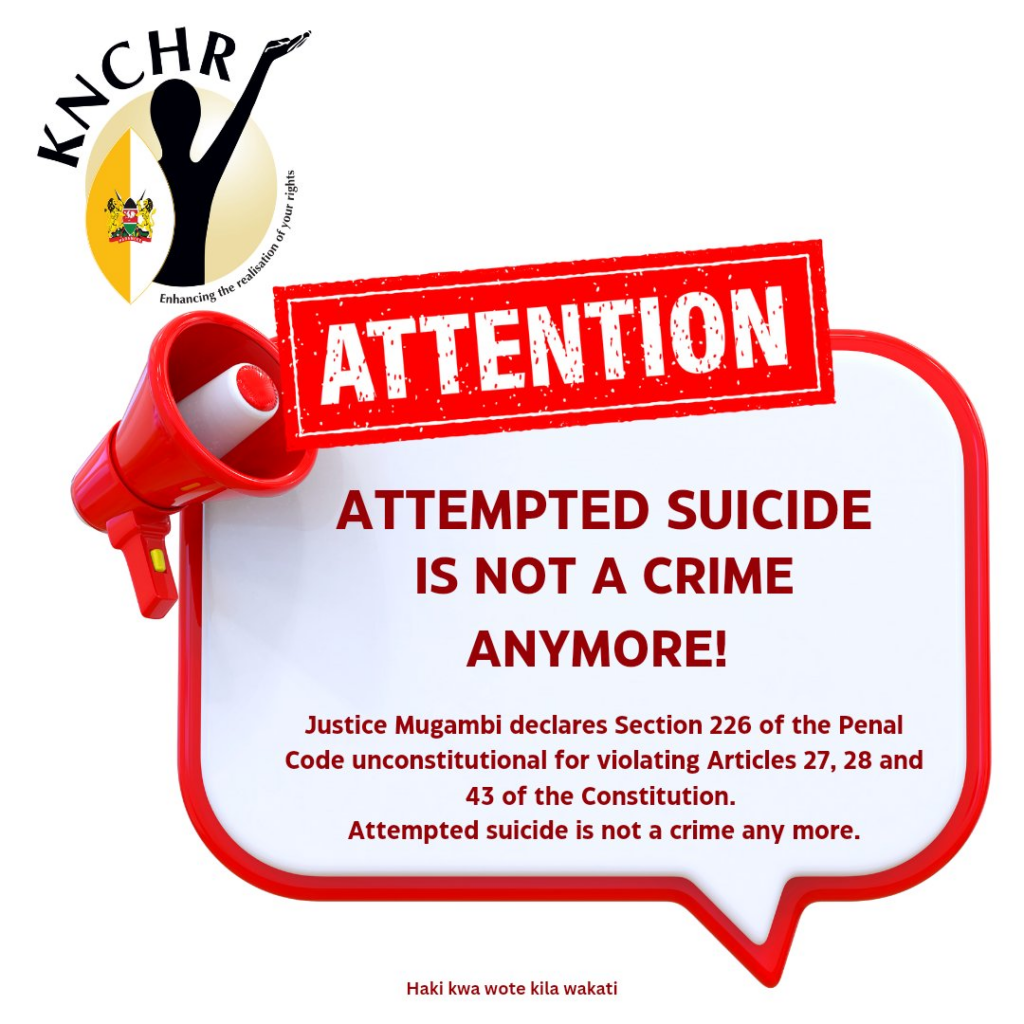
The High Court of Kenya declared Section 226 of the Penal Code unconstitutional on January 9, 2025, effectively decriminalizing attempted suicide. Justice Lawrence Mugambi declared that Section 226 of the Penal Code was unconstitutional, citing its violation of fundamental rights such as equality, human dignity, and access to healthcare. His ruling marks a transformative moment in Kenya’s mental health landscape, shifting the narrative from punishment to care and recognizing the need for empathy toward individuals grappling with suicidal thoughts.
This landmark judgment was driven by a petition led by the Kenya National Commission on Human Rights, the Kenya Psychiatric Association, and the late mental health advocate Charity Muturi. Charity died by suicide on November 6, a cause for which she advocated passionately, including petitioning for the decriminalization of suicide in Kenya. The petitioners highlighted the damaging effects of criminalizing suicide attempts, arguing that such laws reinforced stigma and discouraged individuals from seeking help when they needed it most. Their efforts underscored the critical link between mental health challenges and the need for accessible medical and psychosocial interventions, advocating for reforms that reflect modern understandings of mental health as a public health priority.
For decades, suicide was treated as a crime under Kenya’s Penal Code, specifically Section 226. This provision criminalized any attempt to take one’s own life, branding it an offense punishable by imprisonment. The law, a remnant of colonial legislation inherited from British rule, was rooted in a punitive rather than compassionate approach to mental health struggles. The logic behind it was as archaic as the law itself: to deter individuals from ending their lives through fear of legal repercussions. But what this approach overlooked was the profound pain and hopelessness that drives such actions, leaving those in need of support facing further alienation.
The criminalization of suicide deeply influenced societal attitudes in Kenya, embedding shame and stigma into the framework of how mental health struggles were perceived. Families of those who attempted or died by suicide often bore the weight of societal judgment, with whispers of “what went wrong” replacing words of compassion.
The legal framework meant that individuals who survived a suicide attempt found themselves entangled in the justice system. Judicial attitudes often mirrored societal norms. Cases of attempted suicide were processed with little sensitivity, and the accused were subjected to the humiliation of public trials. Law enforcement officers, often treated these cases as routine criminal offenses rather than as emergencies requiring psychological intervention.
In some communities, the stigma extended beyond the living to the deceased. For those who died by suicide, funeral rites were often stripped of dignity. These rituals, intended to honor a life lived, instead became markers of shame; a painful reminder of how societal attitudes compounded grief with exclusion. The punitive framework perpetuated a cycle of silence and fear. Knowing that reaching out for help could lead to criminal charges, many individuals concealed their struggles. Families, too, hesitated to seek assistance for loved ones, wary of exposing them to legal consequences. This silence created fertile ground for the perpetuation of stigma, leaving many to suffer in solitude.
Despite rising suicide rates in several countries, suicide remains criminalized in many regions, including Tanzania, Nigeria, Myanmar, and Pakistan. In Tanzania and Nigeria, individuals who attempt suicide can face imprisonment, highlighting a harsh punitive approach rather than a supportive one. In Nigeria, the legal position is that suicide is not a crime, but attempted suicide is, which creates a paradox: they can’t punish you if you succeed in ending your life, but if you survive, punishment awaits. This is a deeply contradictory stance, are they only ready to pardon those who die, but punish those who survive their struggles?
However, some countries have begun to move away from criminalizing suicide, signaling a shift toward more compassionate and medically focused responses to mental health issues. Canada, India, New Zealand and Kenya being the new one on the list have decriminalized suicide, recognizing the importance of addressing suicide as a public health issue rather than a criminal act. These countries are leading the way in showing that decriminalization can reduce stigma and improve access to mental health care, providing hope for regions where criminalization still prevails.
While the decriminalization of suicide in Kenya is a significant step forward, there are several challenges ahead in fully implementing this change. One of the primary hurdles is societal stigma. Although the legal landscape has shifted, deeply ingrained cultural attitudes toward mental health and suicide may take longer to evolve. Many people still perceive suicide attempts as a moral failing rather than a symptom of mental health struggles, which can deter individuals from seeking help and lead to further isolation.
Yes, we’ve decriminalized suicide, but what next? While this legal shift is a significant milestone, it is merely the first step in addressing the deeper, systemic issues surrounding mental health. Decriminalization alone will not resolve the stigma, misinformation, or lack of resources that continue to affect individuals in crisis. Now, we must focus on translating this change into meaningful action. The next step is not just a legal change, but a cultural and infrastructural transformation that prioritizes compassion, care, and prevention. Only by addressing these systemic issues can we ensure that the shift in law leads to real change, offering individuals not just freedom from criminal punishment but access to the care and support they need to heal.
As Kenya sets out on this journey, it is hoped that this decriminalization will lead to a significant reduction in suicide rates. When people feel accepted, understood, and supported, they are more likely to seek help before it’s too late. This reform could spark broader mental health reforms not just in Kenya, but globally, as it sends a message that mental health is a priority and that the path to healing begins with empathy and understanding.
Remember, decriminalizing suicide is not just about changing a law; it’s about changing the way we perceive suicide as a public health issue rather than a moral failing. It’s about changing the way we perceive the societal structures that fail to support those who feel trapped by their mental health struggles.
The future holds promise, and together, we can build a world where those in need are met with kindness, not criminalization.

- The Rise of Suicide Posts in Digital Spaces Reflects a Growing Mental Health Crisis - February 22, 2026
- How Kenya’s Silent Lifestyle Disease Crisis Is Reshaping Public Health - February 12, 2026
- The Rise of Lifestyle Diseases Emerges as a Crisis Among Kenya’s Youth - February 9, 2026