By the Light of Two Moons
David stood at the edge of Marsabit town, watching the sun dip behind Mount Marsabit, painting the sky in shades of amber and rose. His phone buzzed—a text from Grace: *”Niko karibu, my love.”* His heart quickened. In six months, they would marry, but first, they had mountains to climb that were higher than any in Kenya—the mountains of tradition, expectation, and the sacred responsibility of being first-borns.
He remembered the day they met at Nairobi’s city market, both reaching for the same bunch of sukuma wiki. Their hands touched, their eyes met, and Grace had laughed—a sound like rain on parched earth. “Samahani,” she’d said, pulling back. But David, bold as his Borana ancestors who once commanded vast territories, had smiled and said, “Keep it. But only if you tell me your name.”
That was two years ago. Now, they stood at the threshold of forever, and the path ahead demanded wisdom, patience, and respect for traditions older than the baobabs dotting the northern landscape.
The Weight of Being First
Grace arrived in his mother’s car, borrowed for the journey. As she stepped out, David saw the worry creasing her beautiful face. Being the first-born daughter in a Kamba family meant she was her parents’ treasure—their retirement plan, their bridge to ancestral blessings. Her father expected a substantial bride price, not from greed, but because it honored her value and sealed the covenant between families.
“My father wants to meet your family,” she said softly, her voice barely above a whisper. “He says we must do things properly.”
David took her hands, feeling them tremble slightly. As a Borana first-born son, he understood duty intimately. He was his father’s heir, the one who would inherit the family’s cattle, carry the family name, and one day become an elder. His marriage wasn’t just his own—it was a union that would bind two clans, two cultures, two ways of seeing the world.
“Then we do it properly,” he said, squeezing her hands gently. “Both ways.”
The Borana Way: Blessing Before Beginning
In Borana culture, marriage begins long before the wedding day. David first needed his father’s blessing—a sacred moment when the elder would pray over him, calling upon Waaqa (God) and the ancestors to guide the union. Without this blessing, the marriage would lack spiritual foundation.
His father, Joseph, sat under the acacia tree where generations of family decisions had been made. David’s stomach churned with nervousness as he knelt before him, presenting cola nuts with trembling hands and explaining his intention to marry Grace—not just a Kamba woman, but a woman of strength, education, and character.
“My son,” Joseph said, his voice weathered by years of wisdom, his eyes reflecting decades of watching the northern plains change with the seasons, “you know our ways. The bride price must be paid—cattle, yes, but also respect shown to her family. You know they will have their own customs. Can you honor both?”
David felt the weight of the question settle on his shoulders. “I will, father. She is worth every cow, every tradition, every bridge we must build.” His voice cracked slightly with emotion.
Joseph studied his son’s face for a long moment, then smiled—a rare, warm smile that made David’s chest tighten. He placed his weathered hand on David’s head, speaking blessings in Borana language—prayers for fertility, prosperity, and peace between the families. David felt tears prick his eyes as the ancient words washed over him.
The Kamba Path: Negotiation and Understanding
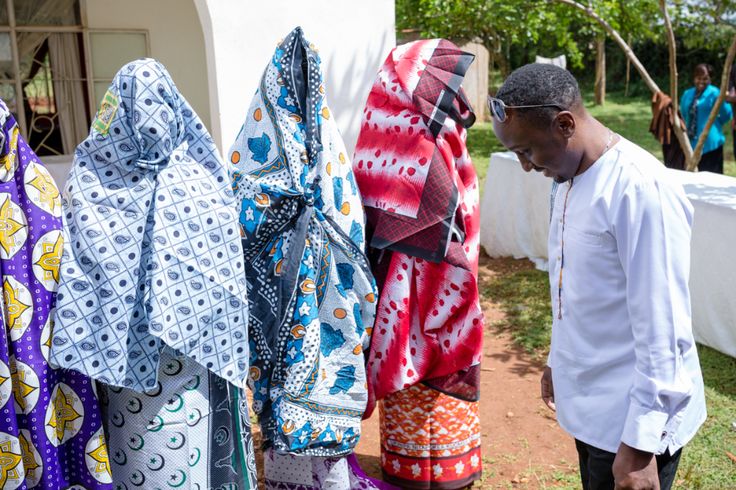
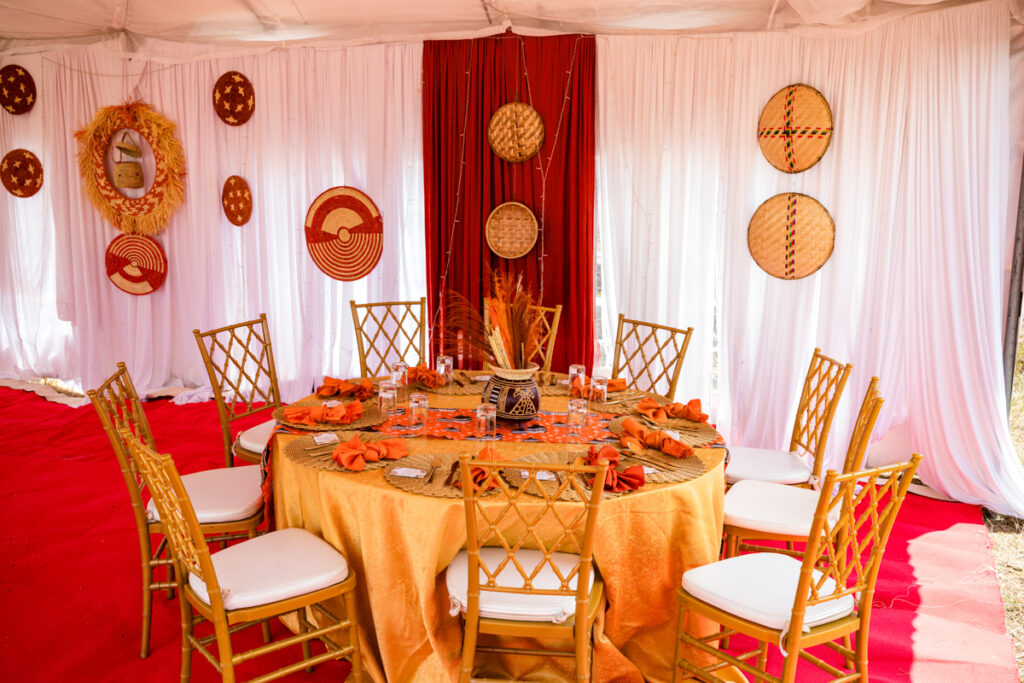
Three weeks later, David’s delegation arrived at Grace’s rural home in Machakos. His hands were sweaty despite the cool morning air. In Kamba tradition, this was the formal negotiation of bride price. David brought his uncles, his father, and gifts: crates of soda, traditional beer, sugar, and a goat as the initial offering.
Grace’s father, Stephen, sat with his brothers and elders under a mango tree. The women—including Grace’s mother—watched from the house, their presence crucial even if unspoken. David caught a glimpse of Grace peeking through the kitchen window, her face a mixture of hope and anxiety. In Kamba culture, mothers hold silent but powerful influence over marriage decisions.
The negotiation was an art form, a dance David wasn’t entirely prepared for. Numbers were suggested, countered, discussed with proverbs and laughter that sometimes felt sharp. “A good wife is like rain in drought season,” Stephen said, leaning forward with intensity. “Can you measure her worth in coins alone?”
David’s uncle responded with Borana wisdom: “A strong marriage is like a three-legged stool—man, woman, and community. We come not to buy, but to honor.” David felt gratitude wash over him for his uncle’s steady voice.
The sun climbed higher. Sweat trickled down David’s back. By midday, they agreed: fifteen cows (converted to monetary value for practicality), a bed set for the parents, and a ceremonial payment to Grace’s mother for the milk that nourished her daughter.
But then Stephen leaned back and added, “Our daughter is educated. She has a degree. This too adds to her value.”
David’s heart sank. Would this be the moment everything fell apart? But Joseph nodded slowly. “Our son also has education. Together, they will build an empire. We accept your terms.”
Relief flooded through David. He wanted to jump up and shout but maintained his composure, merely nodding respectfully.
The Sweet Twist: Navigating Two Worlds
That evening, Grace and David sat alone under the stars at her family compound, finally able to talk freely. The weight of the day’s negotiations hung between them.
“I was so scared,” Grace confessed, leaning against his shoulder. “When my father mentioned my degree, I thought your family might walk away.”
“I was terrified too,” David admitted, wrapping his arm around her. “But here’s the thing—we’re both first-borns. We both carry these expectations. My father expects me to maintain ties to Marsabit, participate in clan decisions, eventually inherit leadership responsibilities. Your family expects you to support your siblings’ education and help your aging parents.”
Grace sighed deeply. “How do we do all of this, David? How do we be ourselves while honoring everyone else?”
They sat in silence for a moment, listening to the night sounds—crickets chirping, a distant dog barking, someone’s radio playing Kikuyu gospel music.
Then Grace sat up, her eyes brightening. “What if we don’t choose? What if we honor both worlds by creating a new model?”
“Tell me more,” David said, intrigued.
“We’ll live in Nairobi for work,” Grace proposed, her words tumbling out with growing excitement. “But every Gada ceremony, we return to Marsabit for you. And every Kamba ceremony, we go to Machakos for me. Our children will speak Borana, Kamba, Swahili, and English. They’ll know both grandparents equally.”
David felt something expand in his chest—hope, love, possibility. “In Borana culture, the wife becomes part of the husband’s clan. But I will learn Kamba traditions too. I’ll dance at our wedding. I’ll learn your mother’s recipes. Your culture doesn’t end because you married me.”
Grace’s eyes filled with tears. “You mean that?”
“Every word. I’m not just marrying you, Grace. I’m marrying into your story, your language, your food, your songs. And you’re marrying into mine. We’re creating something new together.”
She kissed him then, tasting salt from her own tears, and for the first time since they’d started this journey, she felt truly hopeful.
The Wedding: Two Ceremonies, One Love.
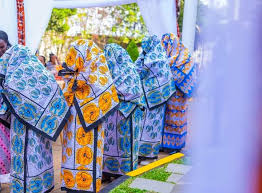
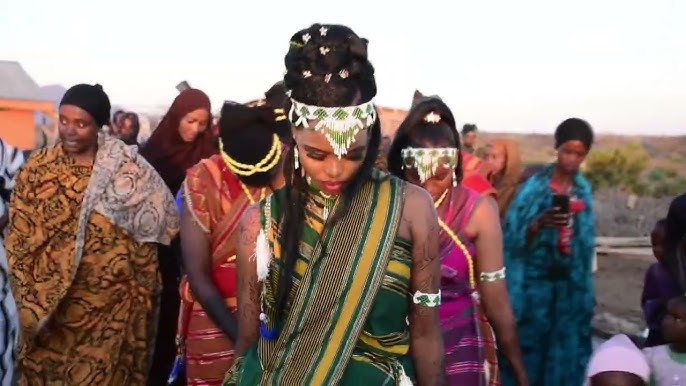
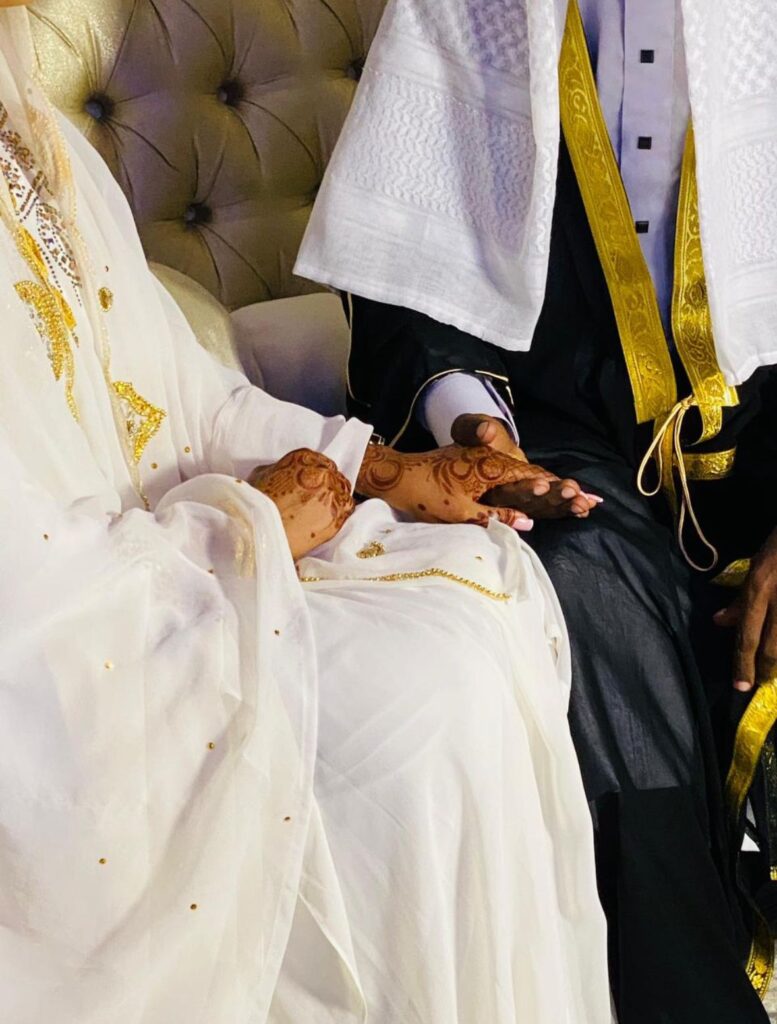
They married twice. First, a traditional Borana ceremony in Marsabit, where Grace was blessed by Borana elders. David’s aunt helped her dress in beautiful traditional attire, speaking softly to her in Swahili since Grace’s Borana was still elementary. “Don’t be nervous, mwanangu. Today you become our daughter.”
Grace was welcomed into the family with songs she didn’t understand but felt in her bones. The women showed her how to move in the ceremonial dance, laughing gently when she stumbled but catching her before she fell. Cattle were slaughtered, and the community feasted. David watched his bride trying his mother’s camel milk for the first time, her face scrunching up before she bravely smiled and took another sip. His heart swelled with love.
Two weeks later, in Machakos, they held a Kamba ceremony. David had practiced the traditional dances for weeks, watching YouTube videos late at night and rehearsing in his living room until his neighbor complained about the noise. When he finally performed at the ceremony, he was so enthusiastic—if not entirely accurate—that the elders laughed warmly and declared him “half Kamba already.” The women ululated as Grace, dressed in beautiful kitenge and traditional Kamba attire, was formally handed over to her husband.
Grace’s grandmother, who was nearly ninety, pulled David aside. “Young man,” she said in heavily accented English, “you dance like a goat learning to walk.” She paused, and David’s heart sank. Then she grinned, revealing missing teeth. “But you dance with joy. That is what matters. Love my granddaughter well.”
Five Years Later: The Wisdom Lived
Five years into their marriage, David and Grace sat in their Nairobi apartment, their three-year-old daughter, Amani, asleep in the next room. The name meant “peace” in Swahili—a bridge between their worlds.
“Remember when we thought the hardest part would be the bride price negotiations?” Grace laughed softly, scrolling through photos on her phone from their recent trip to Marsabit.
“If only we’d known,” David chuckled. “Nobody warned us about whose family to visit for Christmas.”
“Or how to explain to my mother why I let you name our daughter with a Swahili name instead of a Kamba one.”
“Or explaining to my father why our daughter calls him ‘Guka’ instead of the Borana term.”
They’d faced challenges neither anticipated. Grace’s younger brother had needed school fees, and her father had called David directly, assuming as the son-in-law he would provide. David’s mother had expected Grace to spend a month in Marsabit after Amani was born, following Borana custom, but Grace’s job only offered three months maternity leave total.
There had been misunderstandings—like when David’s aunt visited and Grace served her food on the wrong type of plate, unknowingly violating a Borana custom she didn’t know existed. Or when Grace’s uncle made a joke about “northerners” at a family gathering, not realizing how deeply it would hurt David.
But there had been beautiful moments too. David’s father teaching Amani to count in Borana. Grace’s mother teaching David to cook proper Kamba chicken stew, the kitchen filled with laughter and the smell of spices. Their daughter’s first words being a mixture of all her languages: “Mama” for Grace, “Baba” for David, and “moo” for the cows at her grandfather’s farm.
“You know what I learned?” Grace said, putting down her phone and looking at her husband. “It’s not about perfectly balancing everything. Some months we spend more time with your family. Other times, mine needs us more. Some traditions we keep exactly as they were. Others we adapt.”
David nodded. “Last month, when we did Amani’s birthday, remember? Your family wanted a big traditional Kamba celebration. My family wanted a Borana blessing ceremony. We did both—one in the morning, one in the afternoon.”
“And both families complained it wasn’t exactly right,” Grace laughed.
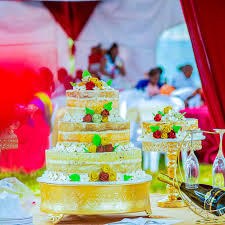
“But Amani was happy. She had two cakes, sang happy birthday in three languages, and got blessed by elders from both sides. That little girl is growing up knowing she belongs to something bigger than one tribe.”
Grace leaned her head on David’s shoulder. “Sometimes I think about young couples like us—mixed tribe, both first-borns, terrified of disappointing everyone. What would you tell them?”
David thought for a moment. “I’d tell them what actually happened last week. Remember when your father and my father were both visiting, and we thought they’d clash? Different languages, different customs, different everything?”
“And instead they sat under our mango tree for three hours,” Grace smiled at the memory.
“Talking about their children, their worries, their hopes. Your dad told my dad about how scared he was to let you go. My dad told your dad about how he worried I wouldn’t be man enough to lead two families. They found common ground not in culture, but in being fathers who love their first-born children.”
Grace wiped a tear from her eye. “They were more alike than different.”

“Exactly. So I’d tell young couples: Yes, learn the customs. Yes, pay the bride price properly. Yes, respect the elders and honor the traditions. But remember—underneath all the cultural differences, families everywhere want the same thing. They want to know their children are loved, their traditions are valued, and their grandchildren will remember where they came from.”
“And sometimes,” Grace added, “you’ll get it wrong. You’ll use the wrong word, forget an important custom, accidentally insult someone.”
“And that’s okay too. We apologize, we learn, we do better next time. Building a bridge between two cultures isn’t a one-time event—it’s every day, every decision, every moment we choose love over ego.”
Amani stirred in the next room, calling out. Grace and David both stood, moving together toward their daughter’s room. She was crying, not fully awake, reaching her small arms up. “Babu?” she mumbled, asking for grandfather—but which one, neither parent could tell.
“Both Babus love you,” Grace whispered, lifting her daughter. “So much.”
As they stood there, the three of them in the soft nightlight’s glow, David realized this was the real wisdom. Not the grand ceremonies or the perfectly negotiated bride price. But this—a child who belonged fully to two worlds, who would grow up knowing that love doesn’t erase differences, it celebrates them. Who would speak multiple languages, eat multiple cuisines, dance multiple dances, and somehow, miraculously, be completely herself.
Their love story wasn’t sweet because it was easy. It was sweet because it was real—messy, complicated, beautiful, and worth every difficult conversation, every cultural misstep, every moment of doubt. They’d chosen the harder path, the path that required them to grow bigger than themselves.
And standing there in their daughter’s room, David and Grace wouldn’t have chosen any other way.

- Must-Watch Movies Releasing in 2026: Your Complete Enterta1nment Calendar. - February 11, 2026
- World Tropical Diseases Day: The Silent Suffer1ng of 1.6b Lives. - January 31, 2026
- The El Molo Tribe: Kenya’s Last Fisher People Fight1ng for Survival on Lake Turkana’s Shores - January 30, 2026