Every year on October 22, the world comes together to observe International Stammering Awareness Day (ISAD), a day dedicated to raising awareness, promoting acceptance, and celebrating the voices of the global stammering community.
This year, under the theme “A Diverse Stuttering Community: Meeting Challenges with Strengths,” we spotlight the Stammering Association of Kenya (SAK), an organization driving change in Kenya by amplifying the voices and rights of People who Stammer (PWS).
In this special feature, we highlight SAK’s remarkable journey, from its founding story to how it is breaking barriers, changing perceptions, and building a more inclusive society. We also explore how SAK continues to advocate for a diverse and empowered stammering community, and its inspiring vision beyond International Stammering Awareness Day 2025.
The Story Behind Stammering Association of Kenya (SAK)
The story of the Stammering Association of Kenya (SAK) begins with compassion, collaboration, and a clear sense of purpose. What started as a small support group in Nairobi has grown into a national movement for inclusion and awareness.
According to Janet Awuor, a volunteer member at SAK, the organization’s roots trace back to a team of dedicated Speech and Language Therapists (SLTs) from leading hospitals such as Aga Khan University Hospital and The Nairobi Hospital.
“Founded in 2013, It all began as the Nairobi Stammering Support Group, a space created to help Kenyans who could not afford private therapy services. At that time, the number of qualified SLTs in the country was very limited, and many people who stammered had no access to professional help.”
Janet Awuor, Volunteer Member, Stammering Association of Kenya (SAK)
Driven by this gap, the group expanded its vision and eventually evolved into the Stammering Association of Kenya, a community grounded in empathy and equality. Its mission has remained consistent: to make speech therapy and psychosocial support accessible to all People Who Stammer (PWS), regardless of their financial background.
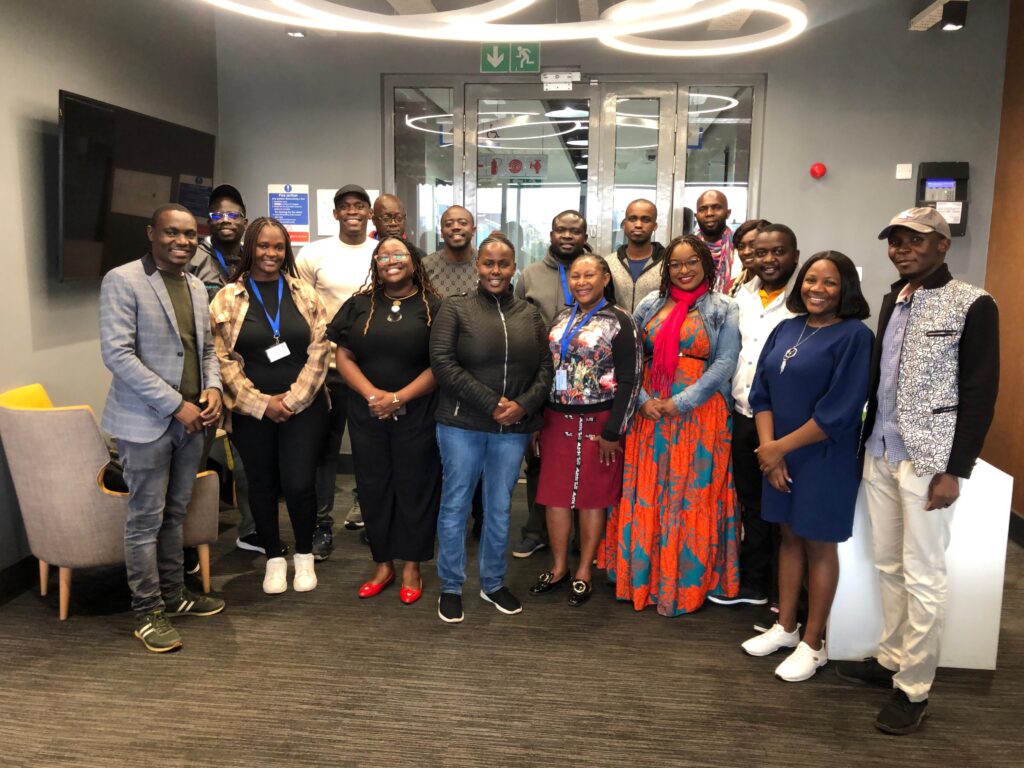
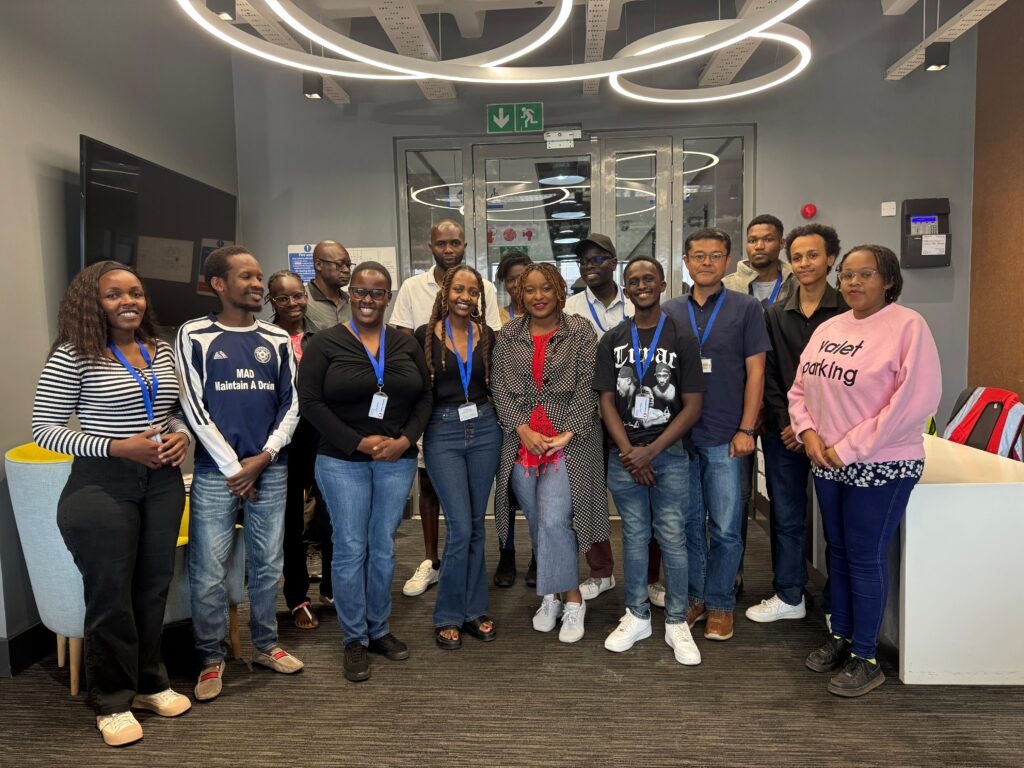
At the heart of SAK’s work lies its Monthly Support Meeting, one of the organization’s most impactful programs. These gatherings, held every third Saturday of the month at Workable Nairobi, offer a safe and inclusive space where members can share experiences, build confidence, and learn coping strategies together. The sessions also include speech therapy activities facilitated by professionals, providing practical tools to help members improve their communication skills in a supportive environment.
Below are pictures of members engaging during SAK’s Monthly Support Meeting at Workable Nairobi.

Beyond that, the association operates across three key pillars: advocacy through legislation, member education, and community engagement, all aimed at promoting inclusion and empowering People Who Stammer across Kenya.
Beyond that, SAK focuses on three key areas:
- Advocacy through Legislation — pushing for policies that promote inclusion, accessibility, and equal opportunities for people who stammer.
- Member Education — providing workshops, resources, and mentorship opportunities to empower members in both personal and professional growth.
- Community Engagement — partnering with professionals, institutions, and organizations that share its mission to create awareness and foster acceptance within society.
From its modest beginnings as a local support group to its current role as a national advocate for change, the Stammering Association of Kenya continues to prove that when voices unite, barriers begin to fall.
Breaking Barriers; Changing Perceptions
For many People who Stammer (PWS) in Kenya, daily communication can feel like a silent battle. Beyond the physical aspect of speech, societal misconceptions often amplify their struggles, creating barriers in education, workplaces, and public life. In a world that frequently prioritizes fluency, people who stammer are too often misunderstood or unfairly judged.
“The biggest challenge for many is career advancement. Interviews and public interactions can trigger anxiety, making it difficult for People who Stammer (PWS) to fully express their competence or confidence.”
Janet Awuor, Volunteer Member, Stammering Association of Kenya (SAK)
To bridge these gaps, SAK has built safe spaces and empowerment programs that nurture both voice and confidence. Through monthly support meetings, peer mentorship, and confidence-building sessions, the organization helps individuals rediscover self-assurance and strengthen their communication skills, not by changing who they are, but by embracing how they speak.

Beyond personal empowerment, SAK extends its impact through community engagement and education. The organization regularly holds workshops, school outreach programs, and awareness talks to sensitize educators, employers, and families about stammering. These efforts aim to create supportive environments where individuals are not defined by their speech patterns, but celebrated for their abilities.
As Janet notes, “SAK works closely with families to help them provide emotional support and encouragement to their loved ones who stammer. It starts at home, when understanding replaces pressure, growth naturally follows.”
On a broader scale, SAK continues to champion advocacy and policy change to influence national conversations around speech diversity. The association actively participates in media engagements, public campaigns, and policy dialogues, all geared toward ensuring that stammering is recognized as a communication difference, not a disability.
Every year, the organization leverages platforms like the International Stammering Awareness Day (ISAD) to amplify its message, connect Kenya’s stammering community with the global movement, and remind the world that every voice, fluent or not, deserves to be heard.
Strength in Diversity: Stories That Inspire a Stuttering Community
The beauty of Kenya’s stammering community lies in its diversity, in the countless voices, each carrying a unique rhythm, experience, and strength. Under the banner of this year’s International Stuttering Awareness Day (ISAD) theme, “A Diverse Stuttering Community: Meeting Challenges with Strengths,” the Stammering Association of Kenya (SAK) continues to shine a light on stories of resilience and inclusion.
“SAK is proud to have members from different backgrounds, age groups, and professions,” notes Janet Awuor, a Volunteer Member. “This diversity inspires acceptance and connection, students, parents, and professionals come together to learn from one another, embracing the different strengths that make our community whole.”

One such story is that of Vivian Adhiambo, a volunteer member whose journey mirrors the quiet courage shared by many. “The programs offered by the Stammering Association of Kenya, especially the monthly group therapy meetings, have had a profoundly positive impact on my life,” Vivian shares. “Through these sessions, I’ve learned effective techniques to better manage my stammer, which has greatly improved my confidence and communication skills.”
Vivian’s transformation extends beyond speech. She describes newfound confidence at work, improved relationships at home, and a renewed sense of self-acceptance. “I can now speak comfortably with my children without shame,” she adds. “I’ve grown in my career, and I now have a supportive community that truly understands my journey.”
For SAK, such stories reflect more than progress, they embody the association’s mission: turning vulnerability into visibility, and difference into strength.
The organization also continues to challenge persistent myths about stammering, misconceptions that have long clouded public understanding. Many still believe that stammering is caused by nervousness, anxiety, or stress, or that people who stammer are less intelligent or capable. Others assume that they just need to relax, slow down, or think before speaking, while some unfairly label them as shy or overly self-conscious.
“Stammering isn’t a sign of nervousness or low intelligence, it’s simply a different way of speaking.”
Janet Awuor, Volunteer Member, Stammering Association of Kenya (SAK)
To shift these perceptions, SAK leverages awareness days like International Stuttering Awareness Day (ISAD), amplifies personal stories through media and community events, and celebrates the successes of people who stammer, redefining the narrative from limitation to empowerment.
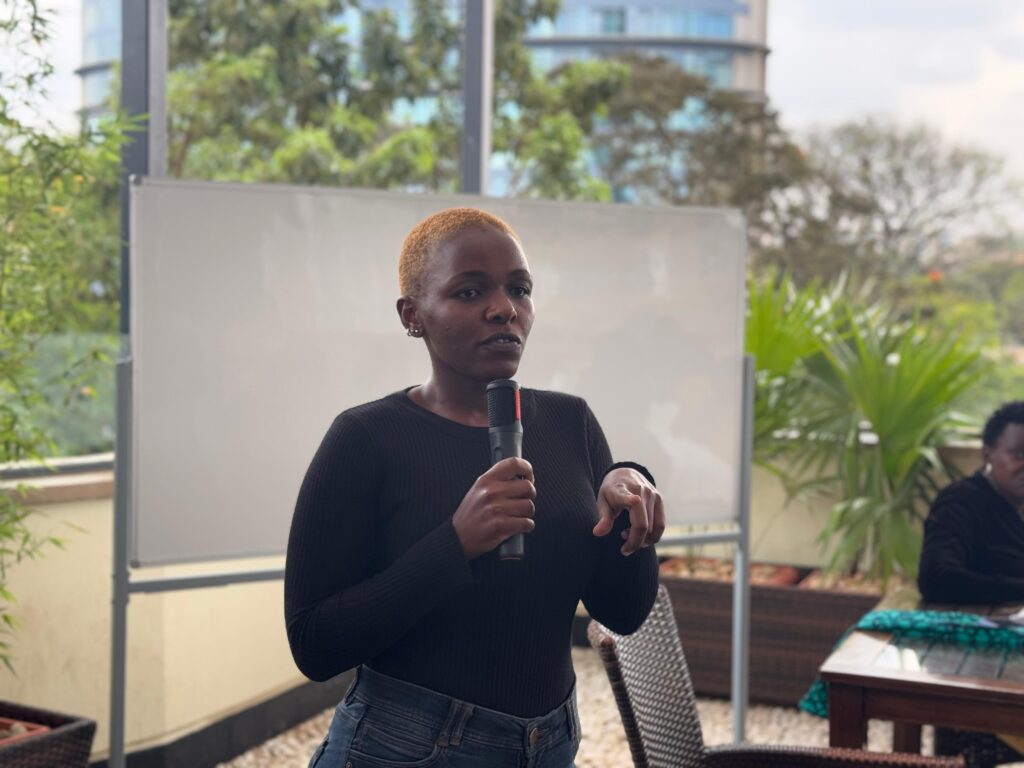
Below are pictures of some speakers sharing powerful insights during the pre-ISAD 2025 celebration.




Stammering Association of Kenya’s Vision Beyond ISAD 2025
As the world unites under the 2025 ISAD theme, “A Diverse Stuttering Community: Meeting Challenges with Strengths,” the Stammering Association of Kenya (SAK) looks beyond the celebrations toward a future of sustained advocacy, inclusion, and empowerment.
Speaking on the organization’s long-term vision, Janet Awuor, a Volunteer Member at SAK, notes that the association’s priorities revolve around deepening inclusion and ensuring visibility for People who Stammer (PWS) across all sectors of society. “Our mission doesn’t end with awareness days,” she emphasizes. “It’s about creating lasting systems that empower people who stammer to thrive, in schools, workplaces, and communities.”
Stammering Association of Kenya’s strategic focus over the coming years is guided by four key priorities:
- Inclusion and Visibility — ensuring that People who Stammer (PWS) are represented, respected, and heard in all spaces, from classrooms to boardrooms.
- Workplace Advocacy — partnering with employers to foster supportive environments through training, awareness sessions, and reasonable accommodations.
- Accessibility and Affordability — expanding access to speech therapy and support services, particularly in rural and underserved areas.
- Community Building — strengthening peer networks to reduce isolation and nurture shared experiences of growth and belonging.
As Stammering Association of Kenya (SAK) continues to shape a more understanding and inclusive society, it calls on partners, institutions, and individuals to walk with them in amplifying the voices of those who stammer. Together, they envision a future where stammering is not seen as a limitation, but as a powerful part of human diversity and expression, celebrated across Kenya and beyond.
For those who wish to learn more, collaborate, or support their work, you can reach the Stammering Association of Kenya (SAK) through their official platforms. Follow them on Instagram at @stammering_association_ke, Facebook and LinkedIn at Stammering Association of Kenya, and on X (Twitter) at @stammeringkenya. To explore their initiatives or get involved, visit stammeringkenya.org or send an email to info@stammeringkenya.org.

It’s inspiring to witness the transformative work of the Stammering Association of Kenya, an organization leading with purpose. This International Stuttering Awareness Day (ISAD) 2025 serves as a reminder that inclusion begins with understanding and collective action. SAK’s mission calls on partners, institutions, NGOs, and individuals to join hands in amplifying the voices of people who stammer and creating spaces where they can thrive without fear or stigma. Together, we can all build “A Diverse Stuttering Community: Meeting Challenges with Strengths.”

- The Rise of Suicide Posts in Digital Spaces Reflects a Growing Mental Health Crisis - February 22, 2026
- How Kenya’s Silent Lifestyle Disease Crisis Is Reshaping Public Health - February 12, 2026
- The Rise of Lifestyle Diseases Emerges as a Crisis Among Kenya’s Youth - February 9, 2026