Dr. Mohammed Abir Awan, PhD, MPharm, is a Specialist Cancer Pharmacist and Neuroscience researcher based in Boston, England, whose work stands at the crossroads of clinical excellence, scientific inquiry, and health communication. He is currently working as a Specialist Cancer Pharmacist at Pilgrim Hospital, where he integrates evidence-based practice with patient-centered care. A graduate of the University of Birmingham (MPharm, First Class Honours) and Aston University (PhD in Neuroscience), he combines a strong foundation in research with hands-on experience in oncology pharmacy to advance safer and more effective cancer treatment practices.
Beyond the clinical setting, Dr. Awan is also a freelance medical writer, using his expertise to demystify cancer science and promote greater literacy in cancer awareness. His passion for this work is personal, rooted in his brother’s battle with stage 4 lymphoma, a journey that continues to inspire his mission to humanize cancer care through knowledge and empathy.
In this feature, he shares his insights on the vital role of cancer pharmacists in improving patient outcomes, and how communication and storytelling can bridge the gap between research and real-world understanding.
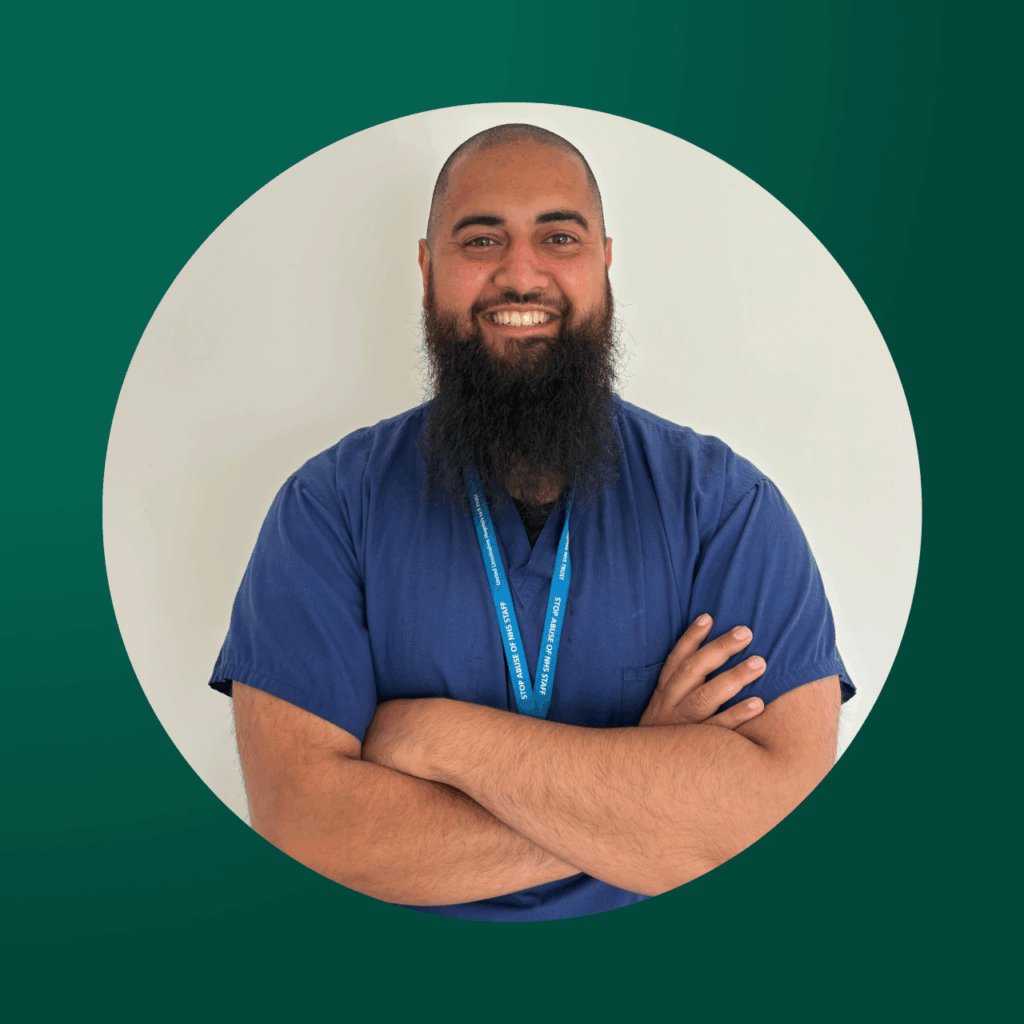
Dr. Mohammed Abir Awan, Specialist Cancer Pharmacist and Neuroscience PhD
For Dr. Mohammed Abir Awan, the world of oncology is a calling shaped by both science and personal experience. As a Specialist Cancer Pharmacist at Pilgrim Hospital, his days are defined by precision, empathy, and the pursuit of safer cancer care.
“Professionally right now, I’m working as a specialist cancer pharmacist at Pilgrim Hospital,” he explains. “My role focuses on ensuring patients receive the safest and most effective treatments across a wide range of cancers, including breast cancer. A big part of my day involves reviewing bloods and patients, answering queries from nurses and doctors, and making treatment adjustments to keep patients safe.”
But Dr. Awan’s work extends far beyond the hospital corridors. On LinkedIn, his thoughtful posts on oncology, haematology, and breast cancer awareness have become a bridge between complex medical research and public understanding. “Beyond my clinical role, I’ve been using LinkedIn to share insights about oncology and haematology care and raise awareness around cancers like breast cancer,” he says. “My mission is to bridge the gap between the latest advancements in cancer and the wider public.”
That drive to humanize cancer care stems from a deeply personal place. His brother’s battle with stage 4 lymphoma, and eventual remission, reshaped his entire perspective on patient care. “Living through that experience as a family member taught me how vital it is to treat patients as people, not just diagnoses,” he reflects.
“It showed me the emotional and human side of cancer, which I carry into my role every day. It also made me realise just how technical cancer treatment is from the patients and family side, even as someone with a healthcare background. That personal perspective makes me especially committed to raising awareness, because I know how much knowledge, support, and empathy can change someone’s journey.”
Dr. Mohammed Abir Awan, Specialist Cancer Pharmacist and Neuroscience PhD
His passion for advocacy is sustained by a clear conviction: that awareness and early action save lives. “What keeps me motivated is knowing that awareness can genuinely save lives,” he says. “Every conversation that encourages someone to get checked, every post that sparks a bit of curiosity can make a real difference.”
Grounded in his faith and fueled by purpose, Dr. Awan sees his dual roles, clinician and advocate, as intertwined forms of service.
“I also feel a responsibility as a Muslim and as a healthcare professional to use my skills and voice for benefit. My clinical work is my duty, but advocacy is my way of giving back more broadly. I want all patients to feel empowered and in charge of their cancer treatment from start to finish.”
Dr. Mohammed Abir Awan, Specialist Cancer Pharmacist and Neuroscience PhD
Through both his clinical excellence and his voice in public health advocacy, Dr. Awan exemplifies how personal experience can transform professional purpose, turning pain into a mission of hope, awareness, and empowerment.
How the UK’s Model Can Inspire Africa’s Breast Cancer Response
Recent research shows the UK is making considerable progress in breast cancer care. According to Cancer Research UK, survival rates for females diagnosed with breast cancer have improved dramatically over the decades, with more than 76.6% of women now surviving 10 years or more after diagnosis. Screening programmes are well-organised, genetic and targeted therapies are increasingly adopted, and public health campaigns are effectively raising awareness, such as the NHS’s recent drive to boost mammography uptake and enhance patient education using simpler language, according to The Guardian.
In contrast, many African countries face significant challenges: late-stage diagnosis is common, treatment infrastructure (screening, imaging, pathology, radiotherapy) is often underdeveloped. According to the World Health Organization (WHO), the five-year survival rate in sub-Saharan Africa averages around 40%, far lower than in high-income countries. Furthermore, organised national breast screening programmes are rare, as highlighted by WHO Africa.
What Africa can emulate from the UK includes developing structured screening systems, investing in diagnostic infrastructure, ensuring accessible and culturally relevant patient education, strengthening workforce training, and creating robust health financing policies that make cancer care equitable and affordable. By integrating these lessons with community-driven initiatives, African nations can move toward reducing disparities and improving breast cancer outcomes continent-wide.
The Science of Care: Inside the World of Cancer Pharmacy
Behind every successful round of chemotherapy or targeted therapy lies a delicate balance between science, precision, and compassion, a balance that cancer pharmacists help maintain every single day. For Dr. Mohammed Abir Awan, this behind-the-scenes work is where much of oncology’s unseen heroism happens.
“Cancer pharmacists play a crucial but sometimes overlooked role in breast cancer treatment,” he explains. “We ensure chemotherapy, targeted therapies, and supportive medications are dosed safely, tailored to patients’ blood results, and adjusted to reduce risks. We act as a safety net, reviewing bloods and catching many potential issues before they reach the patient, and we work closely with doctors and nurses to keep treatment both effective and tolerable.”
In a world where treatment protocols constantly evolve, staying current is non-negotiable. “We are also always staying up to date with the latest approved therapies and regimens,” Dr. Awan adds, “and sharing this with the wider healthcare teams. I’d say our contribution is often behind the scenes, but it’s essential for safe patient care.”
Beyond his technical expertise, Dr. Awan is fully aware of the social and cultural dimensions of cancer awareness, and the barriers that stand in the way of early detection. “One challenge is overcoming misconceptions,” he says. “Some people still believe breast cancer only affects women over 50, or that men aren’t at risk, which isn’t true.”
He points out that cultural stigma can also hinder awareness and timely diagnosis.
“In some communities, there’s embarrassment or silence around talking about breast health. That stigma can delay diagnosis, and in cancer, time really matters.”
Dr. Mohammed Abir Awan, Specialist Cancer Pharmacist and Neuroscience PhD
But perhaps the most systemic challenge, he notes, is inequality. “There’s the challenge of health inequalities,” he says. “Access to screening, awareness, and treatment can vary widely depending on socioeconomic background or region in the UK.”
For Dr. Awan, these disparities reinforce a powerful lesson for all healthcare professionals, that awareness and empathy must walk hand in hand with clinical skill.
“One key lesson is that awareness and empathy go hand in hand with clinical care. As professionals, we can’t assume patients know what we know. Sometimes a simple explanation or a bit of reassurance goes a long way.”
He also emphasizes that true cancer care is a team effort. “Breast cancer care isn’t just about doctors or pharmacists, it involves nurses, dietitians, psychologists, and more. Each member of the team brings value, and not one can do this job without the other. Patients do best when we work seamlessly together.”
Through this integrated lens, Dr. Abir Awan illustrates that cancer care is not just about the medicine, it’s about the people, the process, and the partnership that make recovery possible.
The Advocacy Frontier: Educating, Inspiring, and Transforming Awareness
In a field often dominated by technical language and complex treatment plans, Dr. Abir Awan is determined to make cancer conversations more human, and more understandable. Through his growing presence on LinkedIn, he has turned digital spaces into platforms for empathy, learning, and empowerment, sparking crucial discussions around breast cancer awareness and patient communication.
“Through my awareness work, I hope to demystify breast cancer for the public. The patients I’ve spoken to have mentioned that almost every single consultation they have involves words they don’t understand. Unfortunately, they often feel as if they would be inconveniencing healthcare professionals by constantly asking what things mean. This leads to them often feeling like a spectator in their own treatment, which should not be the case.”
Dr. Awan believes that a shift in how professionals communicate could transform patient experiences, one conversation at a time. “If we can normalise conversations in cancer and highlight the importance of using simpler words, I have no doubt that patients’ lives, especially during treatment, will be changed.”
His use of LinkedIn has become a meaningful extension of this mission, an unexpected yet effective space for awareness.
“LinkedIn has been a powerful platform for sharing cancer awareness. The engagement has been positive, with people both inside and outside healthcare reaching out to say they’ve learned something or shared with friends and family. That kind of ripple effect is exactly what I was hoping for.”
Through his posts, Dr. Awan has shown that social media, often dismissed as superficial, can serve as a genuine tool for public health education.

“My mission is to spark conversations in places they might not usually happen. It’s shown me that social media, when used well, can be a real tool for public health.”
When reflecting on the current state of breast cancer awareness in the UK, Dr. Awan is encouraged, yet realistic.
“Awareness in the UK is good compared to some parts of the world, but gaps still remain. People know breast cancer is common, but they don’t always know the signs to look for, or they underestimate the importance of early detection. We also need to work harder on reaching minority communities and younger people, because cancer isn’t limited to any gender, age, or background.”
His vision for the future of breast cancer care is rooted in both science and humanity, a world where precision medicine meets compassionate understanding. “My vision is for a future where breast cancer is detected earlier, treated more precisely, and supported more holistically,” he says. “Globally, I’d like to see awareness campaigns that are culturally sensitive and accessible to all. In the UK, I hope we can reduce inequalities in access and continue moving towards more personalised treatments.”
Yet, for Dr. Awan, progress isn’t only measured in scientific breakthroughs, but in how patients feel seen, heard, and supported.
“Beyond the science, I’d love to see a world where patients feel genuinely supported as whole people, where their physical, emotional, and spiritual needs are recognised and met, and they feel fully informed at every stage.”
Dr. Mohammed Abir Awan, Specialist Cancer Pharmacist and Neuroscience PhD
In bridging the worlds of pharmacy, research, and advocacy, Dr. Abir Awan represents a new generation of healthcare professionals, those who not only deliver care but redefine it. Through his work, both in clinics and online, he is transforming awareness into action, science into understanding, and knowledge into hope.
It’s truly inspiring to see specialists like Dr. Mohammed Abir Awan bringing their credible voice into the online space of advocacy. In an era where misinformation often overshadows facts, voices like his are helping to reshape the narrative, bridging the gap between clinical expertise and public understanding. As we continue this shared mission of breast cancer awareness, the work of professionals like Dr. Awan reminds us that informed advocacy not only saves lives but also restores trust in healthcare communication.

- The Rise of Suicide Posts in Digital Spaces Reflects a Growing Mental Health Crisis - February 22, 2026
- How Kenya’s Silent Lifestyle Disease Crisis Is Reshaping Public Health - February 12, 2026
- The Rise of Lifestyle Diseases Emerges as a Crisis Among Kenya’s Youth - February 9, 2026